



தொல்காப்பியம் 605 · சொல் 4.3
பாடல் · The poem
Tap a word to see where else it occurs.
பொருள் · Meaning in TamilAI
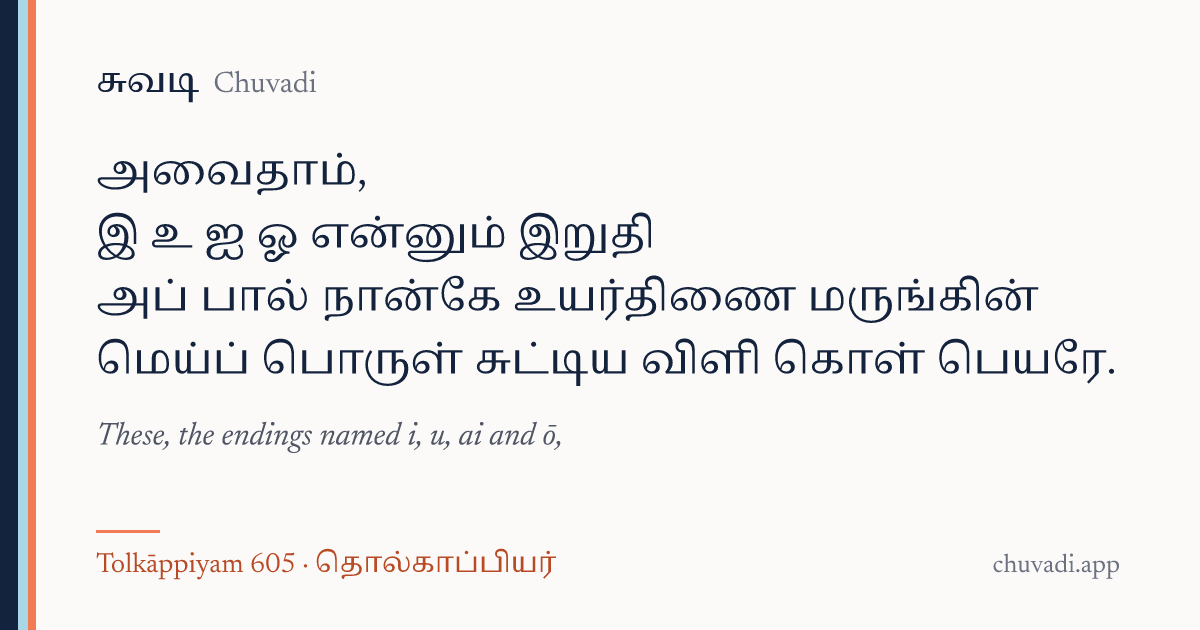
உயர்திணைப் பெயர்களுள் உயிரீற்றுப் பெயர்களில் இ, உ, ஐ, ஓ என்னும் நான்கு இறுதிகளை உடைய பெயர்களே விளியேற்கும். நம்பி, நங்கை, கோ போன்றவை இதற்கு எடுத்துக்காட்டு.
இளம்பூரணர்
இளம்பூரணர் உயர்திணை உயிரீற்றுப் பெயர்களுள் இ, உ, ஐ, ஓ என்னும் நான்கு இறுதிகளை உடையனவே விளி ஏற்கும் எனப் பொருள் கொள்வார்.
நச்சினார்க்கினியர்
நச்சினார்க்கினியரும் இதே பொருளைக் கொண்டு, நம்பி, நங்கை, கோ போன்ற பெயர்களால் இதனை விளக்குவார் எனக் கொள்ளலாம்.
ஒவ்வோர் இறுதியும் விளியில் எவ்வாறு மாறும் என்பதைப் பின்வரும் நூற்பாக்கள் கூறுகின்றன.
ஆங்கிலம் · English translationAI
Translation
- These,
- the endings named i, u, ai and ō,
- those four classes, on the side of the high class,
- are the nouns that take the vocative, pointing to real persons.
What the poem says
Among nouns of the higher class (uyartiṇai, persons) ending in a vowel, only those ending in i, u, ai and ō take a vocative form. Names like nampi (ending in i), naṅkai (ending in ai), and kō "king" (ending in ō) are examples.
The following nūṟpās give the change that each ending undergoes, and nūṟpā 4.7 states that other vowel endings in this class do not take the vocative change.