



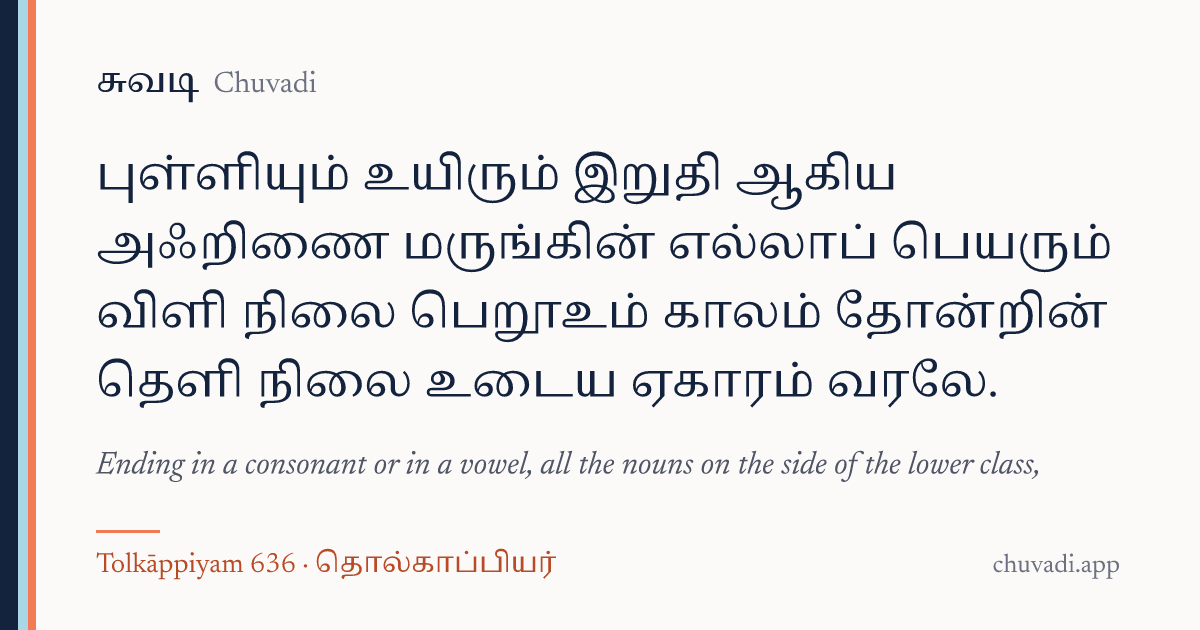
தொல்காப்பியம் 636 · சொல் 4.34
பாடல் · The poem
Tap a word to see where else it occurs.
பொருள் · Meaning in TamilAI
மெய்யீறாயினும் உயிரீறாயினும், அஃறிணைப் பெயர்கள் எல்லாம் விளியேற்கும்போது தெளிவு தரும் ஏகாரத்தைப் பெற்று வரும். மரம் என்பது மரமே என்றும், கிளி என்பது கிளியே என்றும் விளியாகும்.
இளம்பூரணர்
இளம்பூரணர் மெய்யீறும் உயிரீறும் ஆகிய அஃறிணைப் பெயர்கள் எல்லாம் விளி ஏற்கும்போது ஏகாரம் பெற்று வரும் எனப் பொருள் கொள்வார்.
நச்சினார்க்கினியர்
நச்சினார்க்கினியரும் இதே பொருளைக் கொள்வார்; பறவை, நெஞ்சு போன்றவற்றை விளிக்கும் செய்யுள் மேற்கோள்களை இவர் தருவாரா என்பது இங்கு சரிபார்க்கப்படவில்லை.
பறவை, விலங்கு, நெஞ்சு, நிலா போன்றவற்றை அழைக்கும் செய்யுள் வழக்கு இதனால் அமைகிறது.
ஆங்கிலம் · English translationAI
Translation
- Ending in a consonant or in a vowel,
- all the nouns on the side of the lower class,
- when the time comes to take the vocative,
- have ē, which makes it clear, coming on.
What the poem says
All nouns of the lower class (aḵṟiṇai), whatever their final, form the vocative by adding ē. So maram "tree" becomes maramē "O tree!", and kiḷi "parrot" becomes kiḷiyē "O parrot!".
This is the familiar vocative of address to birds, animals, the heart, the moon and so on in classical poetry.