



தொல்காப்பியம் 645 · சொல் 5.6
பாடல் · The poem
Tap a word to see where else it occurs.
பொருள் · Meaning in TamilAI
பெயர்ச்சொற்களை ஆராய்ந்தால், உயர்திணைக்கே உரியவை, அஃறிணைக்கே உரியவை, இருதிணைக்கும் பொதுவானவை என மூன்று வகையாகத் தோன்றும். அவன் உயர்திணைக்கே உரியது; அது அஃறிணைக்கே உரியது; சாத்தன் என்னும் பெயர் இருதிணைக்கும் பொது.
இளம்பூரணர்
இளம்பூரணர் பெயர்களை உயர்திணைக்கே உரியவை, அஃறிணைக்கே உரியவை, இருதிணைக்கும் ஒத்த உரிமையுடையவை என மூவகையாகப் பிரித்து, மூன்றாம் வகையை விரவுப்பெயர் என வழங்குவார்.
நச்சினார்க்கினியர்
நச்சினார்க்கினியரும் இதே மூவகைப் பாகுபாட்டைக் கொள்வார்; பெயரியலின் பின்வரும் நூற்பாக்கள் இம்மூன்றையும் முறையே விரிப்பன என்பது இவர் கருத்து.
இருதிணைக்கும் பொதுவான பெயர் விரவுப்பெயர் எனப்படும். பெயரியல் முழுவதும் இந்த மூவகைப் பாகுபாட்டின் அடிப்படையில் அமைகிறது.
ஆங்கிலம் · English translationAI
Translation
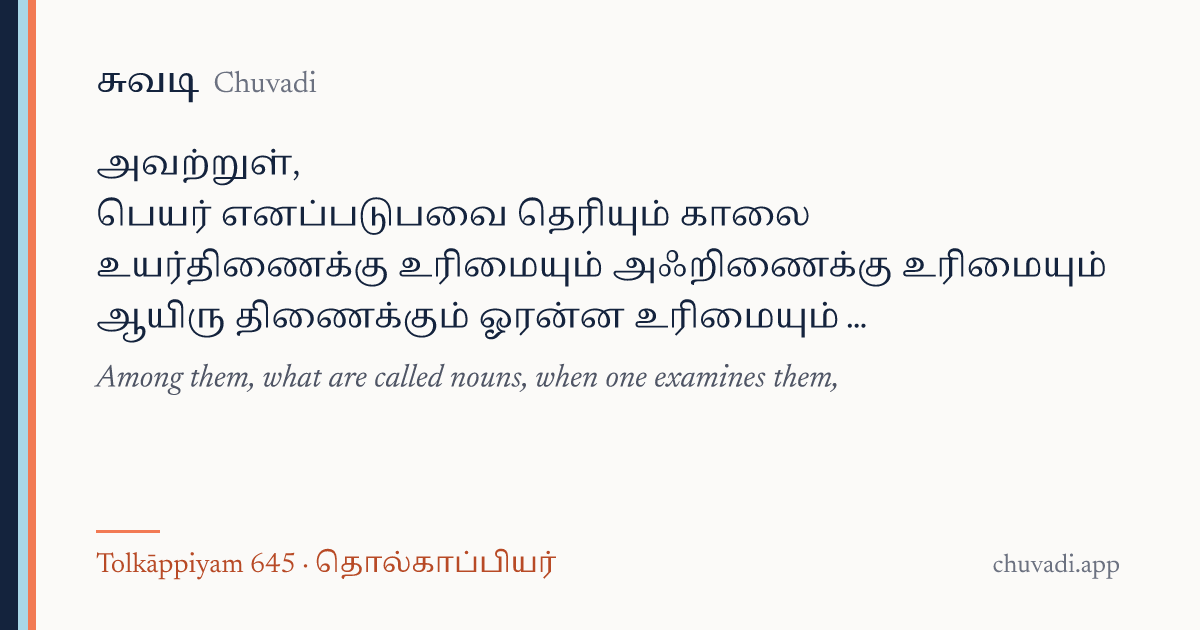
- Among them,
- what are called nouns, when one examines them,
- those proper to the high class, those proper to the lower class,
- and those proper alike to both classes,
- appear in those three forms.
What the poem says
Nouns are of three kinds with respect to tiṇai "class": those belonging only to the higher class (uyartiṇai, rational beings, humans and gods), those belonging only to the lower class (aḵṟiṇai, everything else), and those common to both (viravuppeyar).
Avaṉ "he" belongs to the higher class only, atu "it" to the lower only, and a personal name like cāttaṉ, which may be given to a man or a bull, is common to both.