



தொல்காப்பியம் 649 · சொல் 5.10
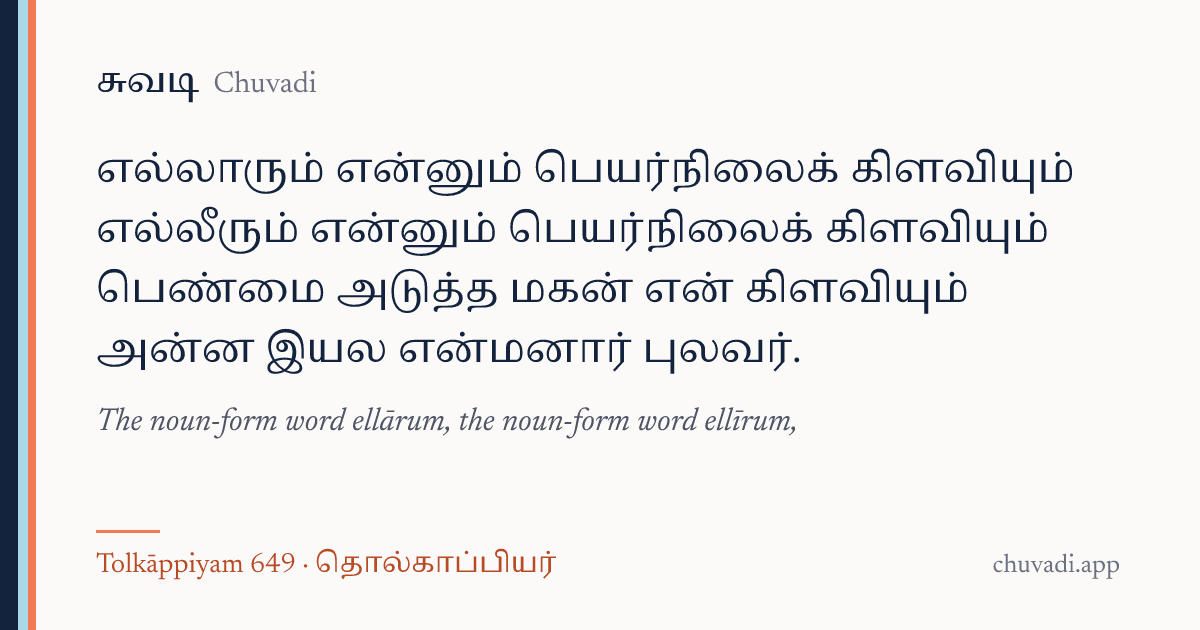
பாடல் · The poem
Tap a word to see where else it occurs.
பொருள் · Meaning in TamilAI
எல்லாரும், எல்லீரும் என்னும் பெயர்களும், பெண்மையோடு கூடிய மகன் என்னும் பெண்மகன் என்பதும் அதே வகையான உயர்திணைப் பெயர்கள் என்று புலவர் கூறுவர்.
இளம்பூரணர்
இளம்பூரணர் எல்லாரும், எல்லீரும், பெண்மகன் ஆகிய மூன்றையும் முன்னைய நூற்பாக்களில் கூறிய உயர்திணைப் பெயர்கள் போன்றவையாகக் கொள்வார்; பெண்மகன் என்பது பெண்ணைக் குறிக்கும் சொல் என்பதே இவர் கருத்து.
நச்சினார்க்கினியர்
நச்சினார்க்கினியரும் இம்மூன்றையும் உயர்திணைப் பெயர்களாகவே கொள்வார்; பெண்மகன் என்னும் வழக்கு பற்றி இவர் தரும் விளக்கம் இங்கு சரிபார்க்கப்படவில்லை.
பெண்மகன் என்பது ஆண்பால் வடிவத்தில் அமைந்திருந்தாலும் பெண்ணைக் குறிக்கும்; அதன் வினை பெண்பாலாக முடியும் என்பதைப் பின்னைய நூற்பா ஒன்று கூறுகிறது.
ஆங்கிலம் · English translationAI
Translation
- The noun-form word ellārum,
- the noun-form word ellīrum,
- and the word makaṉ marked by femaleness,
- are of the same kind, say the learned.
What the poem says
Three more items join the list of higher-class nouns: ellārum "all (of them, persons)", ellīrum "all (of you)", and peṇmakaṉ, the word makaṉ qualified by femaleness, meaning "woman".
Peṇmakaṉ is a curious form: it is grammatically built on the masculine makaṉ but refers to a woman, and it takes feminine agreement, as nūṟpā 5.40 later explains.