



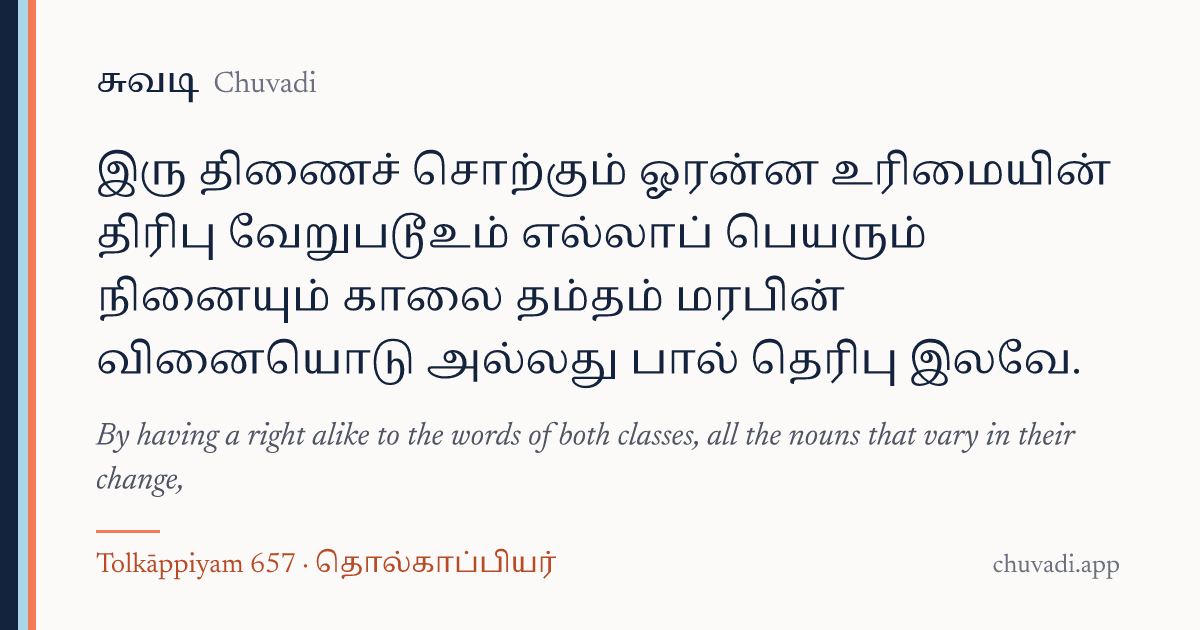
தொல்காப்பியம் 657 · சொல் 5.18
பாடல் · The poem
Tap a word to see where else it occurs.
பொருள் · Meaning in TamilAI
இருதிணைக்கும் பொதுவான உரிமையால் மாறி வேறுபட்டு வரும் விரவுப்பெயர்கள் எல்லாம், வினையோடு வரும்போது அல்லாமல் தாமாகப் பாலைக் காட்டுவதில்லை. சாத்தன் வந்தான் என்றால் மனிதன்; சாத்தன் வந்தது என்றால் அப்பெயருடைய விலங்கு.
இளம்பூரணர்
இளம்பூரணர் இருதிணைக்கும் பொதுவான விரவுப்பெயர்கள் தம்மளவில் திணையையும் பாலையும் காட்டா என்றும், அவற்றோடு வரும் வினையே அவற்றைத் தெரிவிக்கும் என்றும் பொருள் கொள்வார்.
நச்சினார்க்கினியர்
நச்சினார்க்கினியரும் விரவுப்பெயரின் திணையும் பாலும் வினையால் அறியப்படும் என்றே கொள்வார்; தம்தம் மரபின் வினை என்பதால் ஒவ்வொரு பெயருக்கும் பொருந்தும் வினையே வர வேண்டும் என்பதையும் சுட்டுவார் எனத் தோன்றுகிறது.
பெயர் விட்டுவைக்கும் திணையையும் பாலையும் வினையே உணர்த்துகிறது என்பது தமிழ் இலக்கணத்தின் முக்கியக் கருத்துகளுள் ஒன்று.
ஆங்கிலம் · English translationAI
Translation
- By having a right alike to the words of both classes,
- all the nouns that vary in their change,
- when one considers, by their own tradition,
- have no discerning of gender except with the verb.
What the poem says
Common nouns (viravuppeyar), which can belong to either class, do not show class or gender by themselves. Only the verb makes these clear: cāttaṉ vantāṉ "Cāttaṉ came" with a masculine verb is a man, cāttaṉ vantatu with a neuter verb is an animal of that name.
This is one of the central observations of Tamil grammar about agreement: the verb carries the tiṇai and pāl that the noun leaves open.