



தொல்காப்பியம் 659 · சொல் 5.20
பாடல் · The poem
Tap a word to see where else it occurs.
பொருள் · Meaning in TamilAI
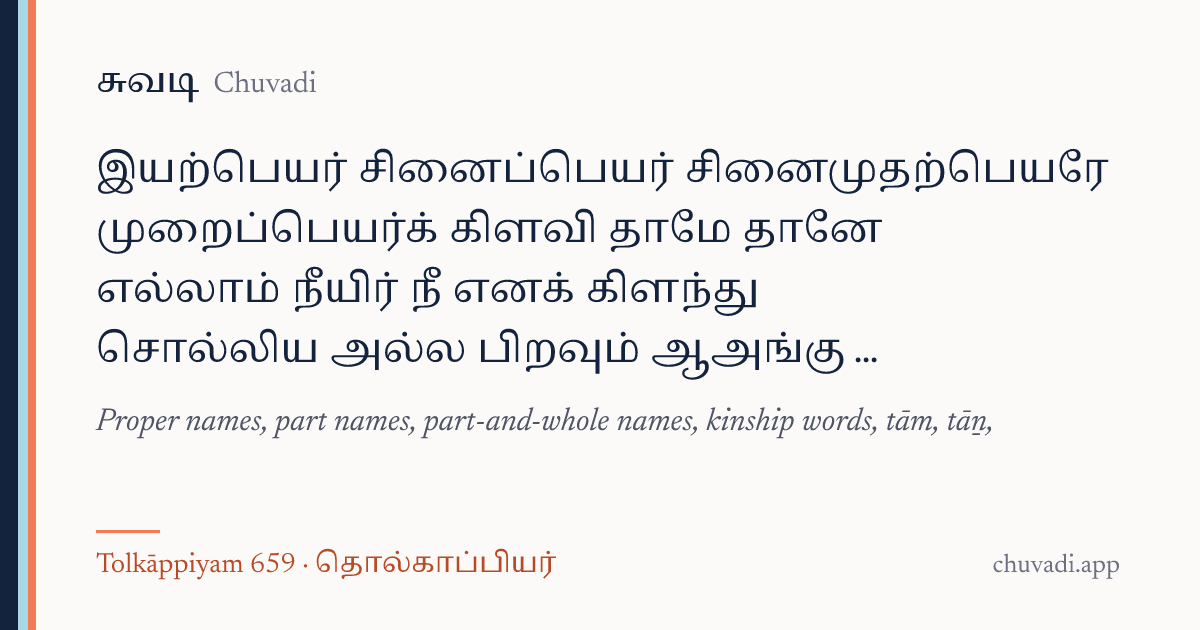
இயற்பெயர், சினைப்பெயர், சினைமுதற்பெயர், முறைப்பெயர், தாம், தான், எல்லாம், நீயிர், நீ என்று எடுத்துக் கூறப்பட்டவையும், கூறப்படாத இவை போன்ற பிறவும் இருதிணைக்கும் பொதுவான விரவுப்பெயர்களாகக் கொள்ளப்படும்.
இளம்பூரணர்
இளம்பூரணர் இயற்பெயர், சினைப்பெயர், சினைமுதற்பெயர், முறைப்பெயர், தாம், தான், எல்லாம், நீயிர், நீ ஆகியவற்றை இருதிணைக்கும் பொதுவான விரவுப்பெயர்களாகக் கொள்வார்; சொல்லிய அல்ல பிறவும் என்பதால் இவை போன்ற பிறவற்றையும் தழுவுவார்.
நச்சினார்க்கினியர்
நச்சினார்க்கினியரும் இப்பட்டியலை விரவுப்பெயர்களின் தொகுப்பாகவே கொள்வார்; இவர் தரும் எடுத்துக்காட்டுகள் இங்கு சரிபார்க்கப்படவில்லை.
இவை ஒவ்வொன்றும் மனிதருக்கும் விலங்கு முதலியவற்றுக்கும் வரலாம். இவற்றின் உட்பிரிவுகளைப் பின்வரும் நூற்பாக்கள் கூறுகின்றன.
ஆங்கிலம் · English translationAI
Translation
- Proper names, part names, part-and-whole names,
- kinship words, tām, tāṉ,
- ellām, nīyir, nī, thus stated,
- and others not stated, there too,
- if such appear, take them with these.
What the poem says
The list of common nouns (viravuppeyar) that can belong to either class: proper names (iyaṟpeyar), names from a part of the body (ciṉaippeyar), names that combine part and whole (ciṉaimutaṟpeyar), kinship names (muṟaippeyar), the reflexives tām and tāṉ, ellām "all", and the second-person pronouns nīyir "you (plural)" and nī "you". Others like them are to be added.
Each of these can be used of a person or of an animal or thing; the following nūṟpās subdivide them.