



தொல்காப்பியம் 692 · சொல் 6.10
பாடல் · The poem
Tap a word to see where else it occurs.
பொருள் · Meaning in TamilAI
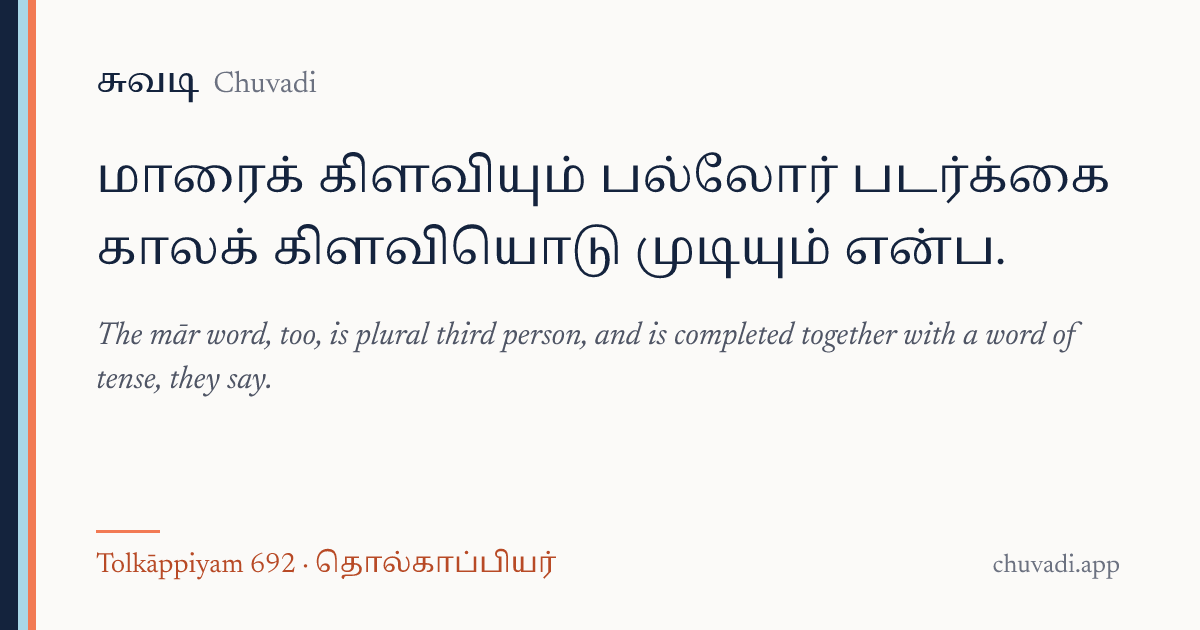
மார் என்னும் விகுதியோடு வரும் சொல்லும் பலர்பால் படர்க்கை வினைச்சொல்லே; அது காலம் காட்டும் சொல்லோடு முடியும் என்று கூறுவர். உண்மார் என்பது இவ்வகை.
இளம்பூரணர்
இளம்பூரணர் மார் விகுதிச் சொல்லையும் பலர்பால் படர்க்கை வினையாகக் கொள்வார் என்பது தெளிவு; காலக் கிளவியொடு முடியும் என்னும் தொடருக்கு இவர் கொள்ளும் சரியான பொருள் இங்கு சரிபார்க்கப்படவில்லை.
நச்சினார்க்கினியர்
நச்சினார்க்கினியர் உரையும் மார் விகுதியைப் பலர்பால் படர்க்கைக்குரியதாகவே கொள்வதாகக் கொள்ளலாம்; இரண்டாம் அடியின் பொருள் பற்றி இவர் கூறுவது இங்கு சரிபார்க்கப்படவில்லை.
‘காலக் கிளவியொடு முடியும்’ என்பதற்கு, மார் விகுதிச் சொல் தானே காலம் காட்டும் முற்று என்றும், அது பின்வரும் ஒரு முற்றுவினையோடு சேர்ந்து முடியும் (உண்மார் வந்தார்) என்றும் இருவகையாகப் பொருள் கொள்ள இடமுண்டு; இது தெளிவாக முடிவு செய்யப்பட்டதன்று.
ஆங்கிலம் · English translationAI
Translation
- The mār word, too, is plural third person,
- and is completed together with a word of tense, they say.
What the poem says
A further high-class plural ending, -mār, is added, as in uṇmār "they will eat". It counts as a third-person plural form.
The second line is less clear. One way to take it, and the one most often given, is that the -mār form is itself a tensed finite verb (mostly future in sense) and so ranks with the endings above. Another reading takes "completed with a word of tense" to mean that the -mār form is usually followed by a finite verb, as in uṇmār vantār "they came to eat", where it behaves almost like a participle of purpose. The commentators discuss both uses; I have kept the English close to the Tamil and leave the point open.