



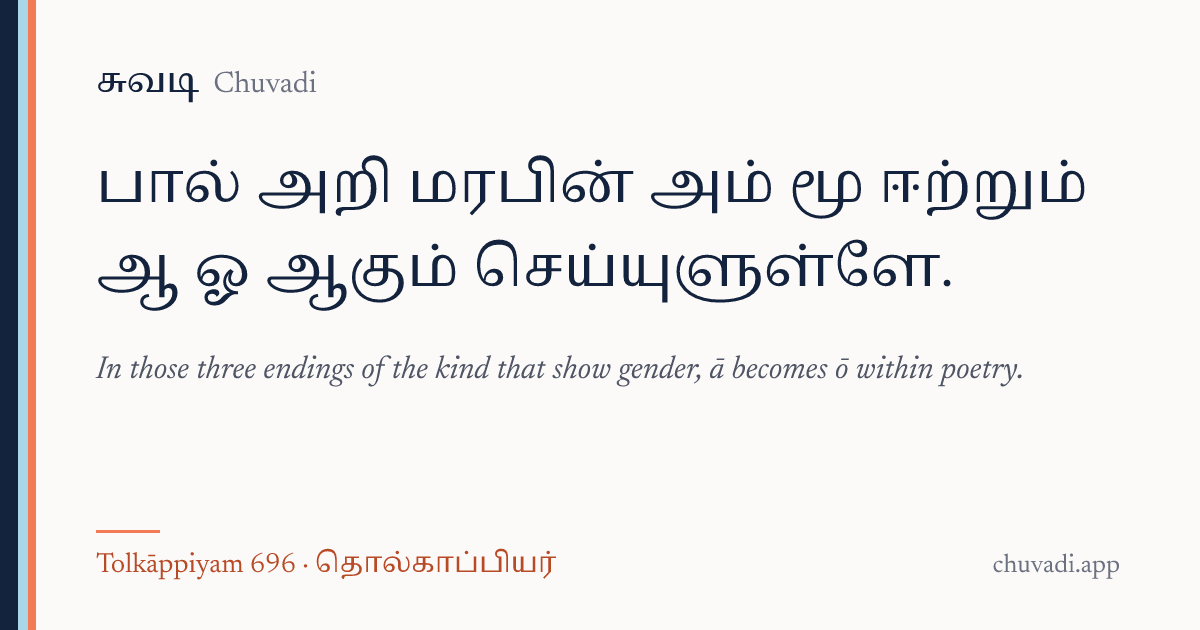
தொல்காப்பியம் 696 · சொல் 6.14
பாடல் · The poem
Tap a word to see where else it occurs.
பொருள் · Meaning in TamilAI
பால் காட்டும் ஆன், ஆள், ஆர் என்னும் மூன்று விகுதிகளிலும் உள்ள ஆகாரம் செய்யுளில் ஓகாரமாக மாறும். வந்தான் வந்தோன் எனவும், வந்தாள் வந்தோள் எனவும், வந்தார் வந்தோர் எனவும் வரும்.
இளம்பூரணர்
இளம்பூரணர் பால் அறிவிக்கும் ஆன், ஆள், ஆர் என்னும் மூன்று இறுதியிலும் உள்ள ஆகாரம் செய்யுளில் ஓகாரமாகத் திரியும் எனப் பொருள் கொள்வார்.
நச்சினார்க்கினியர்
நச்சினார்க்கினியரும் ஆ ஓ ஆகும் என்பதை ஆகாரம் ஓகாரமாகத் திரிதல் என்றே கொண்டு, இதனைச் செய்யுளுக்குரிய திரிபாகக் கொள்வார்.
‘ஆ ஓ ஆகும்’ என்பதை ஆகாரம் ஓகாரமாகத் திரியும் என்றே உரையாசிரியர்கள் பொருள் கொள்வர்; இவ்வடிவங்கள் சங்கச் செய்யுளில் மிகுதியாகக் காணப்படுகின்றன.
ஆங்கிலம் · English translationAI
Translation
- In those three endings of the kind that show gender,
- ā becomes ō within poetry.
What the poem says
In verse, the long ā of the gender-marking third person endings -āṉ, -āḷ, -ār becomes ō. So vantāṉ "he came" may appear as vantōṉ, vantāḷ as vantōḷ, vantār as vantōr.
This is how the commentators take "ā ō ākum": the ā turns into ō. The ō-forms are common in the anthologies, especially where the verb is used as a noun ("the one who came"). Some later grammar treats such forms simply as participial nouns; the Tolkāppiyam presents them as a poetic variant of the finite ending.