



தொல்காப்பியம் 705 · சொல் 6.23
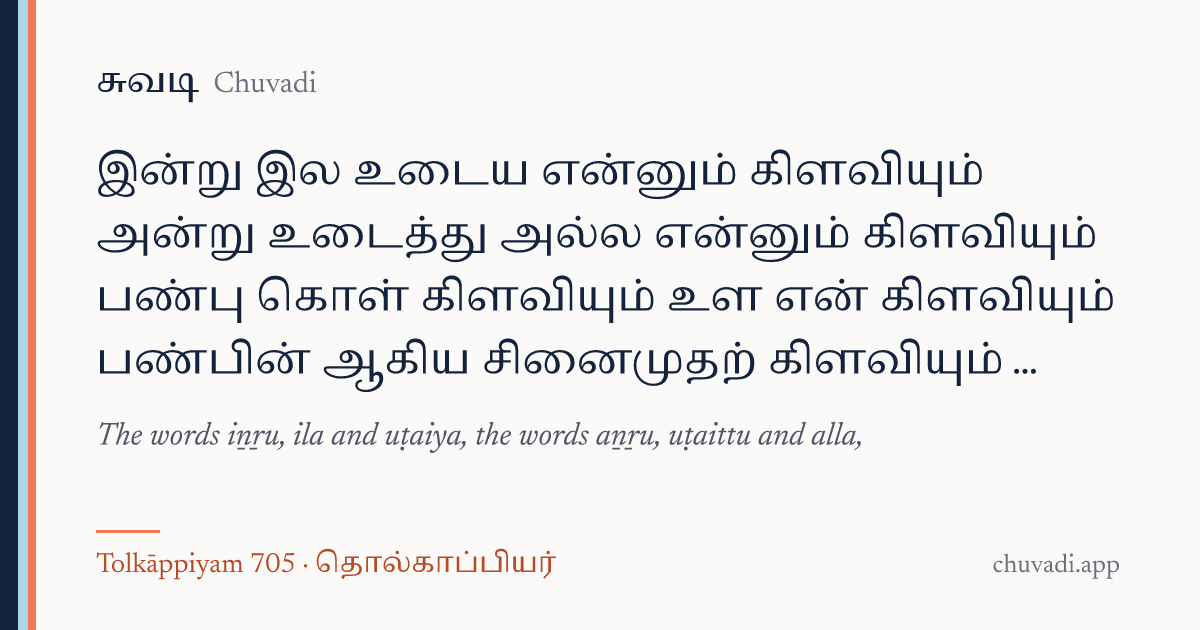
பாடல் · The poem
Tap a word to see where else it occurs.
பொருள் · Meaning in TamilAI
இன்று, இல, உடைய, அன்று, உடைத்து, அல்ல என்னும் சொற்களும், பண்பைக் கொண்டு வரும் சொற்களும், உள என்னும் சொல்லும், பண்பால் அமைந்த சினை முதல் பற்றிய சொற்களும், ஒப்புமையோடு வரும் சொற்களும் ஆகிய பத்தும் அஃறிணைக் குறிப்பு வினைகளாகும். கரிது, கரிய (பண்பு), கண் நெடிது (சினை), பொன் அன்னது (ஒப்பு) என்பன எடுத்துக்காட்டுகள்.
இளம்பூரணர்
இளம்பூரணர் இன்று, இல, உடைய, அன்று, உடைத்து, அல்ல, பண்புகொள் கிளவி, உள, பண்பின் ஆகிய சினைமுதற் கிளவி, ஒப்பொடு வரும் கிளவி ஆகிய பத்தையும் அஃறிணைக் குறிப்பு வினைகளாக எண்ணுவார்.
நச்சினார்க்கினியர்
நச்சினார்க்கினியர் உரையும் இந்நூற்பாவுக்கு மேற்கூறிய பொருளையே தருவதாகக் கொள்ளலாம்; இவர் தரும் எடுத்துக்காட்டுகள் இங்கு சரிபார்க்கப்படவில்லை.
சினையின் பண்பைக் கொண்டு முதலைப் பற்றிக் கூறுவதால் சினைமுதற் கிளவி தனியாக எண்ணப்பட்டது என்று உரையாசிரியர்கள் விளக்குவர்.
ஆங்கிலம் · English translationAI
Translation
- The words iṉṟu, ila and uṭaiya,
- the words aṉṟu, uṭaittu and alla,
- the words that take a quality, and the word uḷa,
- the words of part and whole that arise from quality,
- gathered together with the words that come with likeness:
- those ten of that class take the implicit form.
What the poem says
The non-high-class implicit verbs are listed: iṉṟu "it is not, it has not", ila "they are not", uṭaiya "they have", aṉṟu "it is not (such)", uṭaittu "it has", alla "they are not (such)", words built on a quality (kariyatu "it is dark", kariya "they are dark"), uḷa "they exist", words of part and whole (ciṉai-mutal) built on quality, such as kaṇ neṭitu "its eye is long", and words of likeness, such as poṉ aṉṉatu "it is like gold". That makes ten.
The commentators note that quality-based part-whole words are listed apart because they describe the whole through a quality of its part. Singular forms like uḷatu and iṉṟu pair with plural ones like uḷa and ila.