



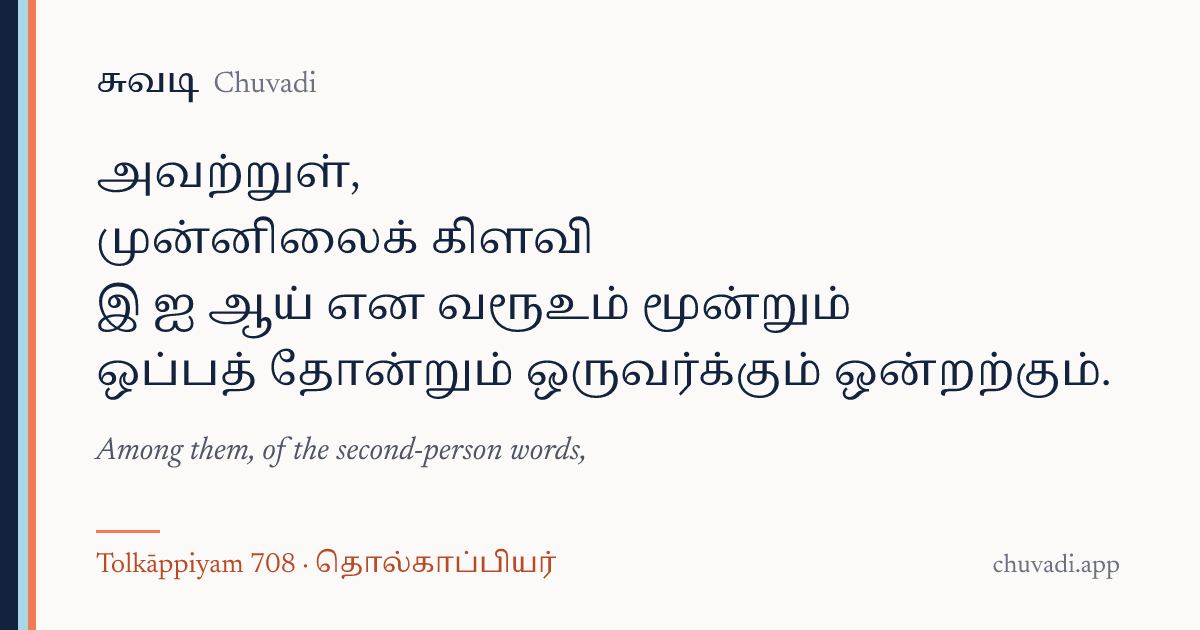
தொல்காப்பியம் 708 · சொல் 6.26
பாடல் · The poem
Tap a word to see where else it occurs.
பொருள் · Meaning in TamilAI
அவற்றுள், முன்னிலை வினைச்சொல்லில் இ, ஐ, ஆய் என்று வரும் மூன்று விகுதிகளும் ஒருவரை நோக்கியும் ஒன்றை நோக்கியும் ஒரே வகையாகத் தோன்றும். உண்டி, உண்டனை, உண்டாய் என்பன எடுத்துக்காட்டுகள்.
இளம்பூரணர்
இளம்பூரணர் இ, ஐ, ஆய் என்னும் மூன்றையும் முன்னிலை ஒருமை வினை விகுதிகளாகக் கொண்டு, அவை ஒருவரை நோக்கியும் ஒன்றை நோக்கியும் ஒப்ப வரும் என்பார்.
நச்சினார்க்கினியர்
நச்சினார்க்கினியரும் இம்மூன்றையும் இருதிணைக்கும் பொதுவான முன்னிலை ஒருமை விகுதிகளாகக் கொள்வார்; இவர் தரும் எடுத்துக்காட்டுகள் இங்கு சரிபார்க்கப்படவில்லை.
இவற்றுள் ஆய் விகுதியே பிற்கால வழக்கில் நிலைத்தது; இ, ஐ இரண்டும் பழஞ்செய்யுளில் காணப்படும்.
ஆங்கிலம் · English translationAI
Translation
- Among them,
- of the second-person words,
- the three that come as i, ai and āy
- appear alike for one person and for one thing.
What the poem says
The second person singular has three endings: -i, -ai and -āy. Examples: uṇṭi, uṇṭaṉai and uṇṭāy "you ate". They are the same whether one addresses a man, a woman, or a single animal or thing, which is why they belong to the common group.
In later Tamil -āy prevailed; -i and -ai appear in old poetry.