



தொல்காப்பியம் 710 · சொல் 6.28
பாடல் · The poem
Tap a word to see where else it occurs.
பொருள் · Meaning in TamilAI
எஞ்சிய பொதுச் சொற்கள், இடத்தோடு பொருந்தி, ஆண், பெண், பலர், ஒன்று, பல என்னும் ஐந்து பாலுக்கும் உரியனவாகத் தோன்றும். வாழ்க, உண்டு போன்றவை பாலுக்கு ஏற்ப மாறாமல் எல்லாப் பாலுக்கும் வரும்.
இளம்பூரணர்
இளம்பூரணர் எஞ்சிய கிளவி என்பதை முன்னைய பட்டியலில் முன்னிலை தவிர்ந்த ஏனைய பொதுச் சொற்களாகக் கொண்டு, அவை இடத்தோடு பொருந்தி ஐந்து பாலுக்கும் உரியவாய் வரும் எனப் பொருள் கொள்வார்.
நச்சினார்க்கினியர்
நச்சினார்க்கினியரும் இவற்றின் பால் வினை விகுதியால் அன்றி எழுவாயாலும் சூழலாலும் அறியப்படும் எனக் கொள்வார்.
இவற்றில் பால் வினையால் அன்றி எழுவாயாலும் சூழலாலும் அறியப்படும் என்று உரையாசிரியர்கள் விளக்குவர்.
ஆங்கிலம் · English translationAI
Translation
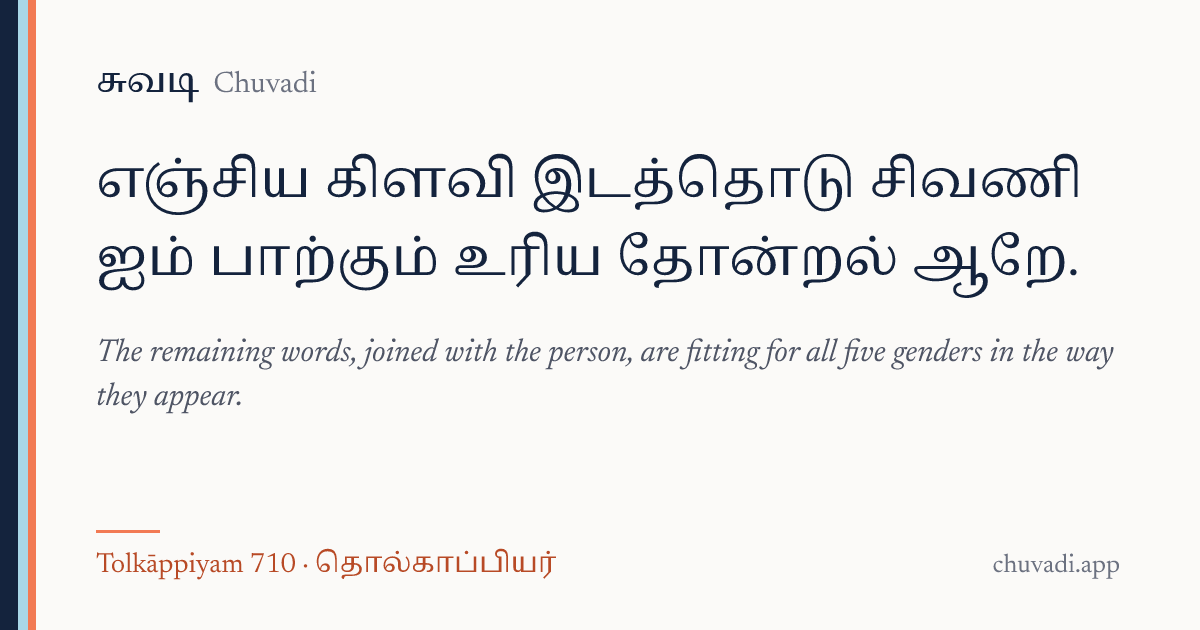
- The remaining words, joined with the person,
- are fitting for all five genders in the way they appear.
What the poem says
The other members of the common group of tol.707 (all except the second person forms, already dealt with) are used for all five pāl "genders": man, woman, many persons, one thing, many things, according to the person concerned. So vāḻka "may (he, she, they, it) live" and uṇṭu "having eaten" do not change for gender.
"Joined with the person" is taken to mean that the gender is shown by the subject or context, not by the verb.