



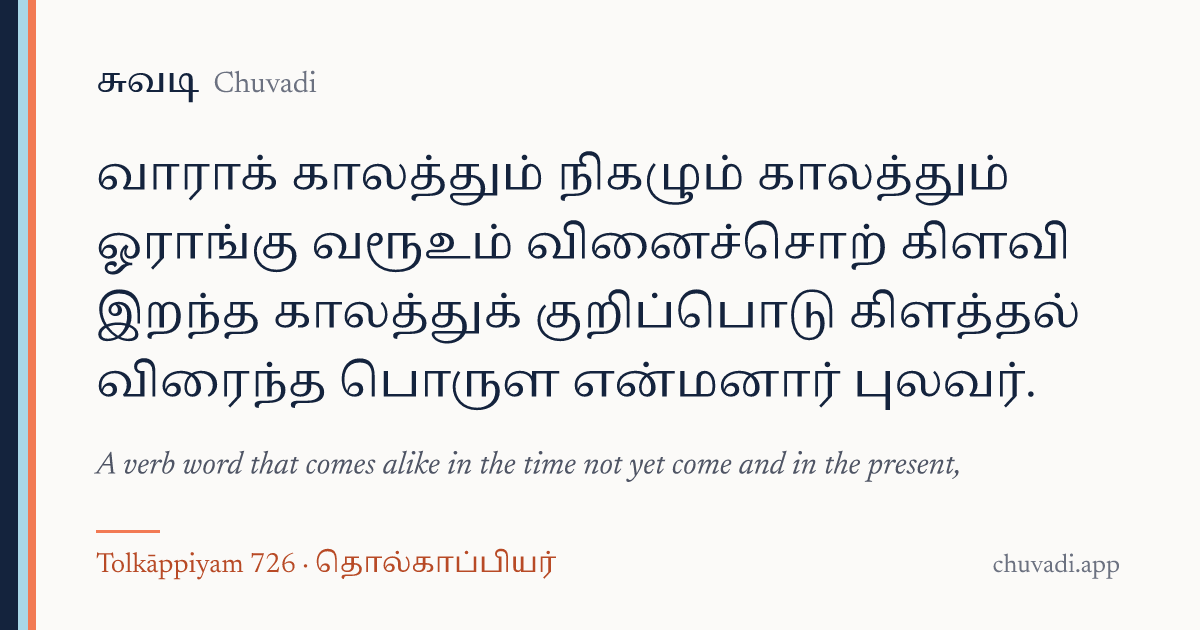
தொல்காப்பியம் 726 · சொல் 6.44
பாடல் · The poem
Tap a word to see where else it occurs.
பொருள் · Meaning in TamilAI
எதிர்காலத்திலும் நிகழ்காலத்திலும் ஒப்ப வரும் வினைச்சொல்லை இறந்த கால வடிவத்தால் கூறுவது விரைவுப் பொருளைக் காட்டும் என்று புலவர் கூறுவர். அழைத்தவனுக்கு இன்னும் புறப்படாத நிலையிலேயே வந்தேன் என்று விடை சொல்வது இதற்கு எடுத்துக்காட்டு.
இளம்பூரணர்
இளம்பூரணர் எதிர்காலத்திலோ நிகழ்காலத்திலோ நிகழும் செயலை இறந்த கால வடிவால் கூறுவது விரைவுப் பொருளைக் காட்டும் வழக்கு எனப் பொருள் கொள்வார்.
நச்சினார்க்கினியர்
நச்சினார்க்கினியரும் இதனை விரைவு பற்றிய கால வழுவமைதியாகவே கொள்வார்; இவர் தரும் எடுத்துக்காட்டுகள் இங்கு சரிபார்க்கப்படவில்லை.
இவ்வழக்கு இன்றும் பேச்சுத் தமிழில் நிலைத்திருக்கிறது.
ஆங்கிலம் · English translationAI
Translation
- A verb word that comes alike
- in the time not yet come and in the present,
- when stated in the form of the past tense,
- expresses haste, say the learned.
What the poem says
An action that is still to come, or is going on, may be expressed with a past tense to show urgency or immediacy. When someone is called and replies vantēṉ "I came!" before he has even moved, the past means "I am coming right now".
The commentators illustrate with this kind of reply. Modern Tamil still uses vantēṉ, vantuṭṭēṉ in exactly this way.