



தொல்காப்பியம் 730 · சொல் 6.48
பாடல் · The poem
Tap a word to see where else it occurs.
பொருள் · Meaning in TamilAI
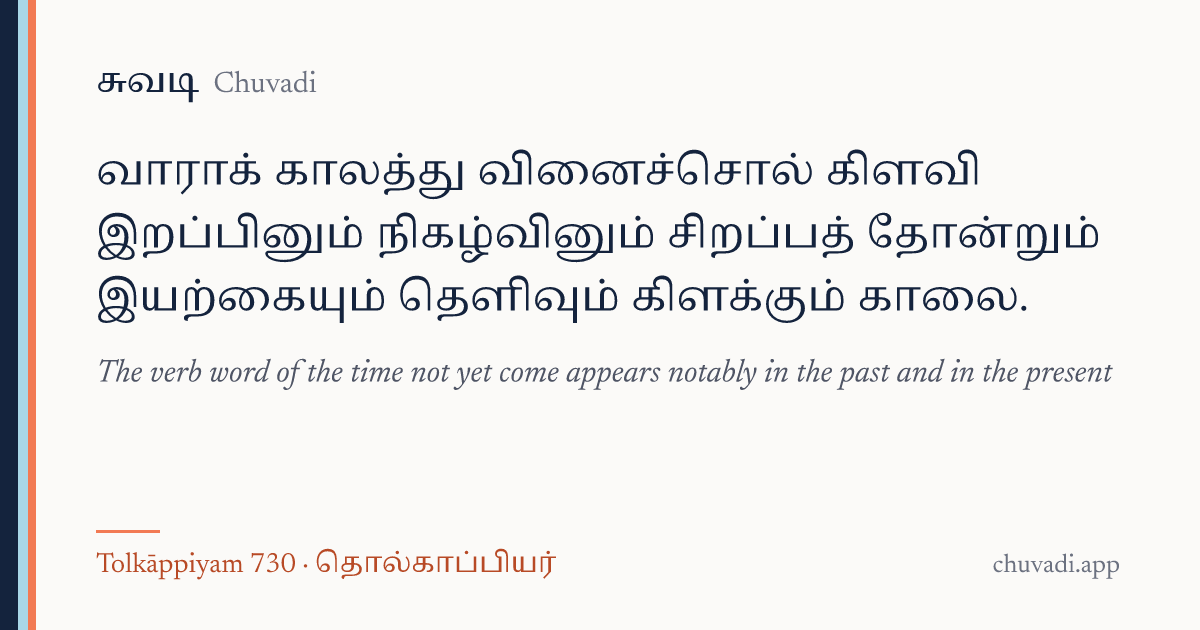
எதிர்காலத்துக்குரிய வினைச்சொல், இயல்பைக் கூறும்போதும் உறுதியைக் கூறும்போதும், இறந்த காலத்தாலும் நிகழ்காலத்தாலும் சிறப்பாகத் தோன்றும். இவ்வாறு செய்தால் அவன் கெட்டான் என்பதில் இனி நடக்கப் போவது உறுதியாதலால் இறந்த காலத்தால் கூறப்படுகிறது.
இளம்பூரணர்
இளம்பூரணர் எதிர்காலச் செயலை, அதன் இயல்பையோ உறுதியையோ கூறும்போது, இறந்த காலத்தாலும் நிகழ்காலத்தாலும் கூறுவது சிறப்புடையது எனப் பொருள் கொள்வார்.
நச்சினார்க்கினியர்
நச்சினார்க்கினியரும் இயற்கை, தெளிவு என்னும் இரண்டு நிலைகளையும் தனித்தனியே கொண்டு இதனை விளக்குவார்; இவர் தரும் எடுத்துக்காட்டுகள் இங்கு சரிபார்க்கப்படவில்லை.
இயற்கையும் தெளிவும் என்னும் இரண்டு நிலைகளுக்கும் உரையாசிரியர்கள் தனித்தனியே எடுத்துக்காட்டு தருவர்; இங்கே தந்தவை பொதுவான எடுத்துக்காட்டுகள்.
ஆங்கிலம் · English translationAI
Translation
- The verb word of the time not yet come
- appears notably in the past and in the present
- when one tells of nature and of certainty.
What the poem says
A future event may be expressed with a past or present tense in two kinds of statement: statements of natural course (iyaṟkai) and statements of certainty (teḷivu). A natural consequence may be put in the present: "if it rains, the crops grow". A certain consequence may be put in the past: "if he does this, he is finished", where "is finished" (keṭṭāṉ) is a past form for a future that is sure to come.
The commentators illustrate both cases. My examples are of the general type, not taken from them.