



தொல்காப்பியம் 733 · சொல் 6.51
பாடல் · The poem
Tap a word to see where else it occurs.
பொருள் · Meaning in TamilAI
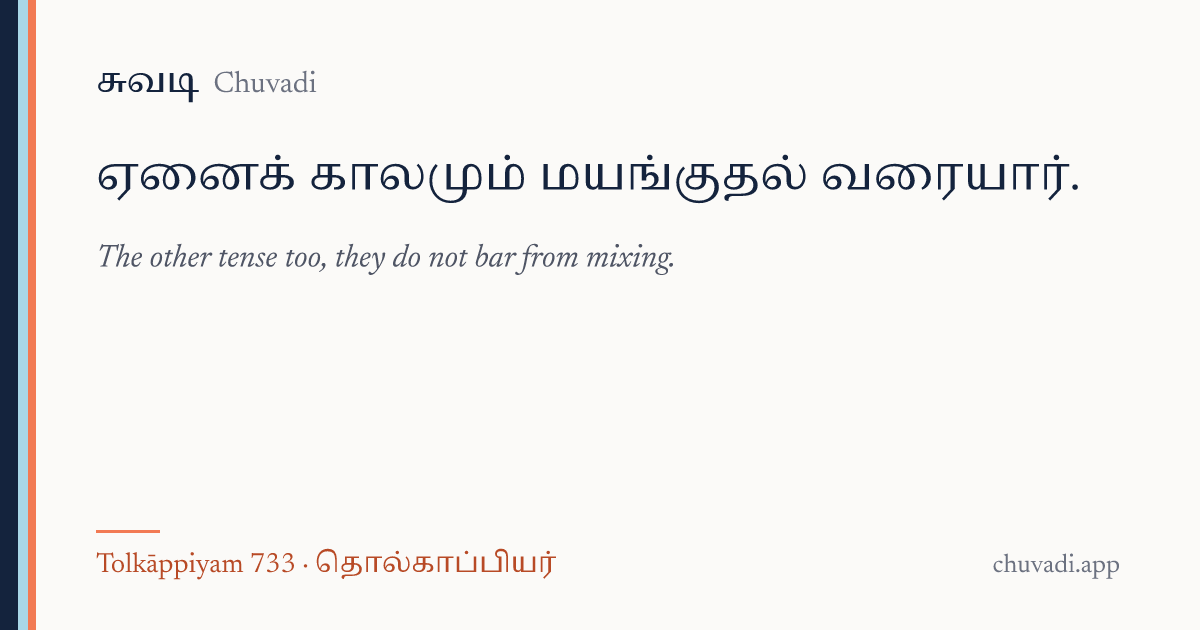
எஞ்சிய நிகழ்காலமும் பிற காலங்களோடு மயங்கி வருவதை விலக்க மாட்டார். நடந்த நிகழ்ச்சியை உயிர்ப்புடன் சொல்லும்போது நிகழ்காலத்தால் கூறுவது போன்றவை இதற்குள் அடங்கும்.
இளம்பூரணர்
இளம்பூரணர் ஏனைக் காலம் என்பதை நிகழ்காலமாகக் கொண்டு, அதுவும் பிற காலங்களோடு மயங்கி வருவதை விலக்கார் எனப் பொருள் கொள்வார்.
நச்சினார்க்கினியர்
நச்சினார்க்கினியரும் இதனை முன்னைய நூற்பாவின் தொடர்ச்சியாகக் கொண்டு நிகழ்காலத்துக்கும் மயக்கம் உண்டு என்பார்; இவர் தரும் எடுத்துக்காட்டுகள் இங்கு சரிபார்க்கப்படவில்லை.
இதனோடு வினையியல் முடிகிறது; வழக்கின் எல்லைக்குள் காலங்கள் ஒன்றற்கொன்று மாறி வரலாம் என்பதே இறுதிக் கருத்து.
ஆங்கிலம் · English translationAI
Translation
- The other tense too, they do not bar from mixing.
What the poem says
The remaining tense, the present, may also be mixed with the others. So the present may stand for the future or the past in suitable contexts, as in a vivid narrative of past events.
With this the chapter on verbs ends: the general principle is that tense forms are flexible in use, within the limits of usage.