



தொல்காப்பியம் 735 · சொல் 7.2
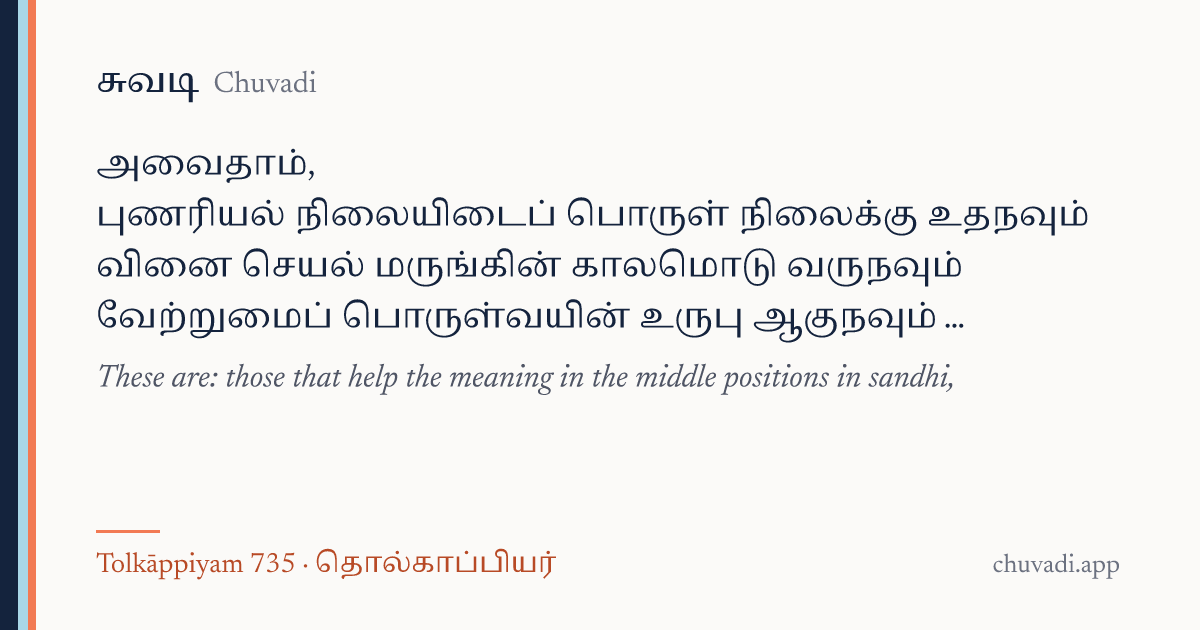
பாடல் · The poem
Tap a word to see where else it occurs.
பொருள் · Meaning in TamilAI
அவை: புணர்ச்சியில் இடையே நின்று பொருள் நிலைக்கு உதவும் சாரியைகள்; வினைச்சொல் அமைவதில் காலம் காட்டி வரும் இடைநிலைகள்; வேற்றுமைப் பொருளில் உருபாக வருவன; அசைநிலையாக வருவன; இசைநிறையாக வருவன; தம் குறிப்பால் பொருள் தருவன; ஒப்புமை வழியாகப் பொருள் தருவன என ஏழு வகைப்படும்.
இளம்பூரணர்
இளம்பூரணர் இடைச்சொற்களைச் சாரியை, கால இடைநிலை, வேற்றுமை உருபு, அசைநிலை, இசைநிறை, குறிப்பால் பொருள் தருவன, ஒப்பு வழியால் பொருள் தருவன என ஏழு வகையாகக் கொள்வார்; இறுதி வகையை உவம உருபுகளாகக் கொள்வார் எனக் கொள்ளலாம்.
நச்சினார்க்கினியர்
நச்சினார்க்கினியரும் இவ்வேழு வகைப் பாகுபாட்டையே கொள்வார்; ஒப்பு இல் வழியான் என்னும் தொடரை இவர் பிரிக்கும் முறை இங்கு சரிபார்க்கப்படவில்லை.
இறுதி வகை ‘போல’, ‘அன்ன’ போன்ற உவம உருபுகளைக் குறிக்கும் என்று உரையாசிரியர்கள் கொள்வர்; அவை பொருளதிகாரத்தின் உவமவியலில் விரிவாகக் கூறப்படுகின்றன. ஆயினும் ‘ஒப்பு இல் போலி’ என்னும் பின்வரும் நூற்பாவில் ‘ஒப்பு இல்’ என்பது ‘ஒப்புமை இல்லாத’ என்ற பொருளில் வருவதால், இவ்வரியின் பொருள் ஐயத்துக்கு இடமானதே.
ஆங்கிலம் · English translationAI
Translation
- These are:
- those that help the meaning in the middle positions in sandhi,
- those that come with tense in making a verb,
- those that become case markers where case meaning is intended,
- those that come as expletive words,
- those that come as words filling out the sound,
- those that make meaning by their own suggestion,
- and those that make meaning by way of comparison, so
- these are their kinds, when one speaks of them.
What the poem says
Seven kinds of particle are listed. First, the increments in sandhi (cāriyai, such as -iṉ- and -attu-, which stand between stem and ending, as in marattai from maram, -attu- and -ai). Second, tense markers in verbs, like -t- and -kiṉṟ-. Third, case markers (urupu), like -ai and -āl. Fourth, expletives (acainilai), which add no meaning. Fifth, sound-fillers (icainiṟai), used to complete metre. Sixth, particles that carry a meaning of their own by suggestion, such as maṉ and til, treated in the next nūṟpās. Seventh, those that make meaning by comparison: the particles of simile such as pōla and aṉṉa, which are dealt with in the chapter on comparison in Poruḷatikāram.
The line on comparison is the least clear. The commentators take oppu il vaḻi as "by way of comparison" and refer it to the simile words; but the same phrase oppu il appears in tol.763 meaning "without comparison", so the wording is genuinely ambiguous.