



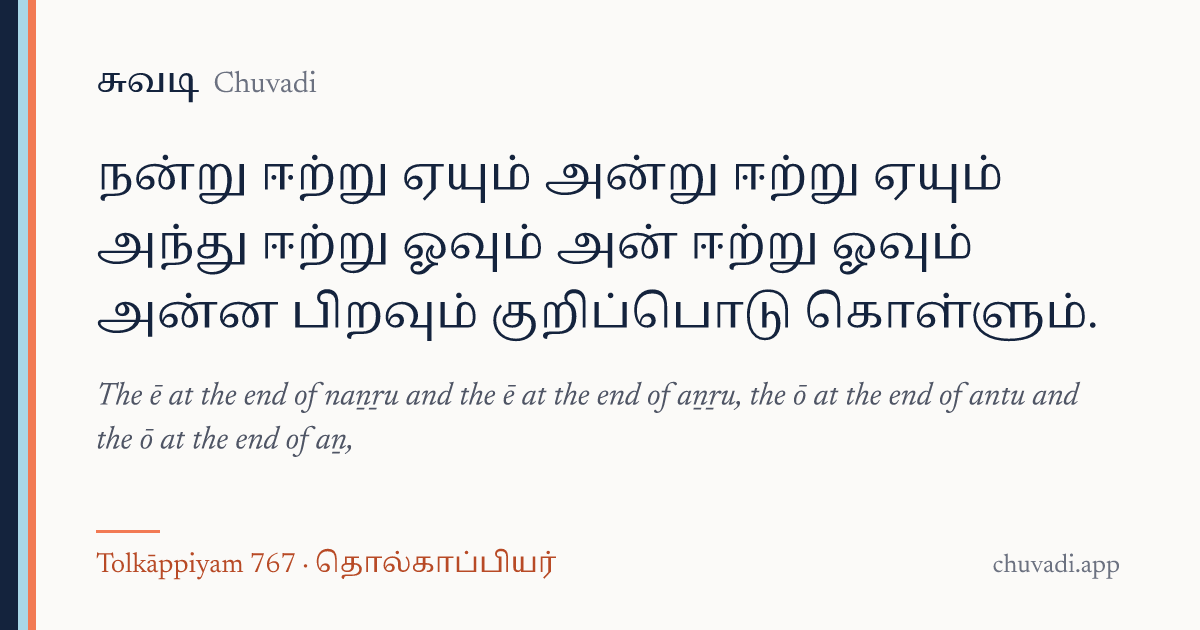
தொல்காப்பியம் 767 · சொல் 7.34
பாடல் · The poem
Tap a word to see where else it occurs.
பொருள் · Meaning in TamilAI
நன்று என்பதன் இறுதியில் வரும் ஏகாரமும் (நன்றே), அன்று என்பதன் இறுதியில் வரும் ஏகாரமும் (அன்றே), அந்து என்பதன் இறுதியில் வரும் ஓகாரமும் (அந்தோ), அன் என்பதன் இறுதியில் வரும் ஓகாரமும் (அன்னோ), இவை போன்ற பிறவும் குறிப்பால் பொருள் தரும். அந்தோ, அன்னோ இரக்கத்தைக் காட்டும்.
இளம்பூரணர்
இளம்பூரணர் நன்றே, அன்றே, அந்தோ, அன்னோ என வரும் ஏகார ஓகார இறுதிகளும் இவை போன்ற பிறவும் குறிப்பால் பொருள் உணர்த்துவன எனப் பொருள் கொள்வார்.
நச்சினார்க்கினியர்
நச்சினார்க்கினியர் உரையும் இந்நூற்பாவுக்கு மேற்கூறிய பொருளையே தருவதாகக் கொள்ளலாம்; இவை உணர்த்தும் குறிப்புப் பொருள்களுக்கு இவர் தரும் எடுத்துக்காட்டுகள் இங்கு சரிபார்க்கப்படவில்லை.
நன்றே என்பது இகழ்ச்சிக் குறிப்பில் ‘நன்றன்று’ என்னும் பொருளும் தரலாம் என்று விளக்குவது வழக்கம்.
ஆங்கிலம் · English translationAI
Translation
- The ē at the end of naṉṟu and the ē at the end of aṉṟu,
- the ō at the end of antu and the ō at the end of aṉ,
- and others like them take their sense by suggestion.
What the poem says
Some particle combinations have a meaning that is not the sum of their parts and must be read by suggestion: naṉṟē "it is good!" said ironically may mean it is bad; aṉṟē "is it not so?" means "it is so"; antō and aṉṉō are cries of grief, "alas".
"And others like them" leaves room for similar forms. All four are common in the poems.