



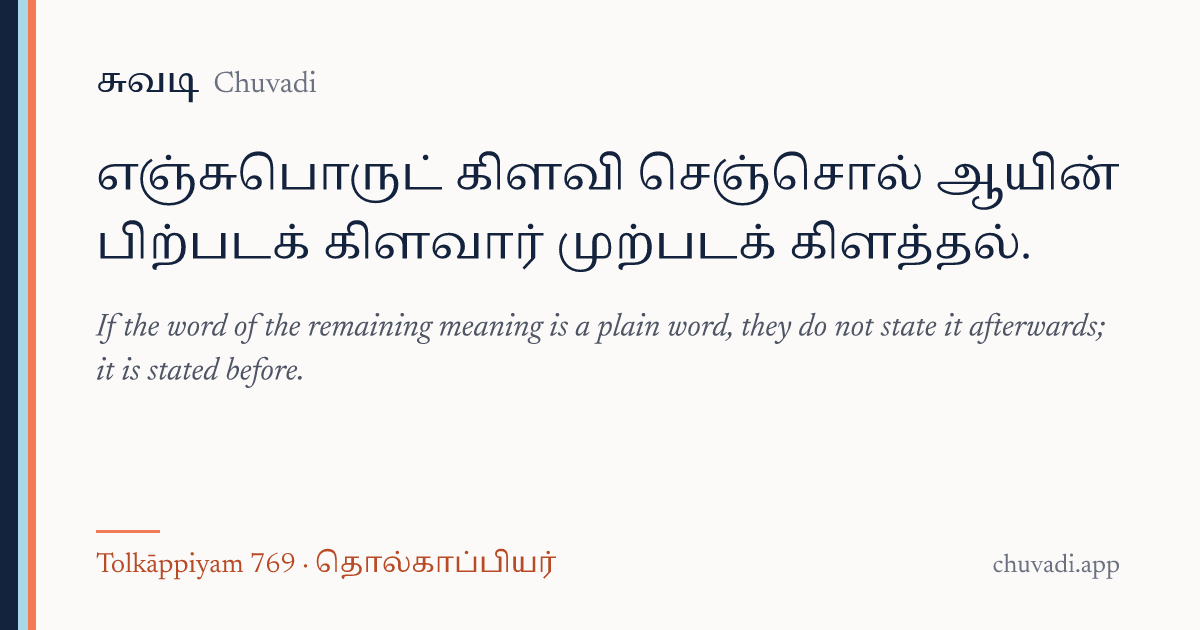
தொல்காப்பியம் 769 · சொல் 7.36
பாடல் · The poem
Tap a word to see where else it occurs.
பொருள் · Meaning in TamilAI
எச்ச உம்மையால் குறிக்கப்படும் எஞ்சிய பொருள் உம்மை இல்லாத செஞ்சொல்லால் வெளிப்படச் சொல்லப்பட்டால், அதனைப் பின்னால் சொல்லாமல் முன்னால் சொல்ல வேண்டும். சாத்தன் வந்தான், கொற்றனும் வந்தான் என வரும்.
இளம்பூரணர்
இளம்பூரணர் எச்ச உம்மையால் குறிக்கப்படும் எஞ்சிய பொருள் செஞ்சொல்லால் வெளிப்படக் கூறப்படுமாயின் அதனை உம்மை பெற்ற சொல்லுக்கு முன்னே கூற வேண்டும், பின்னே கூறலாகாது எனப் பொருள் கொள்வார்.
நச்சினார்க்கினியர்
நச்சினார்க்கினியரும் இதே முறைமையைக் கொள்வார்; இவர் தரும் எடுத்துக்காட்டுகள் இங்கு சரிபார்க்கப்படவில்லை.
உம்மை பெற்ற சொல்லை முன்னும், எஞ்சிய பொருளைச் செஞ்சொல்லாகப் பின்னும் கூறுதல் மரபன்று என்பது இதன் கருத்து.
ஆங்கிலம் · English translationAI
Translation
- If the word of the remaining meaning is a plain word,
- they do not state it afterwards; it is stated before.
What the poem says
When the residue implied by an um of residue is spelled out in a plain word (ceñcol, a word without um), that plain statement comes first, and the um-word follows. So cāttaṉ vantāṉ, koṟṟaṉum vantāṉ "Cāttaṉ came; Koṟṟaṉ came too": the plain clause first, then the one with um.
One does not put the um-word first and then add the residue in plain words afterwards.