



தொல்காப்பியம் 83 · எழுத்து 3.1
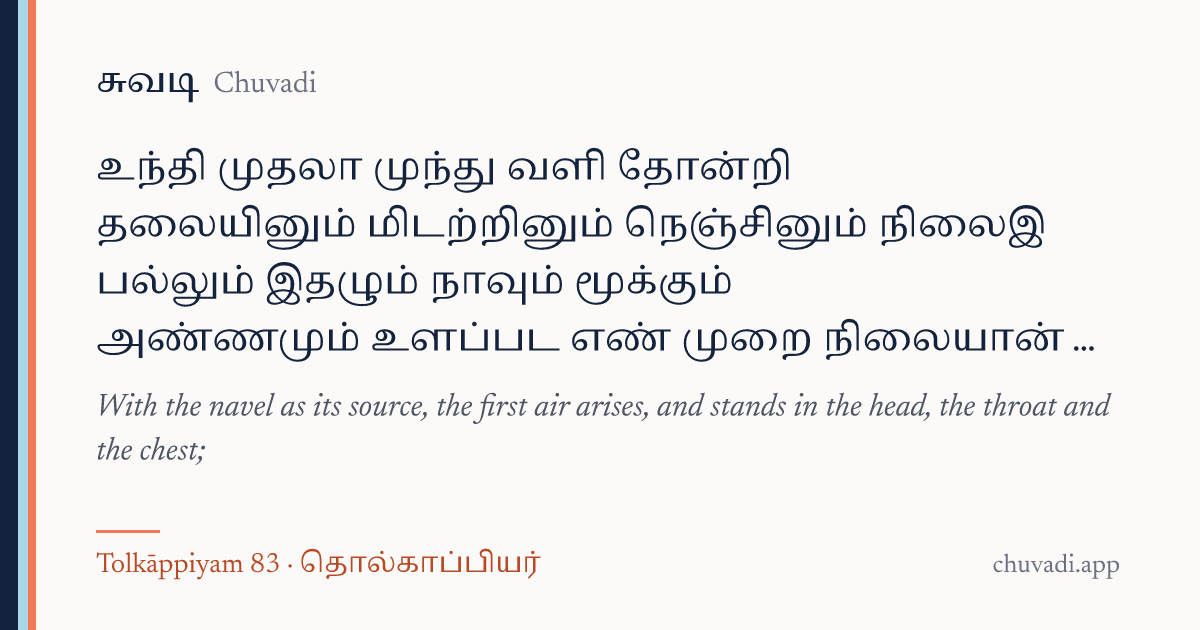
பாடல் · The poem
Tap a word to see where else it occurs.
பொருள் · Meaning in TamilAI
உந்தியிலிருந்து எழும் காற்று தலை, மிடறு, நெஞ்சு என்னும் மூன்று இடங்களில் நிலைபெறுகிறது. பல், இதழ், நா, மூக்கு, அண்ணம் என்னும் ஐந்து உறுப்புகளையும் சேர்த்து எட்டு வகையான முறையில், அக்காற்று உறுப்புகளைப் பொருந்தித் தொடுகிறது. இவ்வாறு எல்லா எழுத்துகளையும் சொல்லும்போது ஒவ்வொன்றின் பிறப்பும் வேறு வேறாக அமைகிறது; நெறிப்படி ஆராய்ந்து பார்ப்பவர்க்கு அவ்வேறுபாடு தெளிவாக விளங்கும்.
இளம்பூரணர்
இளம்பூரணர் உந்தியிலிருந்து எழும் காற்று தலை, மிடறு, நெஞ்சு என்னும் மூன்று இடங்களில் நின்று, பல், இதழ், நா, மூக்கு, அண்ணம் என்னும் உறுப்புகளோடு பொருந்தி எழுத்துகள் பிறக்கும் என நேர்பொருள் கொள்வார். காற்றை உதானன் எனப் பெயரிடுவது போன்ற நச்சினார்க்கினியரின் விரிவுகள் இவர் உரையில் உள்ளனவா என்பது இங்கு சரிபார்க்கப்படவில்லை.
நச்சினார்க்கினியர்
உந்தியிலிருந்து எழும் காற்றை உதானன் என்று குறிப்பிடுகிறார். சார்பெழுத்துகளும் தனிமெய்களும் மொழியின் இடையில் வைத்தே உணர்த்தப்படுவதால், இந்த இயல் மொழிமரபுக்குப் பின்னர் வைக்கப்பட்டது என்றும் அவர் விளக்குகிறார்.
ஆங்கிலம் · English translationAI
Translation
- With the navel as its source, the first air arises,
- and stands in the head, the throat and the chest;
- with the teeth, the lips, the tongue and the nose
- and the palate included, by an arrangement of eight,
- touching the organs so that they fit, examined in due course,
- when all the letters are spoken,
- the formation of their production differs one from another,
- as becomes clear to a discerning view.
What the poem says
The third iyal, Piṟappiyal "on the production of sounds", opens with a general account of articulation. Breath rises from the navel, rests in three places, the head, the throat and the chest, and is shaped by five organs, the teeth, lips, tongue, nose and palate: eight in all. As the breath meets these organs in different ways, each letter is formed differently, and anyone who examines carefully can tell the differences apart.
Nacciṉārkkiṉiyar names the rising breath udāna and explains that the dependent letters and the pure consonants are taught only after their place in words has been shown, which is why this iyal follows Moḻi marapu. He reads the last lines as: when the breath settles and meets the organs in this way the sounds come into use, and, examined along their paths with the mind, their differences become distinct.
உரை · Commentary
நச்சினார்க்கினியர்
என்பது சூத்திரம். இவ்வோத்து எழுத்துக்களினது பிறப்பு உணர்த்துதலிற் பிறப்பியலென்னும் பெயர்த்தாயிற்று. சார்பிற்றேற்றத்து எழுத்துந் தனிமெய்யும் மொழியினன்றி உணர்த்தலாகாமையின் அவை பிறக்கும் மொழியை மொழிமரபிடை உணர்த்திப் பிறப்பு உணர்த்த வேண்டுதலின் நூன்மரபின் பின்னர் வையாது இதனை மொழிமரபின் பின்னர் வைத்தார்.
இச்சூத்திரம் எழுத்துக்களினது பொதுப்பிறவி இத்துணை நிலைக்களத்து நின்று புலப்படு மென்கின்றது.
இ-ள்: எல்லா எழுத்தும் பிறப்பின் ஆக்கஞ் சொல்லுங்காலை — தமிழெழுத்து எல்லாவற்றிற்கும் ஆசிரியன் கூறிய பிறப்பினது தோற்றரவை யாங் கூறுமிடத்து, உந்தி முதலாத் தோன்றி முந்து வளி — கொப்பூழடியாகத் தோன்றி முந்துகின்ற உதானனென்னுங் காற்று, தலையினும் மிடற்றினும் நெஞ்சினும் நிலைஇ — தலையின்கண்ணும் மிடற்றின்கண்ணும் நெஞ்சின்கண்ணும் நிலைபெற்று, பல்லும் இதழும் நாவும் மூக்கும் அண்ணமும் உளப்பட எண்முறை நிலையான் உறுப்புற்று - பல்லும் இதழும் நாவும் மூக்கும் அண்ணமுமென்ற ஐந்துடனே அக்காற்று, நின்ற தலையும் மிடறும் நெஞ்சுங் கூட எட்டாகிய முறைமையையுடைய தன்மையோடு கூடிய உறுப்புக்களோடு ஒன்றற்று, அமைய — இங்ஙனம் அமைதலானே, வேறு வேறு இயல — அவ்வெழுத்துக்களது தோற்றரவு வேறு வேறு புலப்பட வழங்குதலையுடைய, காட்சியான நாடி நெறிப்பட — அதனை யறிவான் ஆராய்ந்து அவற்றின் வழியிலே மனப்பட, திறப்படத் தெரியும் — அப்பிறப்பு வேறுபாடுகளெல்லாங் கூறுபட விளங்கும்; எ-று.
சொல்லுங்காலை வளி நிலைபெற்று உறுப்புக்களுற்று இங்ஙனம் அமைதலானே அவை வழங்குதலையுடைய; அவற்றின் வழக்கம் அவற்றின் வழியிலே மனந் திறப்படத் தெரியுமெனக் கூட்டி உரைத்துக் கொள்க. இங்ஙனம் கூறவே முயற்சியும் முயலுங் கருத்தாவும் உண்மை பெற்றாம்.