



தொல்காப்பியம் 884 · சொல் 9.5
பாடல் · The poem
Tap a word to see where else it occurs.
பொருள் · Meaning in TamilAI
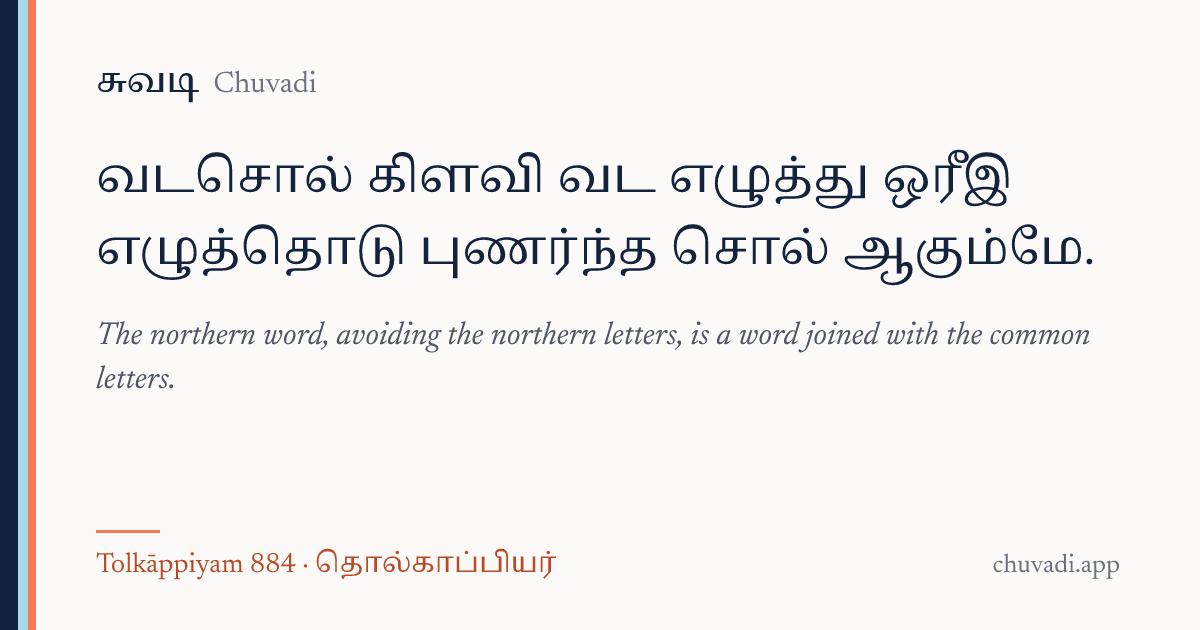
வடசொல் என்பது, வடமொழிக்கே உரிய எழுத்துகளை நீக்கி, இரு மொழிக்கும் பொதுவான எழுத்துகளோடு அமைந்து வரும் சொல் ஆகும். வாரி, குங்குமம் போன்ற சொற்கள் தனி எழுத்து எதுவும் வேண்டாமையால் மாறாமல் தமிழில் வழங்குகின்றன.
இளம்பூரணர்
இவர் வட எழுத்து ஒரீஇ என்பதை வடமொழிக்கே உரிய எழுத்துகளை நீக்கி எனக் கொண்டு, எழுத்தொடு புணர்ந்த என்பதை இரு மொழிக்கும் பொதுவான எழுத்துகளோடு கூடி என உரைப்பார். இவர் தரும் எடுத்துக்காட்டுகள் இங்கு சரிபார்க்கப்படவில்லை.
நச்சினார்க்கினியர்
இவரும் வடசொல் என்பது வடமொழிக்கே உரிய எழுத்துகள் நீங்கிப் பொது எழுத்துகளால் அமைந்து வரும் சொல் என்றே கொள்வார். இதில் இளம்பூரணரிடமிருந்து இவர் வேறுபடுவதாகத் தெரியவில்லை; இவர் காட்டும் மேற்கோள்கள் இங்கு சரிபார்க்கப்படவில்லை.
எழுத்தொடு புணர்ந்த என்பதற்கு இரு மொழிக்கும் பொதுவான எழுத்துகளோடு கூடிய என்றே உரையாசிரியர்கள் பொருள் கொள்கின்றனர். மாற்றம் பெற்று வருவனவற்றை அடுத்த நூற்பா கூறுகிறது.
ஆங்கிலம் · English translationAI
Translation
- The northern word, avoiding the northern letters,
- is a word joined with the common letters.
What the poem says
Vaṭacol, "northern words", are Sanskrit words taken into Tamil. The rule is that such a word drops the sounds peculiar to Sanskrit (vaṭa eḻuttu, "northern letters") and is written with letters that Tamil shares, so that it fits Tamil spelling. A word such as vāri "sea" or kuṅkumam "saffron", which needs no special sound, enters unchanged.
The commentators read "eḻuttoṭu puṇarnta" as "joined with the letters common to both languages", and that reading is followed here. Words that cannot be fitted without change are dealt with in the next nūṟpā.