



தொல்காப்பியம் 886 · சொல் 9.7
பாடல் · The poem
Tap a word to see where else it occurs.
பொருள் · Meaning in TamilAI
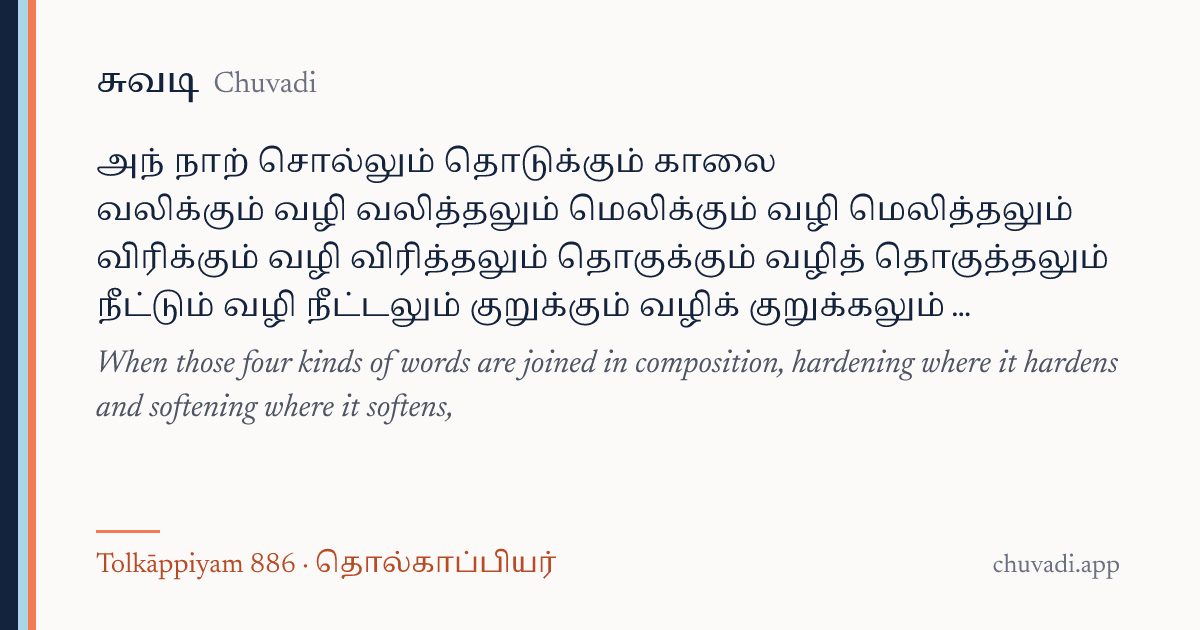
அந்த நான்கு வகைச் சொற்களையும் செய்யுளில் தொடுக்கும்போது, தேவையான இடத்தில் வல்லெழுத்தாக்குதல், மெல்லெழுத்தாக்குதல், எழுத்தை விரித்தல், தொகுத்தல், நீட்டுதல், குறுக்குதல் ஆகிய ஆறு மாற்றங்களும் முறையாக அமைக்கத் தக்கவை என்று புலவர்கள் கூறுவர். ஓசையும் யாப்பும் சரியாக அமைவதற்காக இவை செய்யப்படுகின்றன.
இளம்பூரணர்
இவர் வலித்தல், மெலித்தல், விரித்தல், தொகுத்தல், நீட்டல், குறுக்கல் என்னும் ஆறும் செய்யுளில் வேண்டும் இடத்தில் மட்டும் செய்யத்தக்க மாற்றங்கள் எனக் கொண்டு, ஒவ்வொன்றுக்கும் செய்யுள் எடுத்துக்காட்டுத் தருவார். இவர் தரும் எடுத்துக்காட்டுகள் இங்கு சரிபார்க்கப்படவில்லை.
நச்சினார்க்கினியர்
இவரும் இந்த ஆறு மாற்றங்களையும் செய்யுளுக்கே உரிய இசைவுகளாகக் கொள்வார். இதில் இளம்பூரணரிடமிருந்து இவர் வேறுபடுவதாகத் தெரியவில்லை; இவர் காட்டும் மேற்கோள்கள் இங்கு சரிபார்க்கப்படவில்லை.
இவை செய்யுளுக்கு மட்டும் உரிய விதிவிலக்குகள் என உரையாசிரியர்கள் கொள்கின்றனர்; பிற்கால இலக்கணம் இவற்றைச் செய்யுள் விகாரம் என்று வழங்குகிறது.
ஆங்கிலம் · English translationAI
Translation
- When those four kinds of words are joined in composition,
- hardening where it hardens and softening where it softens,
- expanding where it expands and contracting where it contracts,
- lengthening where it lengthens and shortening where it shortens,
- these are rightly established, say the learned.
What the poem says
When a poet joins words of the four kinds in verse, six alterations are allowed so that the words fit the metre and sound: valittal "hardening", changing a soft or nasal consonant to a hard one; melittal "softening", the reverse; virittal "expanding", adding a sound or syllable; tokuttal "contracting", dropping one; nīṭṭal "lengthening" a short vowel; and kuṟukkal "shortening" a long one.
The repeated "where it hardens … where it softens" stresses that each change is done only where the verse needs it, not at will. The commentators treat these as licences of poetry (ceyyuḷ), and later grammar keeps the same six under the name ceyyuḷ vikāram, "poetic alterations". "Nāṭṭal valiya" is taken as "they are validly established".