



தொல்காப்பியம் 910 · சொல் 9.31
பாடல் · The poem
Tap a word to see where else it occurs.
பொருள் · Meaning in TamilAI
இறந்த காலம், நிகழ் காலம், எதிர் காலம் என்னும் சிறப்புடைய மூன்று காலங்களிலும், தன்மை, முன்னிலை, படர்க்கை என்னும் மூன்று இடங்களிலும், வினையாகவும் குறிப்பாகவும் வருவது முற்றுச்சொல். உண்மையில் அது வினைமுற்று, குறிப்புமுற்று என இரண்டு வகை; அவை மூன்று இடங்களிலும் வருவதால் ஆறு வகை என்பர். வந்தேன் என்பது வினைமுற்று; கரியேன் என்பது குறிப்புமுற்று.
இளம்பூரணர்
இவர் முற்றுச்சொல் மூன்று காலத்தோடும் மூன்று இடத்தோடும் வினையாகவும் குறிப்பாகவும் வரும் எனக் கொள்வார். இறுதி அடியில் உள்ள ஆறு என்னும் எண்ணிக்கையை இவர் எவ்வாறு பகுக்கிறார் என்பது இங்கு சரிபார்க்கப்படவில்லை.
நச்சினார்க்கினியர்
இவரும் முற்றுச்சொல்லை வினைமுற்று, குறிப்புமுற்று என இரண்டாகக் கொள்வார் எனக் கொள்ளலாம்; ஆறு என்னும் பகுப்புக்கு இவர் தரும் விளக்கமும், அதில் இளம்பூரணரோடு வேறுபாடு உண்டா என்பதும் இங்கு சரிபார்க்கப்படவில்லை.
ஆறு என்பதை மூன்று இடங்களும் வினை, குறிப்பு என இரு வடிவிலும் வருவதாக உரையாசிரியர்கள் கணக்கிடுகின்றனர்; தொடர் செறிவாக இருப்பதால் இப்பிரிப்பு உரையாசிரியர் விளக்கத்தைச் சார்ந்தது.
ஆங்கிலம் · English translationAI
Translation
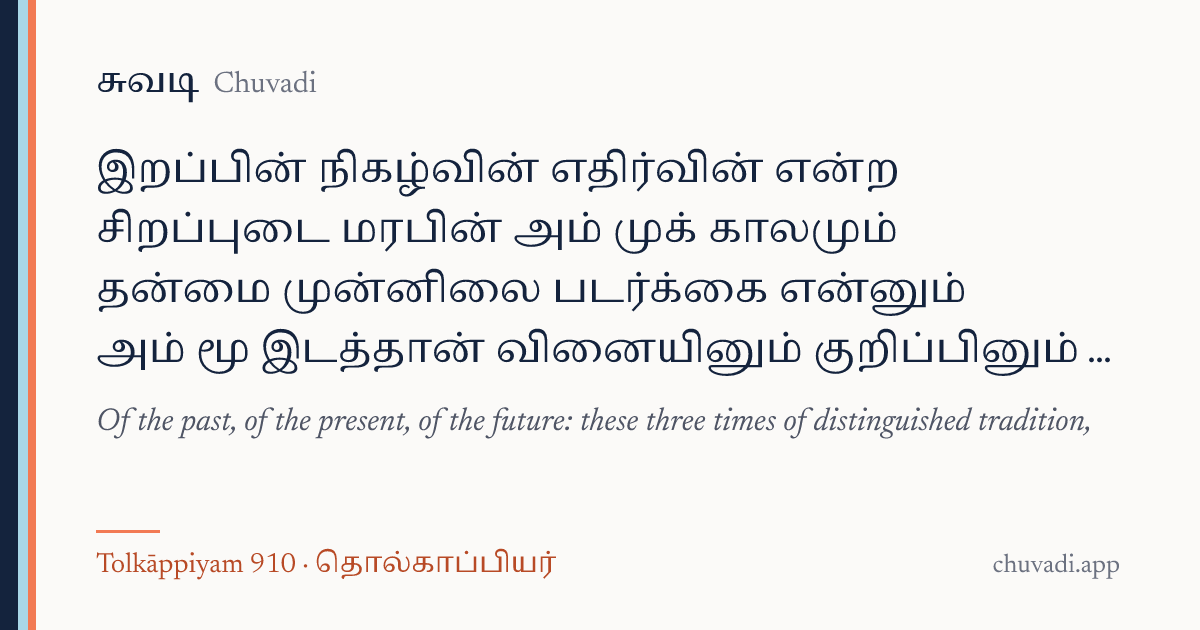
- Of the past, of the present, of the future: these
- three times of distinguished tradition,
- first person, second person, third person: these
- three places, in verbs and in appellatives,
- and in their true nature, these are two:
- those six, they say, are the words of finite nature.
What the poem says
The muṟṟu, "finite verb" or completed predicate, is defined here. It carries one of the three times, past, present and future, and one of the three iṭam "places" or persons, first, second and third. It comes in two forms: as a true verb (viṉai), such as vantēṉ "I came", and as an appellative (kuṟippu), a noun-based predicate such as kariyēṉ "I am dark", which implies time without a tense marker.
The commentators count the six of the last line as the three persons, each found in both the verbal and the appellative form. "Meymmaiyāṉum ivviraṇṭu ākum" is taken as "in their real nature they are of these two kinds". The wording is dense, and the exact grouping is a matter of the commentators' analysis.