



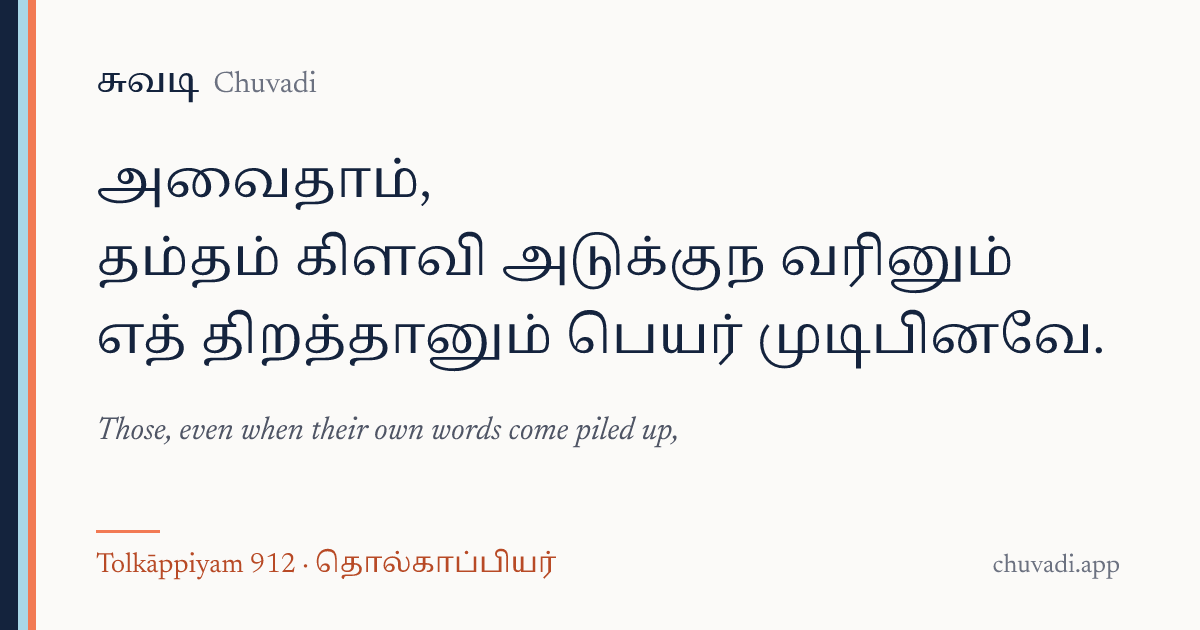
தொல்காப்பியம் 912 · சொல் 9.33
பாடல் · The poem
Tap a word to see where else it occurs.
பொருள் · Meaning in TamilAI
முற்றுச்சொற்கள் பல ஒன்றன்பின் ஒன்றாக அடுக்கி வந்தாலும், எந்த வகையிலும் பெயரையே முடிபாகக் கொள்ளும். உண்டான் தின்றான் ஓடினான் சாத்தன் என்பதில், மூன்று முற்றுகளும் சாத்தன் என்னும் ஒரே பெயரால் முடிகின்றன.
இளம்பூரணர்
இவர் முற்றுச்சொற்கள் பல அடுக்கி வந்தாலும் எவ்வகையானும் பெயரையே முடிபாகக் கொள்ளும் எனக் கொள்வார். இவர் தரும் எடுத்துக்காட்டுகள் இங்கு சரிபார்க்கப்படவில்லை.
நச்சினார்க்கினியர்
இவரும் அடுக்கி வரும் முற்றுகள் பெயரால் முடியும் என்றே கொள்வார். இதில் இளம்பூரணரிடமிருந்து இவர் வேறுபடுவதாகத் தெரியவில்லை; இவர் காட்டும் மேற்கோள்கள் இங்கு சரிபார்க்கப்படவில்லை.
பெயர் முன்னே வந்தாலும் பின்னே வந்தாலும் முற்று பெயரோடே முடியும் என்பதை எத்திறத்தானும் என்னும் சொல் வலியுறுத்துகிறது என உரையாசிரியர்கள் விளக்குவர்.
ஆங்கிலம் · English translationAI
Translation
- Those,
- even when their own words come piled up,
- in every way take a noun as their completion.
What the poem says
Finite verbs may be strung together in a series, several predicates one after another, as in uṇṭāṉ tiṉṟāṉ ōṭiṉāṉ cāttaṉ "he ate, he chewed, he ran, Cāttaṉ". Even then, however many are piled up, they are all completed by a noun, the subject that they describe.
The commentators read "peyar muṭipiṉa" as "they find their completion in a noun": a finite verb looks to a noun as the word it is predicated of. "Ettiṟattāṉum" stresses that this holds in every case, whether the noun comes before or after the verbs.