



தொல்காப்பியம் 920 · சொல் 9.41
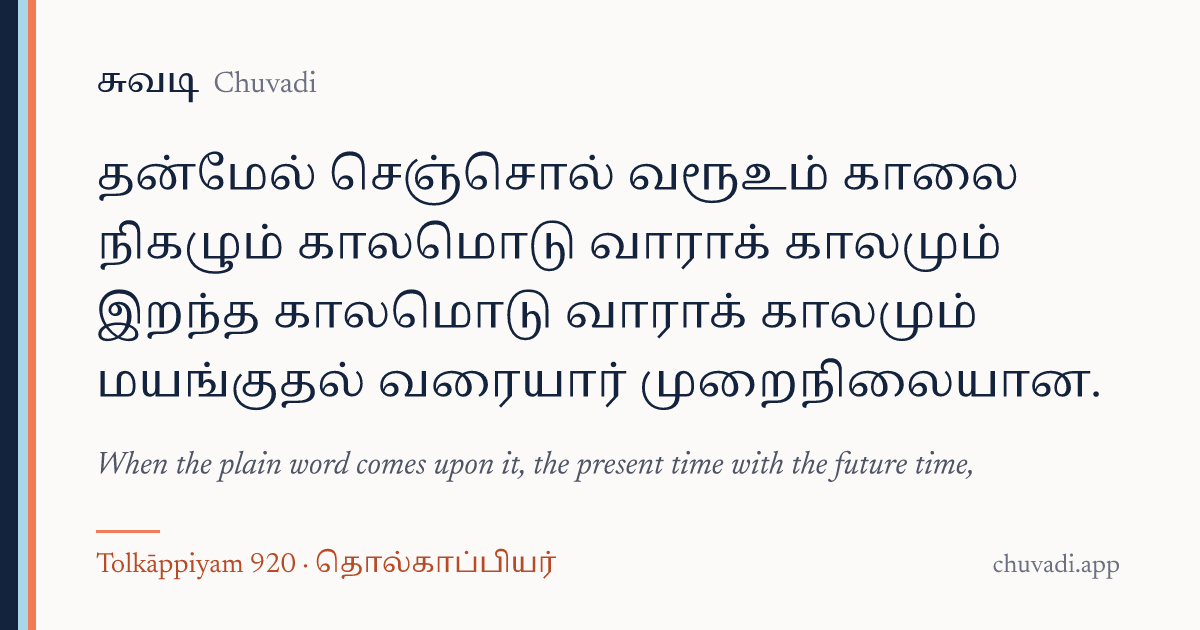
பாடல் · The poem
Tap a word to see where else it occurs.
பொருள் · Meaning in TamilAI
உம்மை எச்சத்தின் மேல் உம் இல்லாத செஞ்சொல் வந்து முடிக்கும்போது, நிகழ்காலத்தோடு எதிர்காலமும், இறந்தகாலத்தோடு எதிர்காலமும் முறைப்படி மயங்கி வருவதை விலக்கமாட்டார்கள். சாத்தன் வந்தான், கொற்றனும் வருவான் என்பது போல இரு பகுதிகளும் வெவ்வேறு காலத்தில் அமையலாம்.
இளம்பூரணர்
இவர் இதனை உம்மை எச்சத்தின் தொடர்ச்சியாகக் கொண்டு, அதன் மேல் செஞ்சொல் வந்து முடிக்கும்போது நிகழ்வோடும் இறப்போடும் எதிர்காலம் மயங்கி வருவதை விலக்கார் என உரைப்பார். செஞ்சொல் என்பதற்கு இவர் தரும் பொருள் இங்கு சரிபார்க்கப்படவில்லை.
நச்சினார்க்கினியர்
இவரும் இதனை உம்மை எச்சம் பற்றியதாகவே கொள்வார் எனக் கொள்ளலாம்; செஞ்சொல், முறைநிலையான என்பவற்றுக்கு இவர் தரும் விளக்கமும், இளம்பூரணரோடு இவர் வேறுபடுகிறாரா என்பதும் இங்கு சரிபார்க்கப்படவில்லை.
இதை உம்மை எச்சத்தின் தொடர்ச்சியாகவே உரையாசிரியர்கள் கொள்கின்றனர்; செஞ்சொல் என்பது இங்கே எதைக் குறிக்கிறது என்பதில் உறுதியில்லை.
ஆங்கிலம் · English translationAI
Translation
- When the plain word comes upon it,
- the present time with the future time,
- and the past time with the future time,
- their mixing they do not forbid, in due order.
What the poem says
This rule continues the and-remainder. When the plain word (cencol), the statement without um, comes after it, the two parts need not share the same tense: a present may combine with a future, and a past with a future. So one may say, in effect, "Cāttaṉ came; Koṟṟaṉ too will come", the implied partner's act lying in a different time.
"Muṟainilaiyāṉa" is taken as "in their proper order", the future following the present or past. The connection with the ummai rule is how the commentators read the nūṟpā, but the wording is terse and I am not certain of every detail, especially of what exactly "cencol" refers to here.