



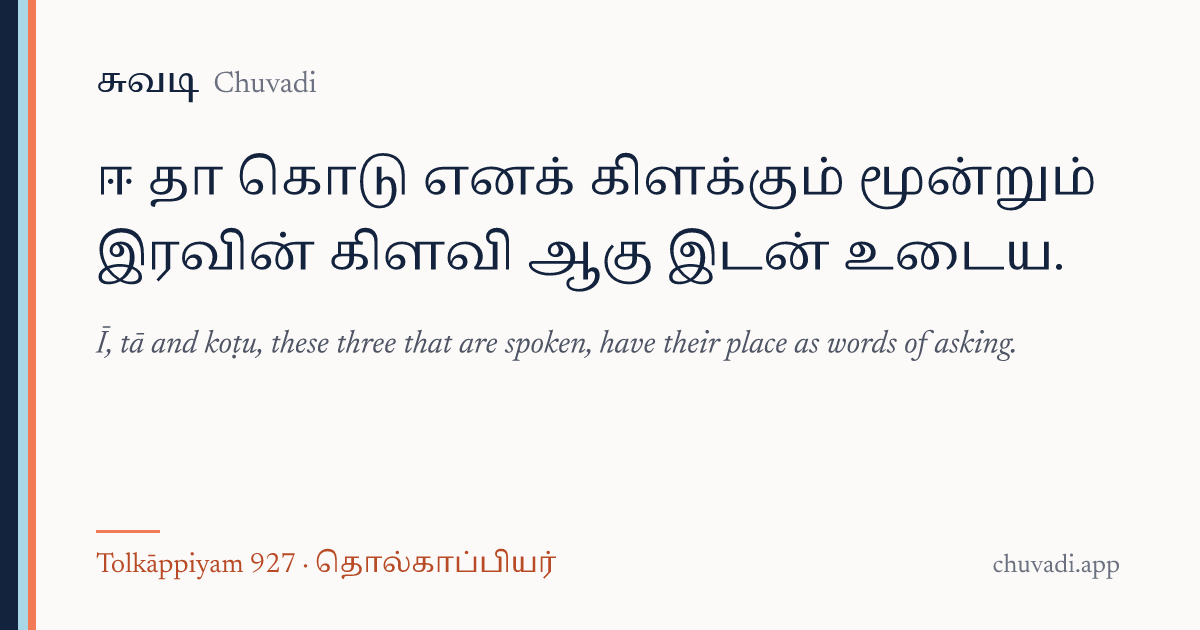
தொல்காப்பியம் 927 · சொல் 9.48
பாடல் · The poem
Tap a word to see where else it occurs.
பொருள் · Meaning in TamilAI
ஈ, தா, கொடு என்னும் மூன்று சொற்களும் இரத்தலைக் குறிக்கும் சொற்களாக வரும் இடம் உடையவை. மூன்றும் கொடு என்னும் பொருளே தந்தாலும், சொல்பவருக்கும் கேட்பவருக்கும் இடையிலுள்ள நிலைக்கு ஏற்ப வேறுபடும்.
இளம்பூரணர்
இவர் ஈ, தா, கொடு என்னும் மூன்றும் இரத்தல் பொருளில் வரும் சொற்கள் எனக் கொண்டு, அவற்றை யார் யாரிடம் கூறுவர் என்பதை அடுத்த நூற்பாக்களோடு இயைத்து உரைப்பார். இந்நூற்பாவுக்கு இவர் தரும் விரிவான விளக்கம் இங்கு சரிபார்க்கப்படவில்லை.
நச்சினார்க்கினியர்
இவரும் இம்மூன்றையும் இரவுக் கிளவிகளாகவே கொள்வார். இந்நூற்பாவுக்கு இவர் தரும் விரிவான விளக்கமும், இளம்பூரணரிடமிருந்து இவர் வேறுபடும் இடங்கள் உண்டா என்பதும் இங்கு சரிபார்க்கப்படவில்லை.
எந்தச் சொல்லை யார் சொல்வர் என்பதை அடுத்த மூன்று நூற்பாக்கள் கூறுகின்றன.
ஆங்கிலம் · English translationAI
Translation
- Ī, tā and koṭu, these three that are spoken,
- have their place as words of asking.
What the poem says
Three verbs meaning "give", ī, tā and koṭu, are used as words of request (iravu, "asking"). They do not mean the same thing socially: which one a speaker uses depends on the relative standing of speaker and listener, as the next three nūṟpās explain.
Modern Tamil still uses tā and koṭu, and the distinction between "give me" and "give him" in later usage is a development of this older social grading.