



தொல்காப்பியம் 946 · சொல் 9.67
பாடல் · The poem
Tap a word to see where else it occurs.
பொருள் · Meaning in TamilAI
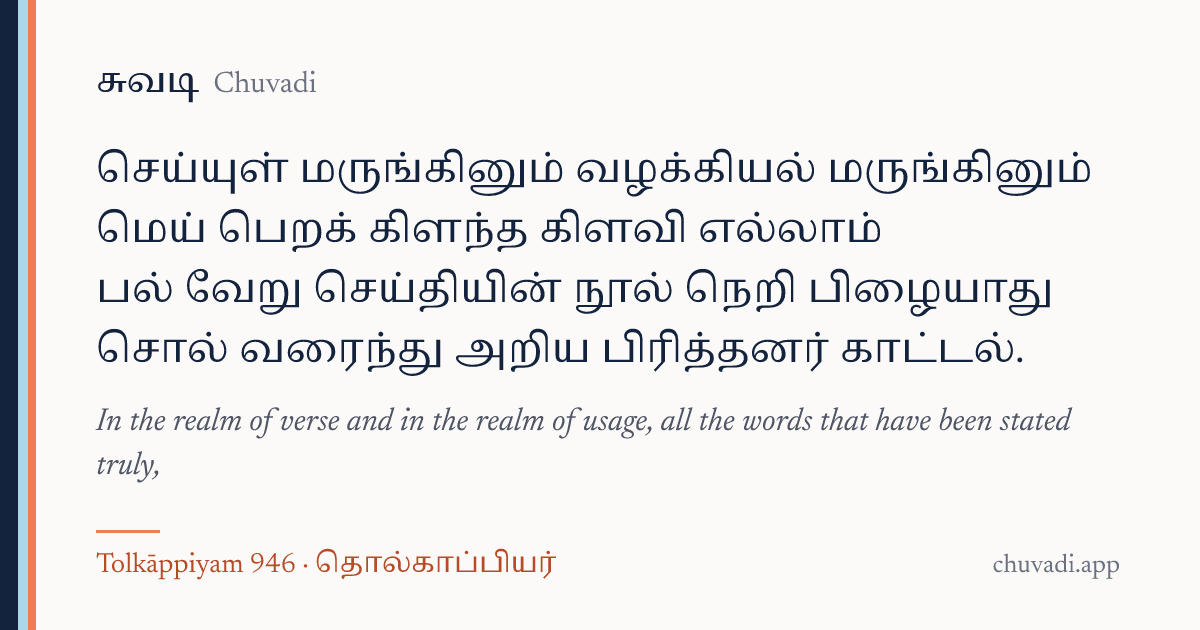
செய்யுளிலும் வழக்கிலும் முறையாக எடுத்துக் கூறப்பட்ட சொற்கள் எல்லாவற்றையும், பலவேறு முறைகளால், நூலின் நெறியிலிருந்து தவறாமல், சொற்களை வரையறுத்துப் பிரித்து, அவற்றின் வடிவும் பொருளும் விளங்கும்படி காட்ட வேண்டும்.
இளம்பூரணர்
இவர் இதனைச் சொல்லதிகாரத்தின் புறனடையாகக் கொண்டு, செய்யுளிலும் வழக்கிலும் வரும் சொற்களை நூல்நெறி பிழையாது வரையறுத்துப் பிரித்துக் காட்ட வேண்டும் என உரைப்பார். இந்நூற்பாவுக்கு இவர் தரும் விரிவான விளக்கம் இங்கு சரிபார்க்கப்படவில்லை.
நச்சினார்க்கினியர்
இவரும் இதனைச் சொல்லதிகாரத்தை முடிக்கும் புறனடை நூற்பாவாகவே கொள்வார். இந்நூற்பாவுக்கு இவர் தரும் விரிவான விளக்கமும், இளம்பூரணரிடமிருந்து இவர் வேறுபடும் இடங்கள் உண்டா என்பதும் இங்கு சரிபார்க்கப்படவில்லை.
சொல்லதிகாரத்தின் இறுதி நூற்பாவான இது, நேரடியாகக் கூறப்படாதவற்றையும் இதே முறையில் ஆராய்ந்து அறிய வேண்டும் என்னும் புறனடை விதி என உரையாசிரியர்கள் கொள்கின்றனர்.
ஆங்கிலம் · English translationAI
Translation
- In the realm of verse and in the realm of usage,
- all the words that have been stated truly,
- by many different methods, not straying from the path of the treatise,
- one should separate and show, marking off the words, so they may be known.
What the poem says
The closing nūṟpā of the Collatikāram gives a general instruction. All the words properly described in this treatise, as used in poetry and in ordinary speech, are to be analysed by the many methods the treatise offers, without departing from its principles, separating and delimiting each word so that its form and meaning can be understood.
It is a kind of puṟaṉaṭai, a closing rule that extends the treatise's method to cases not explicitly covered. The commentators take it as an instruction to teachers and readers: what has not been stated should be worked out by the same reasoning, keeping to the path the grammar has laid down.