



தொல்காப்பியம் 960 · பொருள் 1.14
பாடல் · The poem
Tap a word to see where else it occurs.
பொருள் · Meaning in TamilAI
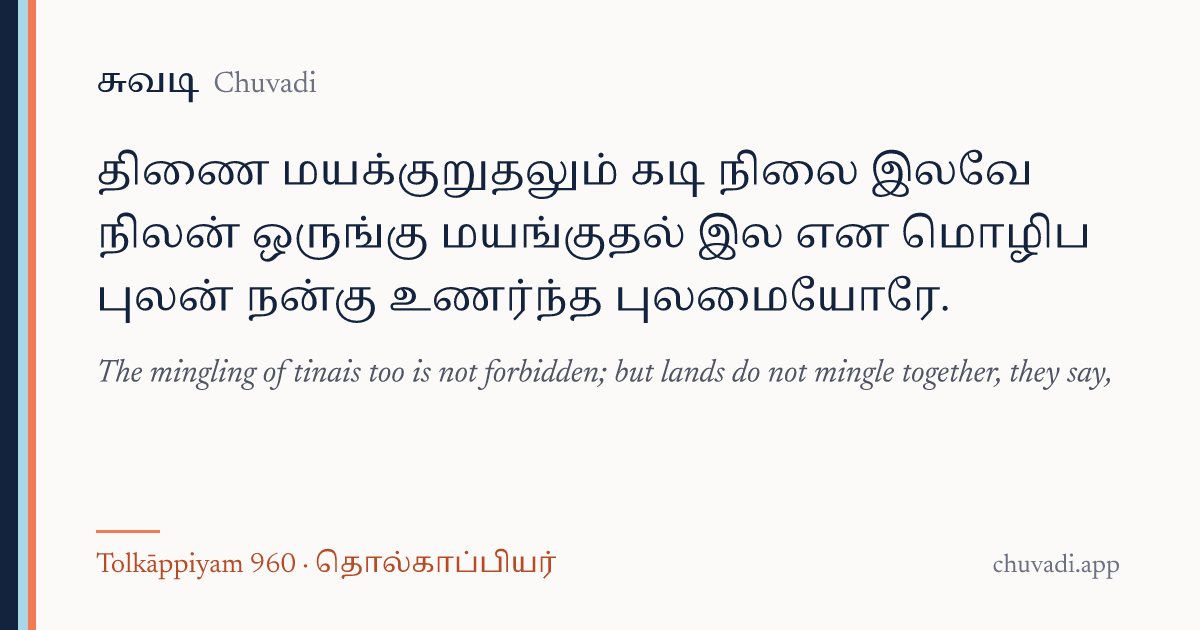
ஒரு பாடலில் திணைகள் மயங்கி வருவது விலக்கப்பட்டதன்று; ஆனால் நிலங்கள் இரண்டு ஒன்றாக மயங்கி வருவது இல்லை என்று பொருளை நன்கு உணர்ந்த புலவர்கள் கூறுவர்.
இளம்பூரணர்
இவர் ஒரு பாடலில் ஒரு திணைக்குரிய பொழுதும் கருவும் மற்றொரு திணையுடன் மயங்கி வருதல் விலக்கன்று என்றும், இரண்டு நிலங்கள் ஒருங்கு மயங்குதல் மட்டும் இல்லை என்றும் பொருள் கொள்வார்.
நச்சினார்க்கினியர்
இவரும் திணை மயக்கத்தை இவ்வாறே விளக்குவார்; ஒரு திணைக்குரிய பொழுது மற்றொரு நிலத்தில் வரும் பாடல்களை எடுத்துக்காட்டுவார் என அறியப்படுகிறது. இவர் காட்டும் பாடல்கள் இங்குச் சரிபார்க்கப்படவில்லை.
ஒரு திணைக்குரிய பொழுதோ ஒழுக்கமோ மற்றொரு திணையின் நிலத்தில் வரலாம்; ஒரு பாடலுக்கு நிலம் ஒன்றே என்பது இதன் கருத்து என்று உரையாசிரியர்கள் விளக்குவர்.
ஆங்கிலம் · English translationAI
Translation
- The mingling of tinais too is not forbidden;
- but lands do not mingle together, they say,
- the learned who know the subject well.
What the poem says
In a single poem, elements belonging to different tiṇais may be mixed (tiṇai mayakkam "mingling of tiṇais"): for example, the time of one tiṇai with the situation of another. That is not forbidden. What does not happen is the mixing of lands: a poem is not set in two landscapes at once.
The commentators illustrate with poems in which, say, the evening of mullai appears in a neytal setting. The rule protects the land as the stable frame while letting time and situation move. The next nūṟpā says which elements may mix.