



தொல்காப்பியம் 966 · பொருள் 1.20
பாடல் · The poem
Tap a word to see where else it occurs.
பொருள் · Meaning in TamilAI
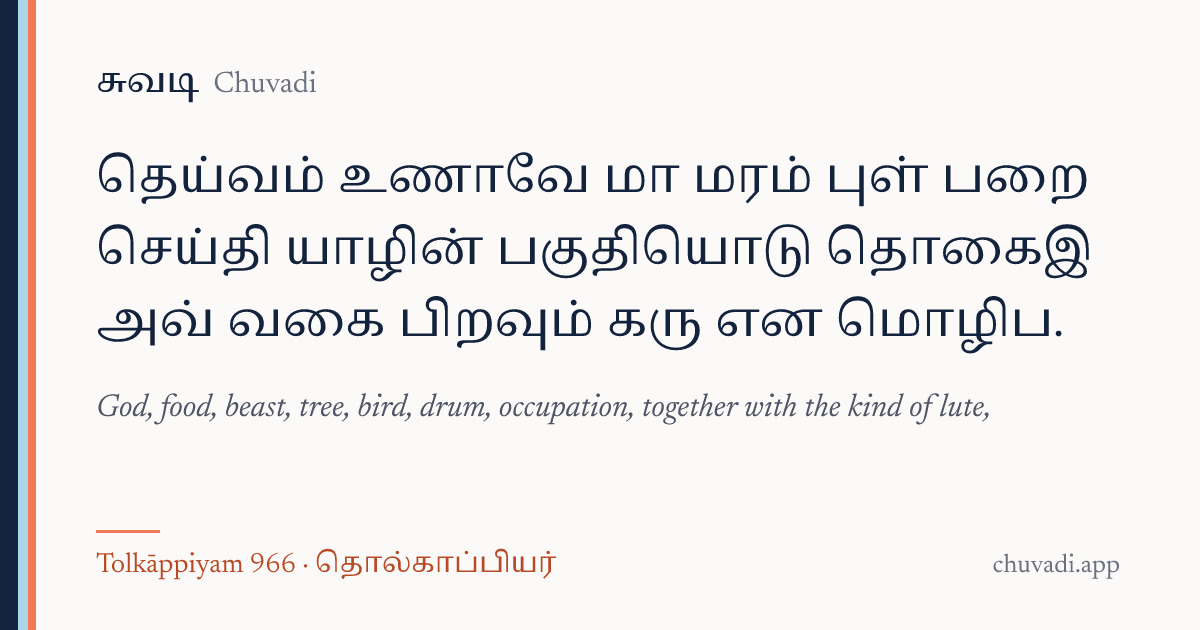
தெய்வம், உணவு, விலங்கு, மரம், பறவை, பறை, தொழில், யாழின் வகை, இவை போன்ற பிறவும் கருப்பொருள் என்று கூறுவர்.
இளம்பூரணர்
இவர் தெய்வம், உணவு, விலங்கு, மரம், பறவை, பறை, தொழில், யாழ் என்னும் கருப்பொருள்களை ஒவ்வொரு திணைக்கும் வகுத்துக் காட்டி, 'அவ்வகை பிறவும்' என்பதால் பூ, நீர் முதலியனவும் அடங்கும் எனப் பொருள் கொள்வார்.
நச்சினார்க்கினியர்
இவரும் கருப்பொருள்களைத் திணைதோறும் விரிவாகப் பட்டியலிட்டுக் காட்டுவார்; மக்கள், பூ, நீர், ஊர் முதலியனவற்றையும் 'பிறவும்' என்பதில் அடக்குவார்.
எடுத்துக்காட்டாகக் குறிஞ்சிக்கு முருகன் தெய்வம்; தினையும் தேனும் உணவு; யானை, புலி விலங்கு; வேங்கை மரம்; கிளி, மயில் பறவை; தேன் எடுத்தலும் தினை காத்தலும் தொழில் என்று உரையாசிரியர்கள் ஒவ்வொரு திணைக்கும் விரித்துக் காட்டுவர். 'அவ்வகை பிறவும்' என்பதால் பூ, நீர், மக்கள் பெயர் முதலியனவும் சேரும்.
ஆங்கிலம் · English translationAI
Translation
- God, food, beast, tree, bird, drum,
- occupation, together with the kind of lute,
- and others of that sort, they call native things.
What the poem says
Here is the list of karu, the "native things" that belong to each landscape and give an akam poem its local colour: the deity, the food, the animals, the trees, the birds, the paṟai "drum", the ceyti "occupation" of the people, and the kind of yāḻ "lute" played there, with other things of the same kind, such as flowers, water and the names of the people.
The commentators fill in the table: for kuṟiñci, Murukaṉ, millet and honey, the elephant and tiger, the vēṅkai tree, the parrot and peacock, the drum for the veṟi dance, honey-gathering and millet-guarding, and the kuṟiñci yāḻ; and so for each tiṇai. The closing "others of that sort" leaves the list open.