



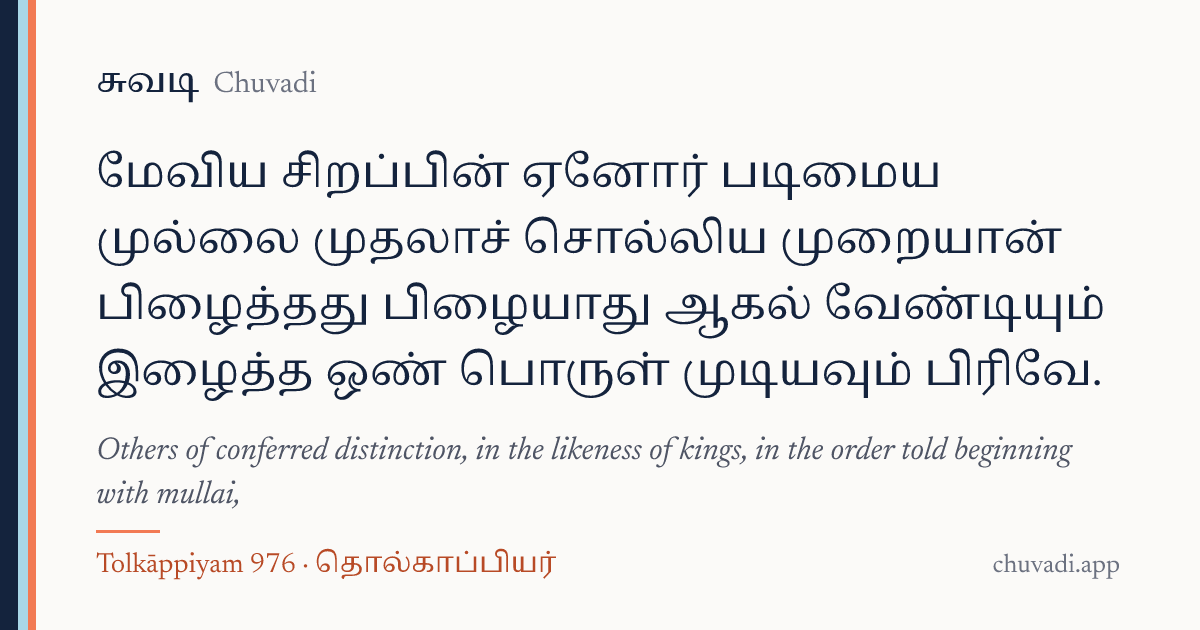
தொல்காப்பியம் 976 · பொருள் 1.30
பாடல் · The poem
Tap a word to see where else it occurs.
பொருள் · Meaning in TamilAI
அரசனால் அளிக்கப்பட்ட சிறப்பைப் பெற்று, அரசரைப் போன்ற நிலையில் இருக்கும் பிறரும், முல்லை முதலாகச் சொல்லப்பட்ட நில முறையில், தவறியதைத் தவறாமல் சரிசெய்யவும், மேற்கொண்ட சிறந்த செயலை முடிக்கவும் பிரிவர்.
இளம்பூரணர்
இவர் 'ஏனோர்' என்பதை அரசனால் சிறப்புப் பெற்று அவனைப் போன்ற நிலையிலுள்ள குறுநில மன்னர் போன்றோராகக் கொண்டு, தவறியதைத் திருத்தவும் மேற்கொண்ட செயலை முடிக்கவும் அவர் பிரிவர் எனப் பொருள் கொள்வதாகக் கொள்ளலாம்.
நச்சினார்க்கினியர்
இவர் 'மேவிய சிறப்பின் ஏனோர்' என்பதை அரசனால் சிறப்புப் பெயர் பெற்ற வணிகர், வேளாளர் போன்றோரோடு தொடர்புபடுத்தி விளக்குவதாகத் தெரிகிறது. இந்நூற்பாவின் பிற பகுதிகளுக்கு இவர் தரும் விளக்கம் இங்குச் சரிபார்க்கப்படவில்லை.
'ஏனோர்' என்பதைக் குறுநில மன்னர் போன்றோர் என்று உரையாசிரியர்கள் கொள்வர். 'முல்லை முதலாச் சொல்லிய முறையான்' என்பது அவர்கள் ஆளும் நிலங்களைக் குறிக்கிறதா, பிரிவு நிகழும் திணைகளைக் குறிக்கிறதா என்பது தெளிவாக இல்லை.
ஆங்கிலம் · English translationAI
Translation
- Others of conferred distinction, in the likeness of kings,
- in the order told beginning with mullai,
- so that what went wrong may be set right,
- and so that the bright task undertaken may be completed, separate.
What the poem says
This concerns ēṉōr "the others", men who hold a distinction conferred on them and stand in the likeness (paṭimai) of kings: the commentators understand the lesser chieftains and nobles who hold lands under a king. They too separate from their wives, in the lands named in order from mullai onward, either to set right a wrong (to restore what has failed) or to complete a worthy undertaking entrusted to them.
The nūṟpā is difficult. "In the order beginning with mullai" may refer to the lands they rule or to the tiṇais in which their separation is set; and the two purposes may be read as one. The rendering keeps close to the words.