



தொல்காப்பியம் 988 · பொருள் 1.42
பாடல் · The poem
Tap a word to see where else it occurs.
பொருள் · Meaning in TamilAI
தலைவருக்கு வந்த துன்ப நிலையை எடுத்துக் கூறும்போதும், அவர்கள் போகும்போதும், அவர்களை அனுப்பும்போதும், பிரிவால் தனக்கு வந்த துன்பத்தைக் கூறும்போதும், உண்மையையும் பொய்யையும் கண்டவரிடம் சுட்டிக் காட்டும்போதும், தாயின் நிலையைக் கண்டு நிலைமையைத் திருப்பிக் கொள்ளும்போதும், துயர் மிகுந்து நெஞ்சு கலங்கிய தலைவியிடம் 'வாடியதை நீக்கு' என்று தலைவன் சொன்னதைக் கூறி அவன் தந்த உறுதிமொழியை நினைவூட்டும்போதும் — இவை எல்லாம் முறையாக ஆராய்ந்தால் தோழிக்கு உரியனவாகப் பொருந்தித் தோன்றும்.
இளம்பூரணர்
இவர் இதனைப் பாலைத் திணையில் தோழிக்குரிய கூற்றுகளைத் தொகுக்கும் நூற்பாவாகக் கொண்டு, உடன்போக்கு நிகழும்போதும் தலைவன் பிரியும்போதும் அவள் பேசும் சூழல்களாக ஒவ்வொரு தொடரையும் பகுத்து விளக்குவார்.
நச்சினார்க்கினியர்
இவரும் இவற்றைத் தோழி கூற்றுகளாகவே பகுத்து விளக்குவார்; 'தலைப்பெயர்த்துக் கொளினும்' போன்ற தொடர்களுக்கு இவர் தரும் பொருள் இங்குச் சரிபார்க்கப்படவில்லை.
இவற்றை உடன்போக்கு, தலைவன் பிரிவு ஆகிய சூழல்களாக உரையாசிரியர்கள் பகுத்து விளக்குவர். 'தலைப்பெயர்த்துக் கொளினும்' என்பது தலைவியை மீட்டுக் கொணர்வதா, தாயின் மனத்தைத் திருப்புவதா என்பதில் கருத்து வேறுபாடு உண்டு.
ஆங்கிலம் · English translationAI
Translation
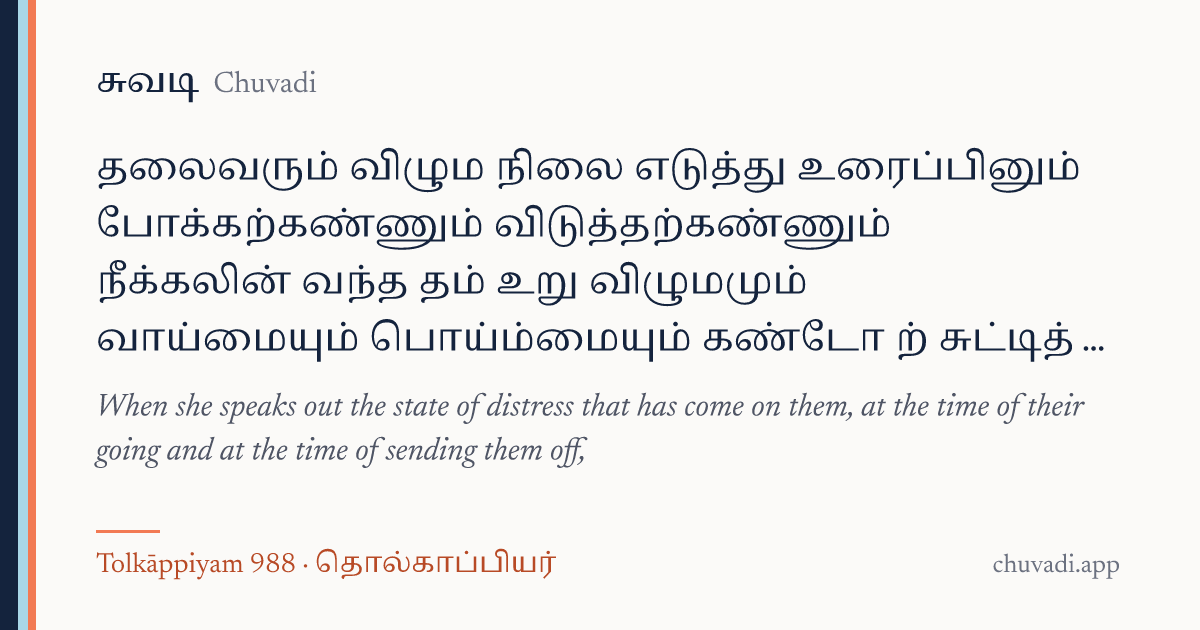
- When she speaks out the state of distress that has come on them,
- at the time of their going and at the time of sending them off,
- the grief that came to herself from the parting,
- pointing to the truth and the falsehood to the onlooker,
- when, seeing the mother's state, she takes her back again,
- to the girl whose heart grieves with pain grown great,
- telling what was said, 'drive away what has wasted you',
- together with the nature of what came close as firm reassurance,
- all these, when examined rightly,
- appear fitting for the friend.
What the poem says
The speeches of the tōḻi "the heroine's friend" in pālai. She may describe the distress that has come upon the lovers; speak at the moment of their going (pōkku) and when sending them off; voice her own grief at being parted from her friend; set out the truth and the falsehood of the matter to an onlooker; seeing the mother's anguish, bring the situation round again ("take it back"); and, to the heroine wasting with longing, repeat the hero's words urging her to put away her grief, along with the vaṉpuṟai "firm reassurance" he gave.
The order of the lines is loose and several phrases are open to different readings, for instance whether "takes back" means bringing the girl home or turning the mother's mind. The commentators group the items into situations of elopement and of the hero's separation.