



தொல்காப்பியம் 990 · பொருள் 1.44
பாடல் · The poem
Tap a word to see where else it occurs.
பொருள் · Meaning in TamilAI
தலைவியின் சுற்றத்தார் உடன்படாதபோதும், பருவத்தையும் பாலை வழியையும் பற்றிப் பேசும்போதும், தலைவியின் மொழிக்கு இசைந்த சொல்லோடு அழைத்துச் செல்லத் துணியும்போதும் அவளை விட்டுச் செல்லும்போதும், பாலை வழியில் அவளுடைய சுற்றத்தார் வந்து அவளை மீட்டுக் கொண்டு செல்லக் கலங்கித் துயருறும்போதும், கற்பு வாழ்க்கையில் அதனால் எழும் அலரும் — இவை ஒரு வகை. வாழ்நாள் சிலவாக இருத்தல், இளமை அரிது, முயற்சியின் பெருமை, தகுதியின் அமைதி, வறுமையின் இழிவு, செல்வத்தின் உயர்வு, அன்பின் பரப்பு, பிரிவின் கடினம் ஆகியவற்றை எண்ணிப் பொருள் தேட ஊக்கம் கொள்ளும்போதும், சொல்லாலும் குறிப்பாலும் பிறர் தூண்டும்போதும் — இது ஊதியம் கருதிய வகை. புகழையும் மானத்தையும் எடுத்துக் கூறி வற்புறுத்துதலும், தூது இடையே வரும் வகையும், அதற்குத் துணையாகும் பாங்கரின் பக்கமும்; மூன்றன் பகுதியும் நாட்டின் அருமையும் பகைவரின் வலிமையும், பாசறையில் புலம்புதலும், போர் முடிந்தபின் பாகனிடம் விருப்பத்துடன் பேசுவதும்; காவற் பிரிவின் ஒரு பக்கமும்; பரத்தையிடம் பிரிந்ததால் வருந்திய தலைவியை அணுகி இரந்தும் தெளிவித்தும் பேசுவதும் — இவ்வாறான பேச்சு வகைகள் தலைவனுக்கு உரியவை.
இளம்பூரணர்
இவர் இதனைப் பாலைத் திணையில் தலைவனுக்குரிய கூற்றுகளைத் தொகுக்கும் நீண்ட நூற்பாவாகக் கொண்டு, உடன்போக்கு, பொருள்வயிற் பிரிவு, தூது, போர், காவல், பரத்தையிற் பிரிவு ஆகிய சூழல்களாகப் பகுத்து விளக்குவார்.
நச்சினார்க்கினியர்
இவரும் இதனைத் தலைவன் கூற்றுகளின் தொகுப்பாகக் கொண்டு அவ்வாறே பகுப்பார்; 'மூன்றன் பகுதி' போன்ற தொடர்களுக்கு இவர் தரும் பொருள் இங்குச் சரிபார்க்கப்படவில்லை.
இப்பகுப்புகள் உரையாசிரியர்களின் வழக்கமான விளக்கத்தைப் பின்பற்றுகின்றன. 'மூன்றன் பகுதி' என்பதை அறம், பொருள், இன்பம் என்றோ அரசனின் மூவகை ஆற்றல் என்றோ வேறுவேறாக விளக்குவர்; இது போன்ற சில தொடர்களின் பொருள் உறுதியானது அன்று.
ஆங்கிலம் · English translationAI
Translation
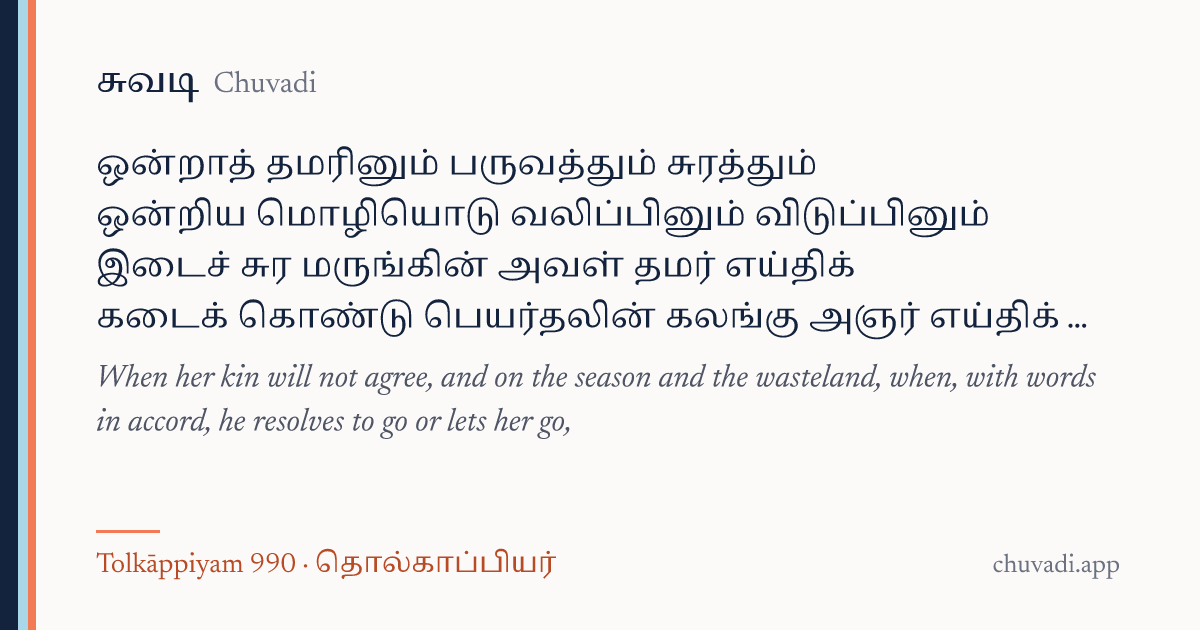
- When her kin will not agree, and on the season and the wasteland,
- when, with words in accord, he resolves to go or lets her go,
- when in the midst of the wasteland her kin come up
- and take her back at the last, so that he falls into troubled grief,
- including the gossip joined with wedded faithfulness,
- in that one kind falling in that division;
- the fewness of days, the preciousness of youth,
- the side of manly effort, the fitness of what is proper,
- the shame of having nothing, the eminence of having,
- the breadth of love, the hardness of parting,
- in the part where he is spurred toward wealth not yet his,
- with the side set out by word of mouth and by hand,
- in the one kind that has gain in view;
- pressing the point by holding up fame and honour,
- in the kind where an embassy intervenes,
- and on the side of companions who appear in this way;
- the division of the three, the hardness of the realm,
- the eminence of foes who have come forward,
- the lonely grief in the war camp, and when it is over,
- in the kinds of task he longs for with the charioteer;
- a side of that kind in the matter of guarding;
- drawing near to her who grieves at his parting for the courtesan,
- with two kinds, pleading and reassuring,
- the varieties of speech are seen to belong to the hero.
What the poem says
The long list of the kiḻavōṉ's "hero's" speeches in pālai and in separation. They fall into groups. In elopement: when her kin will not consent; when he speaks of the season and the wasteland; when, with words agreeing with hers, he decides to take her or to let her go; when her kin overtake them on the road and take her back, and he is left in grief; and the talk (kauvai) that arises in married life about it. In separation for wealth: he weighs the shortness of life, the preciousness of youth, the call of manly effort (tāḷāṇmai), what is fitting, the disgrace of poverty and the standing that wealth brings, the breadth of love against the hardness of parting; he may be urged to it by others, by word or sign, with gain in view. In separation for honour and on embassy: fame and self-respect are pressed upon him, with companions speaking on his side. In war: the matter of "the three" (which the commentators explain variously, for instance as the three aims of life or the three powers of a king), the difficulty of the realm, the strength of enemies, his loneliness in the pāsaṟai "war camp", and when the war is done, his eager words to the charioteer. Also a separation for guarding the land. Finally, in marutam, when he returns from the courtesan and approaches the grieving wife, his speech is of two kinds: pleading (irattal) and reassuring (teḷittal).
The groupings follow the usual explanations; several phrases, such as "the division of the three", are interpreted differently by the commentators and are uncertain.