



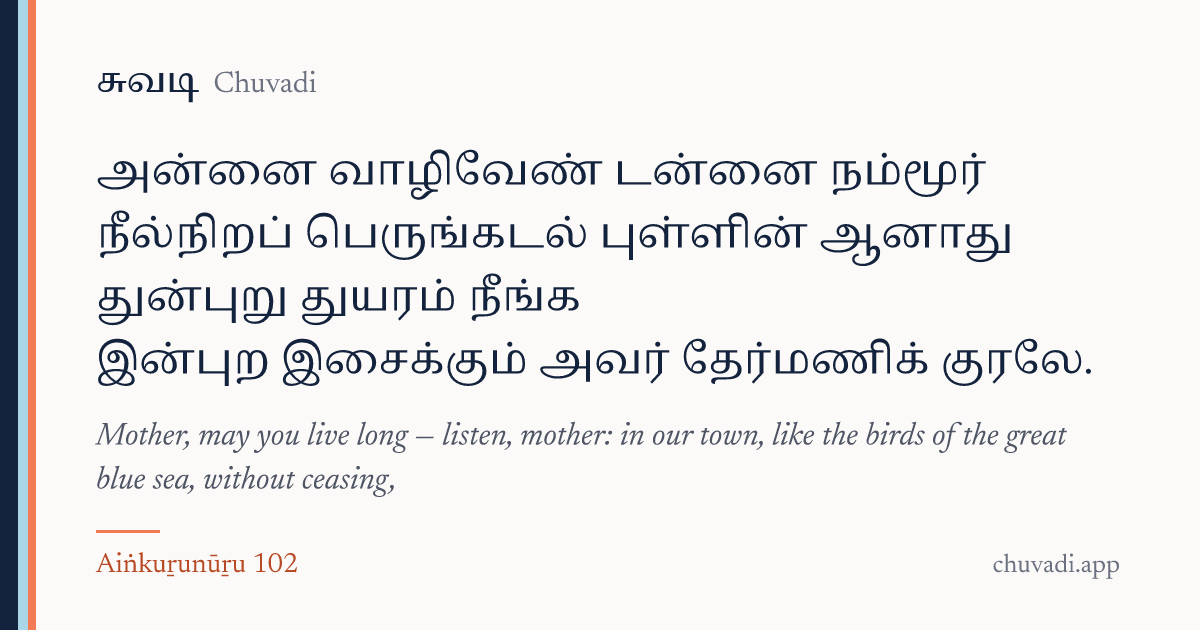

ஐங்குறுநூறு 102 · தாய்க்கு உரைத்த பத்து
பாடல் · The poem
Tap a word to see where else it occurs.
பொருள் · Meaning in TamilAI
அம்மா, நீ வாழ்க; கேள், அம்மா. நம் ஊரில், நீலநிறப் பெருங்கடலின் பறவைகள் ஓயாமல் ஒலிப்பது போல, இடைவிடாமல், அவள் படும் துன்பம் நீங்கும்படி இனிமையாக ஒலிக்கிறது அவருடைய தேரின் மணியோசை.
நெய்தல் திணை; தோழி தாயிடம் அறத்தொடு நிற்கிறாள். கடற்பறவைகளின் ஓயாத ஒலி தலைவியின் துயரத்தை நினைவூட்டுகிறது; தலைவனின் தேர்மணி ஓசையோ அத்துயரத்தைப் போக்குகிறது. ஆகவே அவனே அவளுக்குரியவன் என்பது குறிப்பு. "புள்ளின்" என்னும் ஒப்புமை பறவைகளைப் போல என்றா, பறவைகளையும் மிஞ்சி என்றா என்பது உறுதியாகத் தெரியவில்லை.
ஆங்கிலம் · English translationAI
Translation
- Mother, may you live long — listen, mother: in our town,
- like the birds of the great blue sea, without ceasing,
- so that the grief that torments her may leave her,
- it sounds out sweetly — the ringing of the bells on his chariot.
What the poem says
The friend speaks again to the mother. The seashore is full of noise: the cries of sea birds never stop. Against that constant crying she sets another sound, just as constant but welcome, the bells of the hero's chariot as he drives into town.
The birds' crying belongs to neytal, the landscape of lament, and can be heard as an echo of the girl's own grief. The bells answer it. What the friend wants the mother to understand is that only his coming takes the girl's suffering away, so the family should let the match go ahead. The comparison in the second line is compressed. It may mean the bells ring as tirelessly as the birds cry, or that their sound rises above the birds. Either way the contrast between sad noise and glad noise carries the poem.