



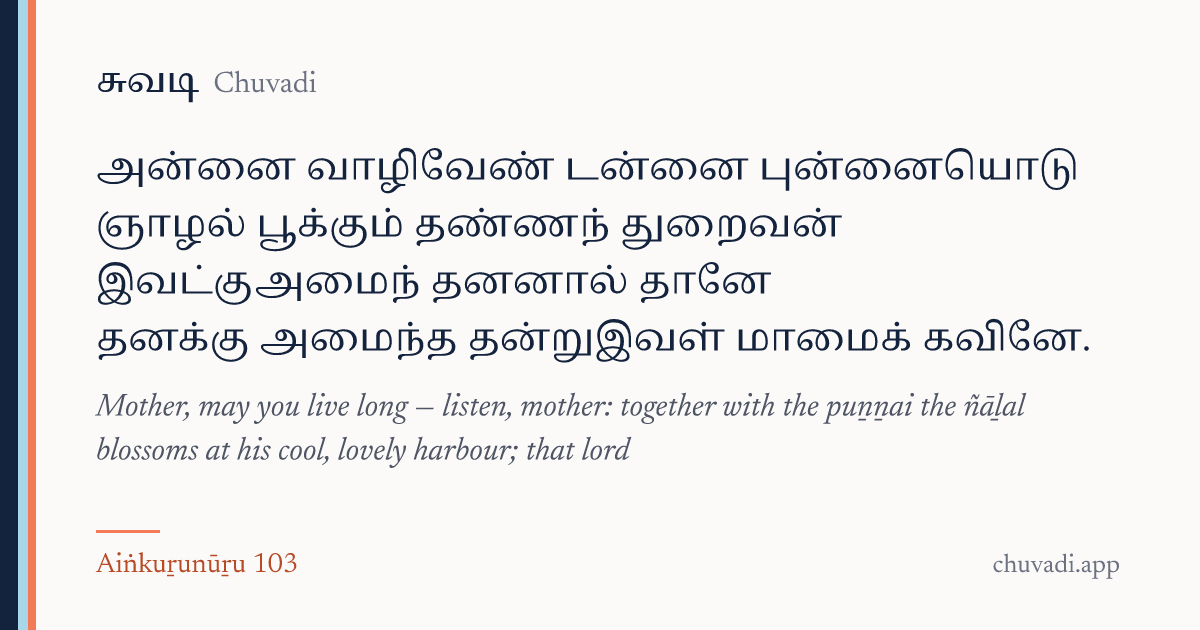

ஐங்குறுநூறு 103 · தாய்க்கு உரைத்த பத்து
பாடல் · The poem
Tap a word to see where else it occurs.
பொருள் · Meaning in TamilAI
அம்மா, நீ வாழ்க; கேள், அம்மா. புன்னையோடு ஞாழலும் பூக்கும் குளிர்ந்த அழகிய துறையை உடைய தலைவன் இவளுக்கு உரியவனாக அமைந்துவிட்டான். ஆகவே இவளுடைய மாமை நிறத்து அழகு இனி இவளுக்கு மட்டும் உரியதாக இல்லை.
நெய்தல் திணை; தோழி தாயிடம் அறத்தொடு நிற்கிறாள். புன்னையும் ஞாழலும் சேர்ந்து பூப்பது தலைவனும் தலைவியும் சேர்ந்திருப்பதைக் குறிப்பாக உணர்த்துகிறது. மூன்றாம் அடியில் உள்ள "அமைந்தனெனால்" என்ற வடிவம் தெளிவாக இல்லை; "அமைந்தனனால்" (அவன் அமைந்தான்) என்று கொண்டு பொருள் சொல்லப்பட்டது.
ஆங்கிலம் · English translationAI
Translation
- Mother, may you live long — listen, mother: together with the puṉṉai
- the ñāḻal blossoms at his cool, lovely harbour; that lord
- has become bound to her, and so
- it is no longer her own, this dark glow of her beauty.
What the poem says
The friend tells the mother plainly that the hero of the coast belongs to the girl now. The harbour where puṉṉai (the Alexandrian laurel) and ñāḻal (a yellow-flowered coastal tree) bloom side by side is his, and the pairing of the two trees in flower quietly mirrors the pairing of the two lovers.
Māmai is the soft dark complexion prized in Sangam poetry as a sign of a young woman's beauty. The friend says it is no longer the girl's to keep for herself: it has gone over to him. The words could also hint that her beauty has suffered, since longing in these poems drains māmai into pallor. The third line is uncertain. The edition reads amaintaṉeṉ, which would mean 'I have become fitted', and that makes poor sense here. I have read it as amaintaṉaṉ, 'he has become fitted (to her)', which suits the rest of the poem.