




ஐங்குறுநூறு 104 · தாய்க்கு உரைத்த பத்து
பாடல் · The poem
Tap a word to see where else it occurs.
பொருள் · Meaning in TamilAI
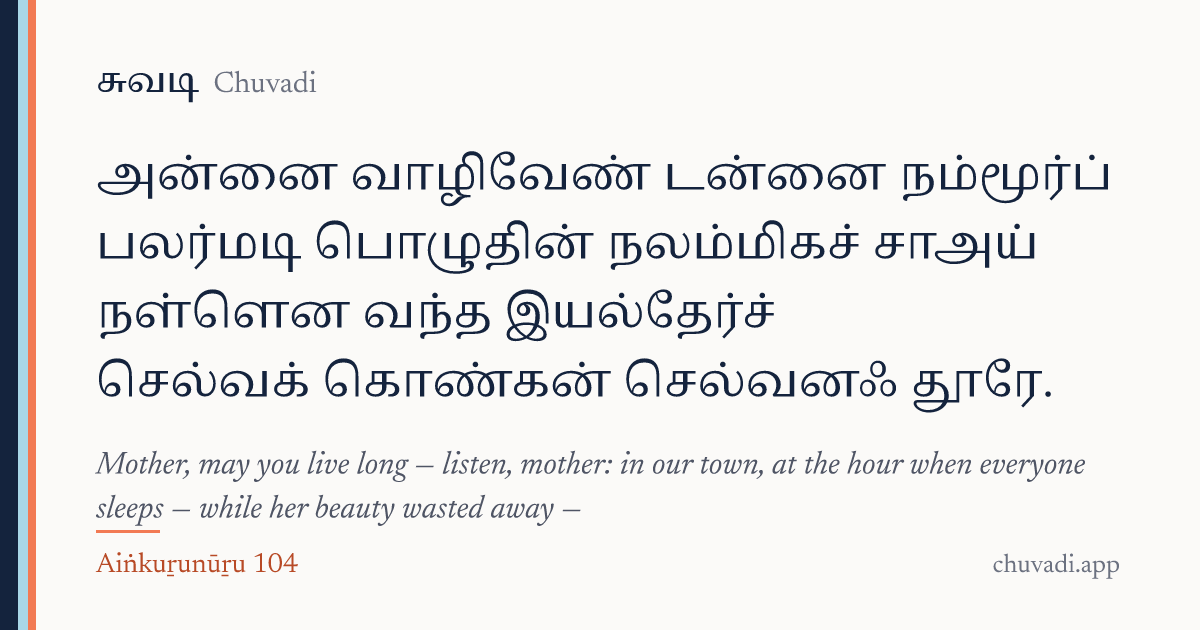
அம்மா, நீ வாழ்க; கேள், அம்மா. நம் ஊரில் எல்லோரும் உறங்கும் நேரத்தில், இவளுடைய அழகு மிகவும் வாடிக்கொண்டிருக்க, நள்ளிரவில் நன்கு அமைந்த தேரில் வந்தான் செல்வனாகிய கடற்கரைத் தலைவன்; பின்னர் அவன் தன் ஊருக்கே திரும்பிச் சென்றுவிடுகிறான்.
நெய்தல் திணை; தோழி தாயிடம் அறத்தொடு நிற்கிறாள். தலைவன் இரவில் மட்டும் மறைவாக வந்து போவதால் தலைவி வாடுகிறாள்; ஆகவே மணமே தீர்வு என்பது குறிப்பு. முதல் அடியில் "வழி" என்பது "வாழி" என்பதன் பிழை. இறுதி அடியின் பொருள் உறுதியாகத் தெரியவில்லை.
ஆங்கிலம் · English translationAI
Translation
- Mother, may you live long — listen, mother: in our town,
- at the hour when everyone sleeps — while her beauty wasted away —
- in the dead of night he came in his well-made chariot,
- the wealthy lord of the shore; and back he goes, to that town of his.
What the poem says
The friend complains to the mother about the way the affair is being carried on. The hero comes only by night, when the whole town is asleep, and leaves again for his own town. Meanwhile the girl's beauty wears away under the strain of secret meetings and long waits.
Night visits are a stock danger in akam poetry: the road is risky, the family may discover them, and nothing is settled. By telling the mother this, the friend pushes the family towards a formal marriage. Note that the first line in this edition reads vaḻi for vāḻi, clearly a slip, since every other poem in the decade has vāḻi. The last line is also hard. Celvaṉ aḥtu ūrē can be taken as 'that is the town of the rich man', or as 'he goes (celvaṉ) to that town'. I have taken the play on celvam (wealth) and cel (go) as the point, but the reading is not certain.