



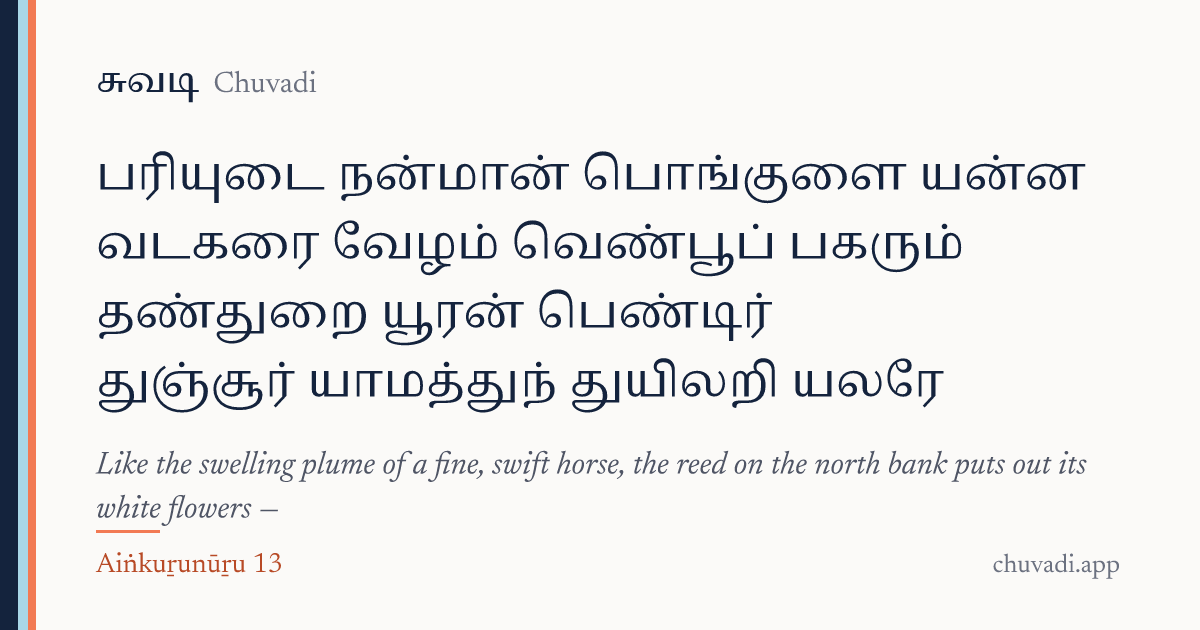

ஐங்குறுநூறு 13
பாடல் · The poem
Tap a word to see where else it occurs.
பொருள் · Meaning in TamilAI
நல்ல குதிரையின் தலையில் பொங்கி நிற்கும் உளையைப் போல, வடகரையில் வளரும் வேழம் வெண்மையான பூக்களை விரிக்கும். அத்தகைய குளிர்ந்த துறை உடைய ஊரைச் சேர்ந்தவனின் பெண்டிர், ஊரே உறங்கும் நள்ளிரவிலும் உறக்கம் அறியாமல் இருக்கிறார்கள்.
மருதத் திணை; கூற்று தெளிவாக இல்லை. தலைவியோ தோழியோ, தலைவன் கைவிட்ட பரத்தையர் படும் துயரைப் பற்றிக் கூறுவதாகக் கொள்ளலாம். "பெண்டிர்" என்பதில் தலைவியும் அடங்கக்கூடும். குதிரையின் உளை போன்ற வேழப்பூ வெளித்தோற்ற அழகு மட்டுமே உடையது; அது தலைவனின் கவர்ச்சியைக் குறிக்கலாம்.
ஆங்கிலம் · English translationAI
Translation
- Like the swelling plume of a fine, swift horse,
- the reed on the north bank puts out its white flowers —
- the women of the man of the town with cool ghats
- know no sleep even at midnight, when the town sleeps.
What the poem says
It is not clear who speaks. The most natural reading is that the heroine or her friend speaks of the hero's 'women', the courtesans he moves between. They too now lie awake at midnight, because he has left them for someone new. There is a sharp, half-mocking sympathy in the observation. The word peṇṭir could also include the heroine among his women, in which case the poem speaks of every woman he has loved and left sleepless.
The reed's white flowers are compared to the tossing plume worn on a war-horse's head, a showy decoration. The plume is all display, and that may reflect the hero's attractive but unreliable charm.
The edition's துயலறி stands for துயில் அறி, 'know sleep'.