



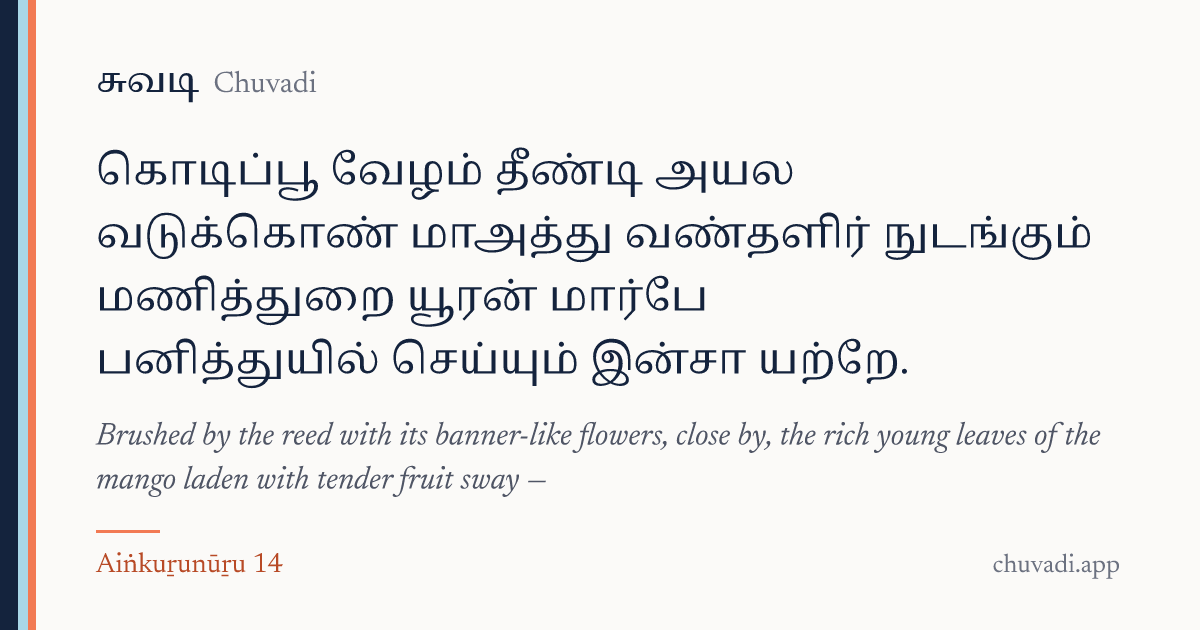

ஐங்குறுநூறு 14
பாடல் · The poem
Tap a word to see where else it occurs.
பொருள் · Meaning in TamilAI
கொடி போன்ற பூக்களை உடைய வேழம் அருகிலுள்ள மாமரத்தைத் தீண்ட, வடுக்கள் நிறைந்த அம்மாமரத்தின் செழித்த தளிர்கள் அசைந்தாடும். அத்தகைய, மணி போலத் தெளிந்த நீர்த்துறை உடைய ஊரைச் சேர்ந்தவனின் மார்பு குளிர்ந்த உறக்கத்தைத் தரும் இனிய மென்மை உடையது.
மருதத் திணை; கூறுபவர் யார் என்பது உறுதியாகத் தெரியவில்லை. அவன் அணைப்பை நினைக்கும் தலைவியாகவும் இருக்கலாம், பெருமை பேசும் பரத்தையாகவும் இருக்கலாம். பதிப்பில் "வீரன்" என்று இருப்பது "ஊரன்" என்பதன் பிழையாகத் தோன்றுகிறது. வேழம் தீண்ட அசையும் மாந்தளிர், தலைவனால் உள்ளம் அசையும் பெண்ணைக் குறிக்கலாம்.
ஆங்கிலம் · English translationAI
Translation
- Brushed by the reed with its banner-like flowers, close by,
- the rich young leaves of the mango laden with tender fruit sway —
- the chest of the man of the town with jewel-clear ghats
- brings cool sleep, so sweet and gentle it is.
What the poem says
The poem praises the hero's chest as a place of gentle, cool sleep. Who speaks is uncertain. It may be the heroine, recalling his embrace and still drawn to him in spite of everything, or it may be a courtesan who boasts of what she now enjoys. Nothing in the four lines settles the question.
The image sets the tall reed beside a mango whose young leaves tremble as it brushes them. The mango is heavy with vaṭu, small tender fruit. One may read the mango as the heroine, perhaps as a mother, moved by a man whose nature is like the restless wild reed; this is an interpretation, not a statement of the text.
The edition reads மணித்துறை வீரன், 'hero of the jewel-clear ghat'. Every other poem in this decade has ஊரன், 'man of the town', and வீரன் is almost certainly a misprint. The translation follows ஊரன்.