



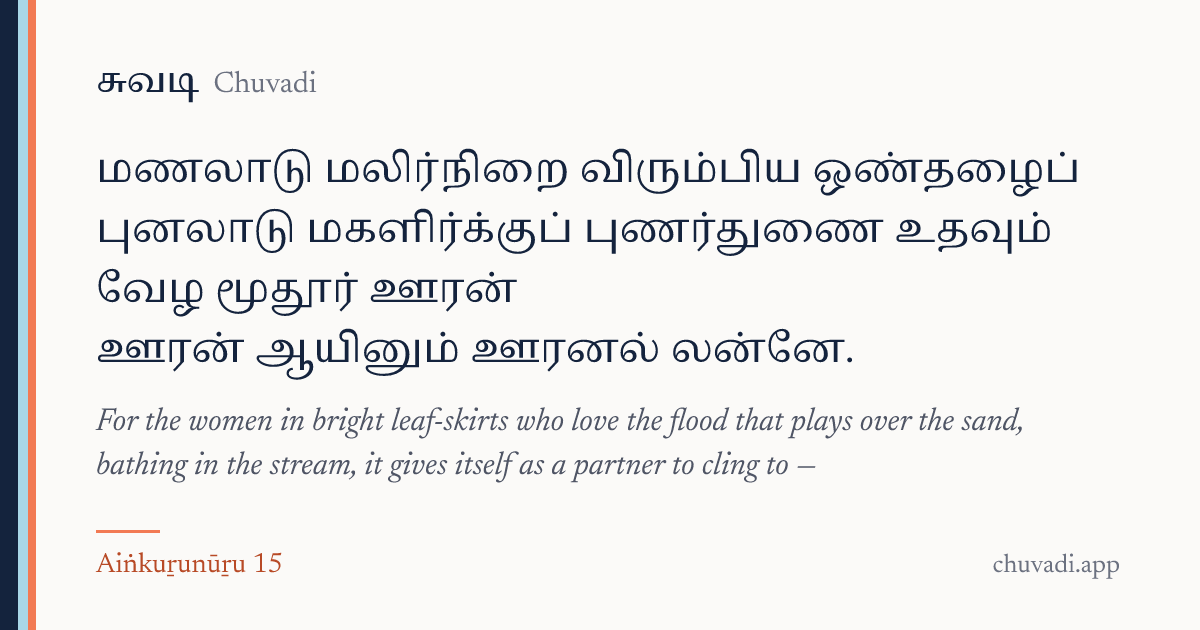

ஐங்குறுநூறு 15
பாடல் · The poem
Tap a word to see where else it occurs.
பொருள் · Meaning in TamilAI
மணலின் மேல் பெருகி ஓடும் வெள்ளத்தை விரும்பி, ஒளிரும் தழையாடை அணிந்து நீராடும் மகளிருக்குப் பற்றிக்கொள்ளும் துணையாக உதவும் வேழம் நிறைந்த பழைய ஊரைச் சேர்ந்தவன் அவன். அவன் இந்த ஊரைச் சேர்ந்தவனாக இருந்தாலும், இந்த ஊருக்கு உரியவன் அல்லன்.
மருதத் திணை; தலைவியோ தோழியோ கூறுவதாகக் கொள்ளலாம். நீராடும் எல்லா மகளிருக்கும் துணையாகும் வேழம் போல, தலைவனும் பல பரத்தையருக்கும் துணையாகிறான் என்பது உள்ளுறை. "ஊரன்" என்ற சொல்லைத் திரும்பச் சொல்வதில் கசப்பான நகைப்பு உள்ளது. பதிப்பில் உள்ள "மண்லாடு" என்பதை "மணலாடு" என்று படிக்க வேண்டும்.
ஆங்கிலம் · English translationAI
Translation
- For the women in bright leaf-skirts who love the flood that plays over the sand,
- bathing in the stream, it gives itself as a partner to cling to —
- in the old town of such reeds lives the man of the town;
- though he is of our town, he is not of our town.
What the poem says
The reed, cut and floating, is used by women bathing in the river as something to hold on to, a 'partner' (puṇar tuṇai) in the water. The reed is not named until the third line; the first two lines describe what it does. The speaker is probably the heroine, or the friend on her behalf.
The comparison is pointed. Just as the reed serves any woman who comes to bathe, the hero gives himself to the courtesans who play with him. So the closing line turns on the word ūraṉ, 'man of the town'. He lives in this town and is its man, yet he does not belong to it, or to her. The repetition gives the poem its sting.
The edition's மண்லாடு should be read மணலாடு, 'playing over the sand'.