




ஐங்குறுநூறு 149 · ஞாழற் பத்து
பாடல் · The poem
Tap a word to see where else it occurs.
பொருள் · Meaning in TamilAI
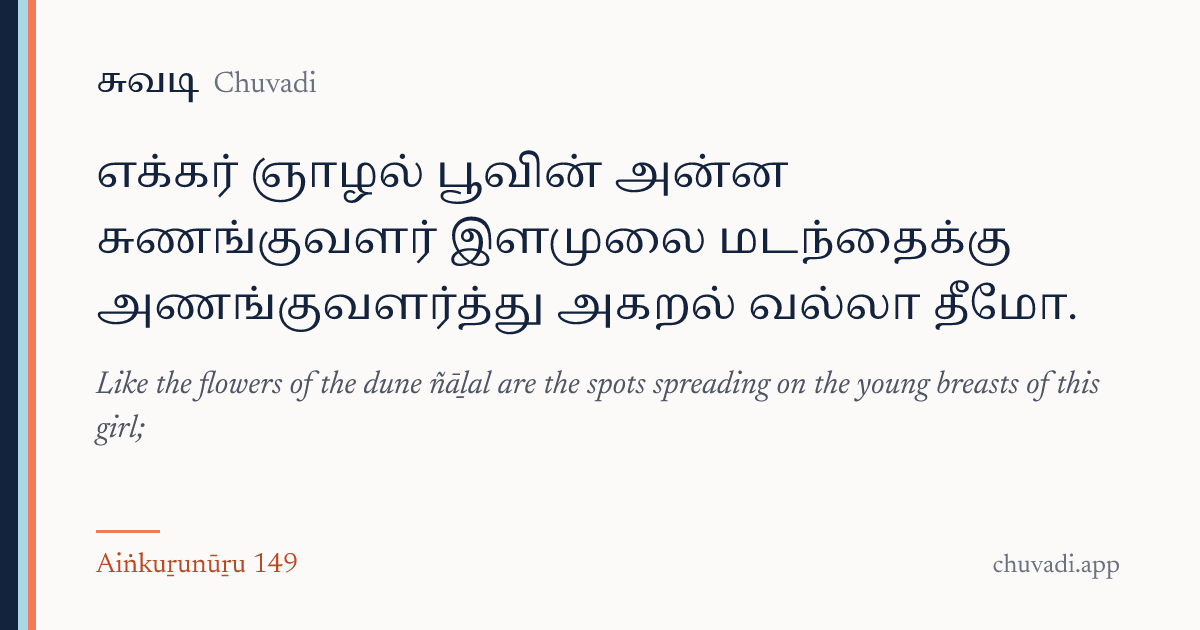
மணல்மேட்டு ஞாழலின் பூக்களைப் போன்ற சுணங்கு படர்ந்த இளமார்பை உடைய இப்பெண்ணுக்குக் காதல் வேதனையை வளர்த்துவிட்டு, அவளைப் பிரிந்து செல்லும் வல்லமை உள்ளவனாக நீ ஆகிவிடாதே.
நெய்தல் திணை; தோழி தலைவனிடம் கூறுகிறாள். சுணங்கு இளமையின் அழகுக்குறி; அது ஞாழலின் மஞ்சள் மலர்களுக்கு ஒப்பிடப்படுகிறது. "அணங்கு" என்பது இங்குக் காதலால் வரும் வருத்தத்தைக் குறிக்கிறது. அன்பை வளர்த்த பின் பிரிந்தால் அவள் தாங்கமாட்டாள் என்பதால், மென்மையான வேண்டுகோளாகத் தோன்றினாலும் இது ஓர் எச்சரிக்கையும் ஆகும்.
ஆங்கிலம் · English translationAI
Translation
- Like the flowers of the dune ñāḻal
- are the spots spreading on the young breasts of this girl;
- having raised such longing in her, do not be one who could leave her.
What the poem says
The friend addresses the hero with a plea. The heroine's young breasts are flecked with cuṇaṅku, the golden spots on the skin that Sangam poems treat as a mark of youthful beauty, and these are compared to the yellow ñāḻal flowers. Having stirred such desire (aṇaṅku, here the trouble or torment of love) in her, he must not now be capable of going away.
Aṇaṅku is a strong word, used elsewhere for spirits or powers that afflict a person, and here it means the overwhelming affliction of love. The final verb vallātīmō, 'please do not be able (to leave)', is phrased as a gentle request but carries a warning.