



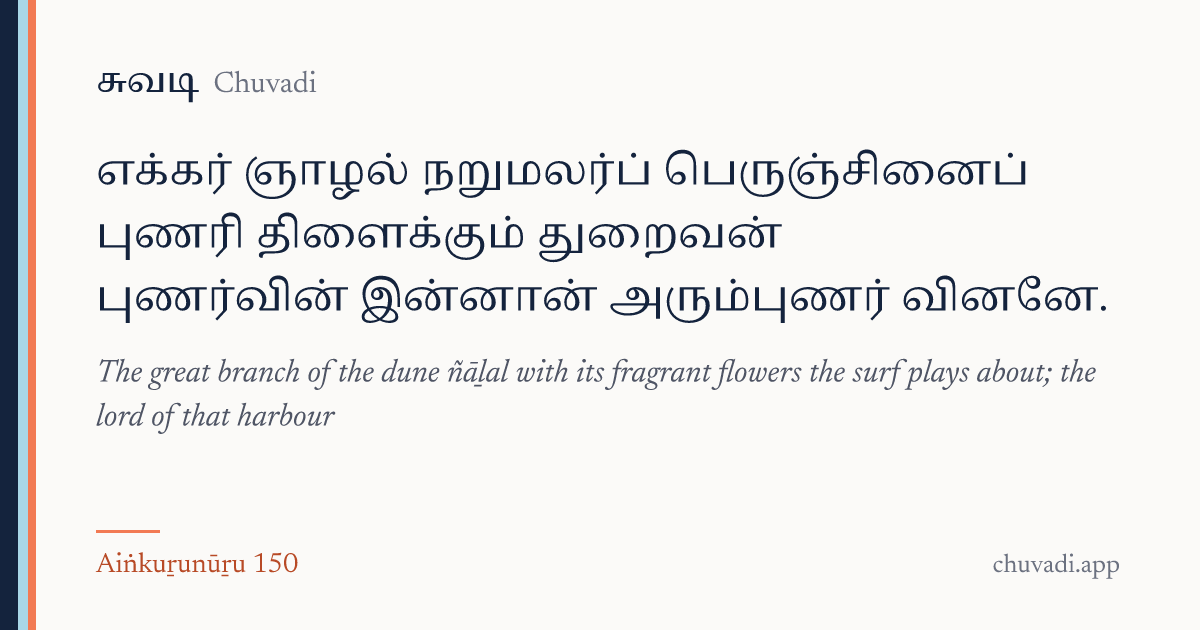

ஐங்குறுநூறு 150 · ஞாழற் பத்து
பாடல் · The poem
Tap a word to see where else it occurs.
பொருள் · Meaning in TamilAI
மணல்மேட்டு ஞாழலின் நறுமணம் உள்ள மலர்களை உடைய பெரிய கிளையைக் கடல் அலை தழுவி விளையாடும் துறையை உடைய தலைவன், கூடியிருக்கும்போதும் துன்பம் தருபவன்; அவனோடு கூடுவதும் அரிது.
நெய்தல் திணை; தலைவி கூறுவதாகத் தோன்றுகிறது. அலை கிளையோடு எளிதில் "புணர்கிறது"; தலைவனோடு புணர்வது அவளுக்கு அரிதாக உள்ளது என்ற நயம் "புணரி", "புணர்வு" என்ற சொற்களால் அமைகிறது. "புணர்வின் இன்னான்" என்பதன் பொருள் உறுதியாகத் தெரியவில்லை; கூடும்போதும் பிரிவு அச்சத்தால் துன்பம் தருபவன் என்று கொள்ளப்பட்டது.
ஆங்கிலம் · English translationAI
Translation
- The great branch of the dune ñāḻal with its fragrant flowers
- the surf plays about; the lord of that harbour
- is cruel even in union, and hard to be united with.
What the poem says
The decade closes on an ambivalent note, most likely in the heroine's voice. The surf (puṇari) splashes and plays about the flowering branch, and puṇar, 'to unite', is the root of both the sea-word and the love-word, so the line plays on it: the waves 'unite' with the tree freely, as she cannot with the hero.
The last line is the hardest in the decade. Puṇarviṉ iṉṉāṉ seems to say he is 'painful in union', perhaps because every meeting carries the fear of parting, while arum-puṇarviṉaṉ says he is 'hard to unite with', rarely available. I have kept both senses. The reading is uncertain, and iṉṉāṉ could conceivably be a misprint for a word meaning 'sweet', which would turn the line into 'sweet in union, but hard to win'.