



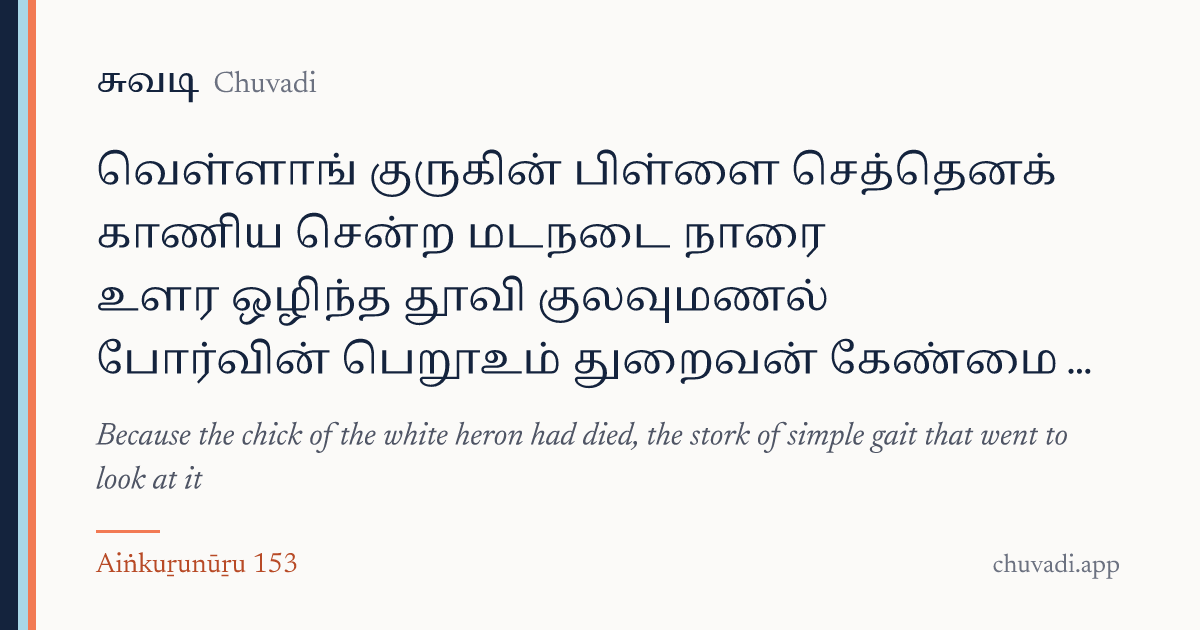

ஐங்குறுநூறு 153 · வெள்ளங் குருகுப் பத்து
பாடல் · The poem
Tap a word to see where else it occurs.
பொருள் · Meaning in TamilAI
வெள்ளாங்குருகின் குஞ்சு இறந்துவிட்டது என்று அதைப் பார்க்கச் சென்ற மென்னடை நாரை, இறகுகளைக் கோதும்போது உதிர்ந்த தூவிகளை வளைந்த மணல்மேடுகள் குவித்துக்கொள்ளும் துறையை உடையவனே! உன் நட்பை நல்ல நீண்ட கூந்தலை உடைய இவள் இனியும் விரும்புவாளோ?
நெய்தல் திணை; தோழி தலைவனிடம் கடிந்து கூறியதாகக் கொள்ளலாம். உதிர்ந்து மணலில் புதையும் இறகுகள், தலைவியின் அழகு கெட்டு அழிவதைக் குறிப்பதாகக் கொள்ளலாம். இக்கேள்வி தலைவியிடமே கேட்கப்பட்டது என்றும் கொள்ள இடமுண்டு.
ஆங்கிலம் · English translationAI
Translation
- Because the chick of the white heron had died,
- the stork of simple gait that went to look at it
- sheds feathers as it preens, and on the curving sand
- the dunes gather them; the friendship of that shore's lord —
- will she of fine long hair seek it again now?
What the poem says
The friend most likely speaks to the hero, and her question is a rebuke. After the way he has behaved, she asks, will the heroine with her fine long hair still want his friendship? Calling the heroine by her hair is a common way of naming a woman by her beauty.
In the refrain, the stork that went to look at the dead chick preens and drops its feathers, and the curving sand heaps them up. Feathers scattered and lost may suggest the heroine's beauty wasting away while she waits for him. The image is quiet, but it sets the tone of loss.
The line about the feathers is compressed, and the exact sense of pōrviṉ ("in the heaps") is not certain. It is also possible to take the closing question as spoken to the heroine herself.