



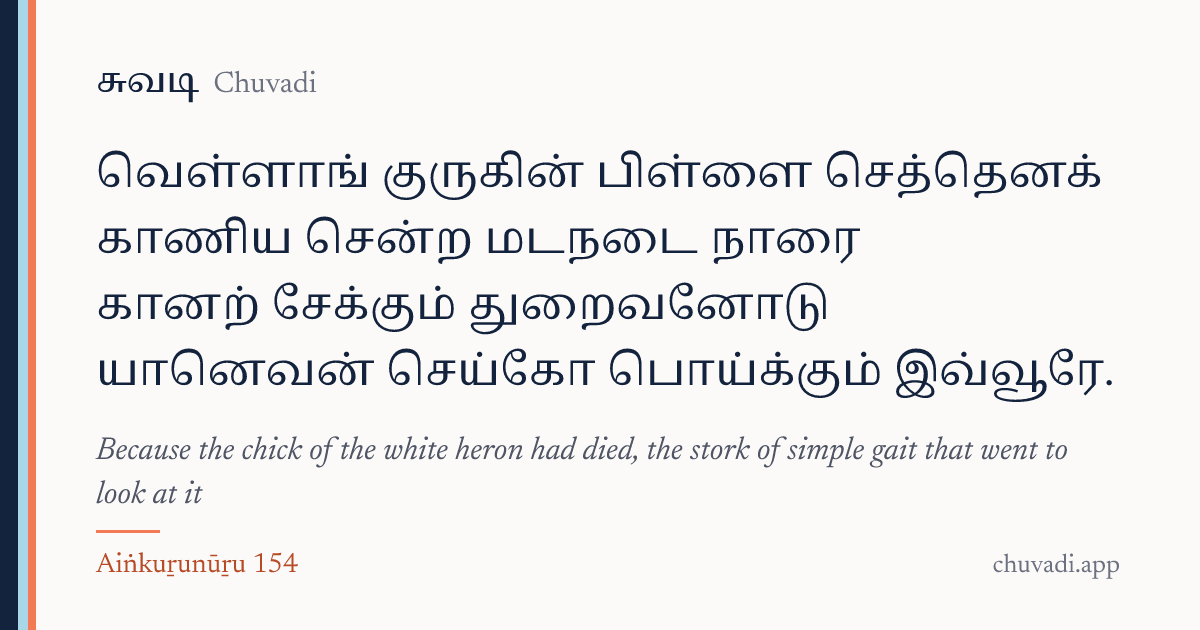

ஐங்குறுநூறு 154 · வெள்ளங் குருகுப் பத்து
பாடல் · The poem
Tap a word to see where else it occurs.
பொருள் · Meaning in TamilAI
வெள்ளாங்குருகின் குஞ்சு இறந்துவிட்டது என்று அதைப் பார்க்கச் சென்ற மென்னடை நாரை தங்கும் கடற்கரைச் சோலையை உடைய துறைவனோடு எனக்கு என்ன தொடர்பு? இந்த ஊர் பொய் சொல்கிறது.
நெய்தல் திணை; ஊரார் பேசும் அலரைக் கேட்டுத் தலைவி கூறியதாகக் கொள்ளலாம். இது உண்மையான மறுப்பா, அல்லது உண்மைக் காதலை மறைக்கும் மறுப்பா என்பதைப் பாடல் தெளிவாகச் சொல்லவில்லை. சோலையில் அமைதியாகத் தங்கும் நாரை, தலைவன் வாழும் கடற்கரையைக் காட்டுவதற்காக மட்டுமே வந்திருக்கலாம்.
ஆங்கிலம் · English translationAI
Translation
- Because the chick of the white heron had died,
- the stork of simple gait that went to look at it
- rests in the seaside grove — with the lord of that shore
- what have I to do? This town tells lies.
What the poem says
The heroine protests against the gossip of the town. The village links her name with the lord of the shore, and she asks what she could possibly have to do with him; the town, she says, is lying.
The refrain stork simply settles in the grove by the sea. Nothing in the image is pointed, and it may only set the scene of the coast where the hero lives. The denial itself can be read two ways: as a real protest against slander, or as a playful, half-guilty denial of a love that is in fact true, which is how akam poems often treat gossip (alar).
This poem has only four lines; from here on the edition spells the first word of the refrain with an extra k, which does not change the sense.