



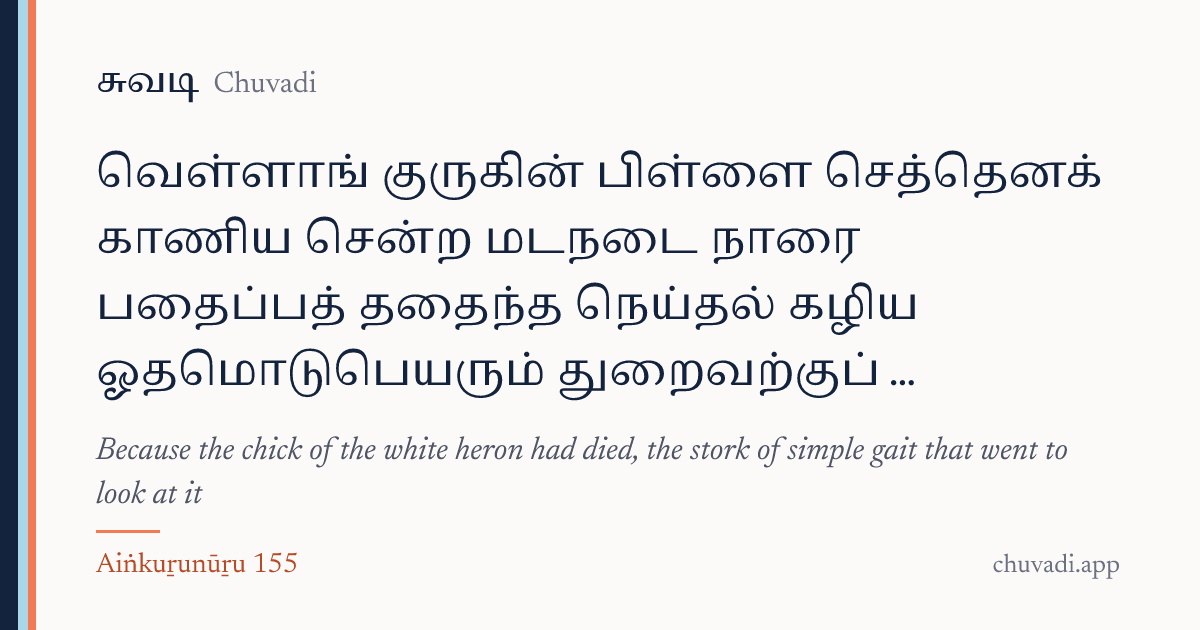

ஐங்குறுநூறு 155 · வெள்ளங் குருகுப் பத்து
பாடல் · The poem
Tap a word to see where else it occurs.
பொருள் · Meaning in TamilAI
வெள்ளாங்குருகின் குஞ்சு இறந்துவிட்டது என்று அதைப் பார்க்கச் சென்ற மென்னடை நாரை பதறியபோது சிதைந்த நெய்தல் பூக்கள் கழியில் ஓதத்தோடு அடித்துச் செல்லப்படும் துறையை உடையவனுக்கு, நான் பசுமையான சாய்க்கோரையால் செய்த ஒரு பாவையைத்தான் பெற்றிருக்கிறேன்.
நெய்தல் திணை; தலைவி கூற்று. சிதைந்து ஓதத்தில் போகும் நெய்தல், பயன்படுத்தப்பட்டுக் கைவிடப்பட்ட தலைவியைக் குறிப்பதாகத் தோன்றுகிறது. 'பைஞ்சாய்ப் பாவை ஈன்றனென்' என்ற இறுதி அடியின் பொருள் உறுதியாகத் தெரியவில்லை; இது கசப்பான வஞ்சப்புகழ்ச்சியாக இருக்கலாம். 'ததைந்த' என்பதற்குச் 'சிதைந்த' என்றும் 'நெருங்கிய' என்றும் பொருள் கொள்ளலாம்.
ஆங்கிலம் · English translationAI
Translation
- Because the chick of the white heron had died,
- the stork of simple gait that went to look at it
- in its flurry crushed the neytal, which in the backwater
- drifts off with the tide — for the lord of that shore
- I have given birth to a doll of green sedge.
What the poem says
The heroine speaks, and her last line is strange and bitter. For the lord of the shore, she says, she has borne only a doll made of green sedge, the kind of toy girls of the coast play with. The likeliest sense is ironic: all she has to show for this love, which the town talks about as if it were a marriage, is a plaything.
The refrain stork, flustered, crushes the neytal flowers, and the crushed flowers float away with the tide. The flowers used and carried off may stand for the heroine herself, spoiled and then left.
The closing line is genuinely obscure. It may instead hint at the heroine's youth (she is still a girl of dolls), and no reading is certain. The word tatainta in the third line can mean "crushed" or "thickly massed"; the first is followed here.