



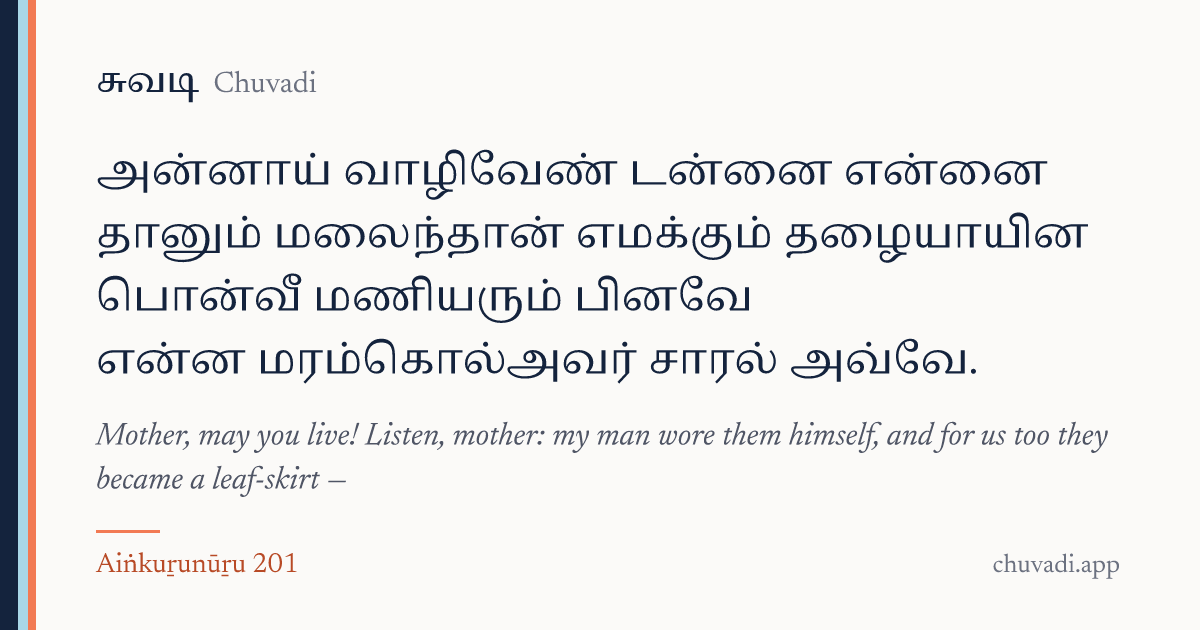

ஐங்குறுநூறு 201 · அன்னாய் வாழிப் பத்து
பாடல் · The poem
Tap a word to see where else it occurs.
பொருள் · Meaning in TamilAI
அன்னையே, நீ வாழ்க! நான் சொல்வதைக் கேள், அன்னையே! என் தலைவன் தானும் அவற்றைச் சூடிக்கொண்டான்; எங்களுக்கும் அவை தழையுடையாக ஆயின. பொன்னைப் போன்ற மலர்களும் நீலமணியைப் போன்ற அரும்புகளும் உடையவை அவை. அவனுடைய மலைச்சாரலில் உள்ள அந்த மரம் என்ன மரமோ?
இது குறிஞ்சித் திணை. பதிப்பில் கூற்று குறிக்கப்படவில்லை; தோழி செவிலித்தாயிடம் தலைவியின் களவு உறவைக் குறிப்பாக வெளிப்படுத்துவதாகக் கொள்ளலாம். தலைவன் தந்த தழையுடையை அணிவது இருவருக்கும் உறவு ஏற்பட்டுவிட்டதன் அடையாளம். அந்த மரத்தின் பெயர் பாடலில் சொல்லப்படவில்லை.
ஆங்கிலம் · English translationAI
Translation
- Mother, may you live! Listen, mother: my man
- wore them himself, and for us too they became a leaf-skirt —
- flowers of gold, and buds like sapphire:
- what tree can it be, the one on his slopes?
What the poem says
The decade is named for its opening address, "Mother, may you live! Listen, mother." The edition gives no speaker, but the poems read best as the friend speaking to the foster-mother, slowly letting her know that the girl already belongs to a man of the hills. Here she pretends to wonder about a tree.
The point is the leaf-skirt. In kuṟiñci poems a lover's gift of a garment of fresh leaves and flowers is a sign of a bond already formed. The friend lets slip that the same sprays the hero wore became a skirt "for us too", and then hides the confession behind an innocent question about the tree on his slopes.
The word rendered "my man" (eṉṉai) may mean "my lord" or "our man". The tree is not named. Gold flowers might suggest the vēṅkai, but the poem does not say so.