



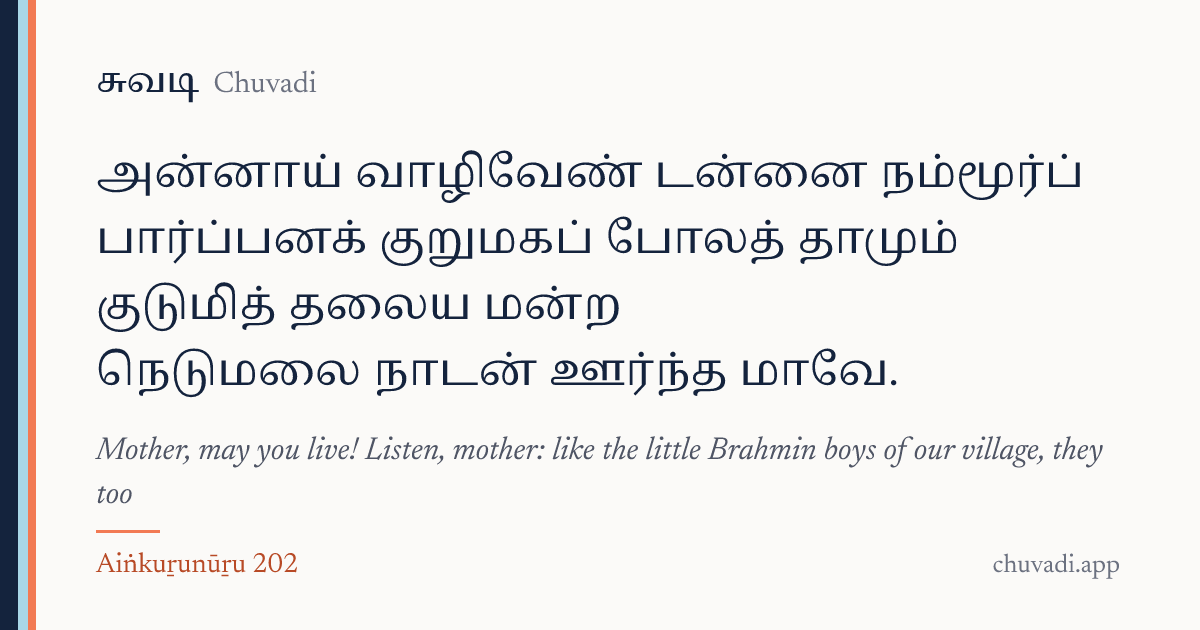

ஐங்குறுநூறு 202 · அன்னாய் வாழிப் பத்து
பாடல் · The poem
Tap a word to see where else it occurs.
பொருள் · Meaning in TamilAI
அன்னையே, நீ வாழ்க! நான் சொல்வதைக் கேள், அன்னையே! நம் ஊரில் உள்ள பார்ப்பனச் சிறுவர்களைப் போலவே அவையும் தலையில் குடுமி உடையனவாக இருக்கின்றன; இது உறுதி. அவை நெடிய மலைநாட்டுத் தலைவன் ஏறி வந்த குதிரைகள்.
இது குறிஞ்சித் திணை. தோழி செவிலித்தாயிடம் கூறுவதாகக் கொள்ளலாம். குதிரைகளின் குடுமியை விளையாட்டாக வருணிப்பது போலப் பேசினாலும், தலைவன் தங்கள் ஊர்ப்பக்கம் வந்து போவதைத் தாய்க்கு உணர்த்துவதே அவள் நோக்கம்.
ஆங்கிலம் · English translationAI
Translation
- Mother, may you live! Listen, mother: like the little
- Brahmin boys of our village, they too
- have tufts upon their heads, it is certain —
- the horses ridden by the man of the tall mountains.
What the poem says
Once more the friend speaks to the foster-mother, as the decade's refrain suggests, though the edition names no speaker. She remarks, as if idly, on how the hero's horses look. Each has a tuft of hair left on its crown, like the tuft (kuṭumi) on the shaved head of a young Brahmin boy in the village.
The joke covers a disclosure. To compare the horses this closely she must have seen them, so the man of the tall mountains has been coming near their village, and has been seen. The mother is meant to understand that a suitor is about, and perhaps that he has come openly.
The word for the animals (mā) can mean horse or any large beast. "Horse" fits best with "ridden" and with the tuft.