



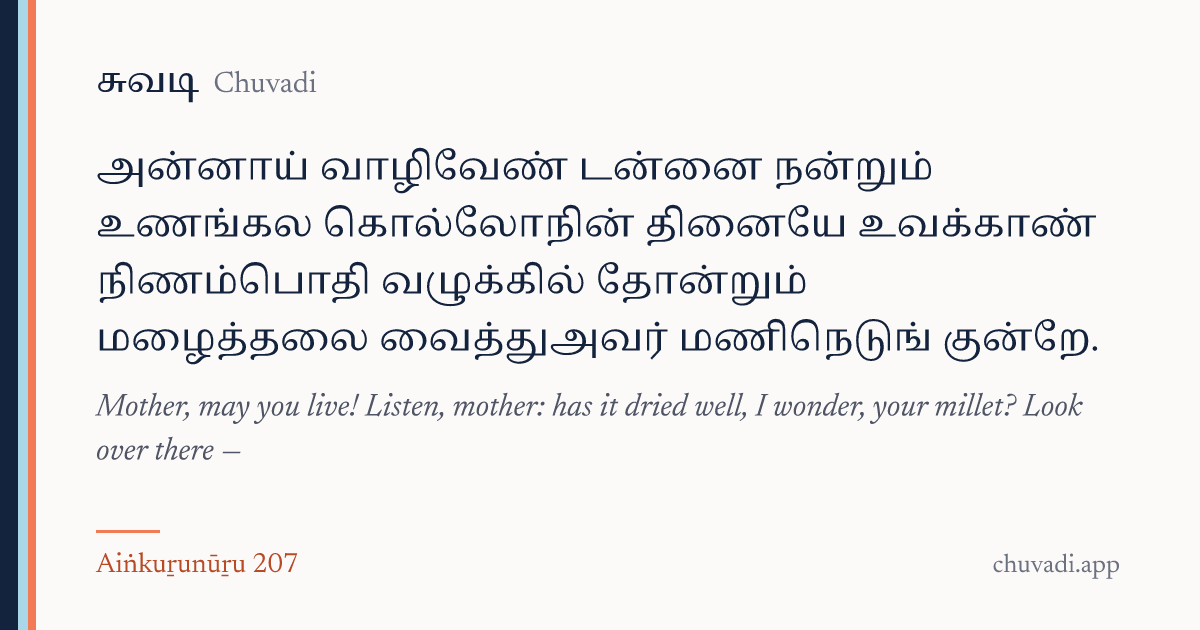

ஐங்குறுநூறு 207 · அன்னாய் வாழிப் பத்து
பாடல் · The poem
Tap a word to see where else it occurs.
பொருள் · Meaning in TamilAI
அன்னையே, நீ வாழ்க! நான் சொல்வதைக் கேள், அன்னையே! உன் தினை நன்றாகக் காய்ந்துவிட்டதோ? அங்கே பார்! கொழுப்பால் மூடப்பட்ட இறைச்சியைப் போல, தலையில் மேகத்தைச் சூடிக்கொண்டு தோன்றுகின்றன அவனுடைய நீலமணி நிறமுள்ள நெடிய குன்றுகள்.
இது குறிஞ்சித் திணை. தோழி தாயிடம் வீட்டு வேலை பற்றிக் கேட்பது போலத் தொடங்கி, தலைவனின் மலையை நோக்கும்படி திருப்புகிறாள். தினை அறுவடை முடிந்தால் தலைவியின் தினைப்புனக் காவலும் முடியும் என்ற குறிப்பும் இருக்கலாம்; அது உறுதியன்று.
ஆங்கிலம் · English translationAI
Translation
- Mother, may you live! Listen, mother: has it dried
- well, I wonder, your millet? Look over there —
- looking like flesh wrapped in fat,
- with clouds upon their heads, his tall sapphire hills.
What the poem says
The friend starts with a household question about whether the mother's millet has dried in the sun. Then she turns abruptly to the view. The hero's hills stand dark as sapphire with white cloud lying on their tops, like red meat wrapped in a sheet of fat.
The homely image and the sudden change of subject are deliberate. The friend draws the mother's attention to his hills, which the girl watches every day. Millet-drying also marks the end of the harvest, and with it the end of the girl's excuse to be out in the fields where she meets the hero. Whether that hint is intended cannot be proved, but it fits the decade.
Vaḻukku here appears to mean the fatty membrane around meat. The comparison of cloud-capped hills to it is unusual but clear.