



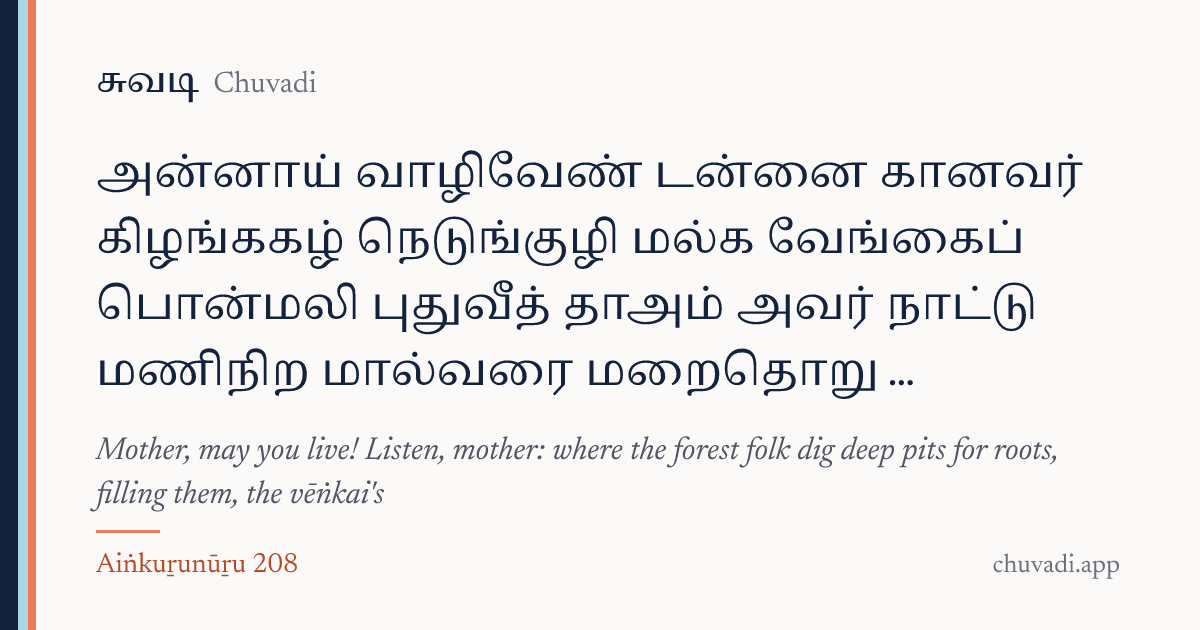

ஐங்குறுநூறு 208 · அன்னாய் வாழிப் பத்து
பாடல் · The poem
Tap a word to see where else it occurs.
பொருள் · Meaning in TamilAI
அன்னையே, நீ வாழ்க! நான் சொல்வதைக் கேள், அன்னையே! கானவர் கிழங்கு அகழ்ந்த ஆழமான குழிகள் நிறையும்படி வேங்கை மரத்தின் பொன்போன்ற புதிய மலர்கள் உதிர்ந்து பரவும் அவனுடைய நாட்டில், நீலமணி நிறமுள்ள பெரிய மலை மறையும் ஒவ்வொரு முறையும், இவளுடைய மலர் போன்ற அழகிய நீண்ட கண்கள் கண்ணீரால் நிறைகின்றன.
இது குறிஞ்சித் திணை. தோழி தாயிடம் தலைவியின் காதல் நோயைக் குறிப்பாக உணர்த்துகிறாள். வேங்கை பூக்கும் காலம் மணத்துக்கு உரிய காலம்; ஆகவே மணம் செய்யும் நேரம் வந்துவிட்டது என்ற குறிப்பும் இதில் உண்டு.
ஆங்கிலம் · English translationAI
Translation
- Mother, may you live! Listen, mother: where the forest folk
- dig deep pits for roots, filling them, the vēṅkai's
- new flowers, rich as gold, lie strewn — in his country
- each time the great dark-blue mountain is hidden,
- her long eyes, lovely as flowers, fill with tears.
What the poem says
The friend tells the mother what she has seen. The girl watches the hero's mountain. Whenever mist or cloud hides it, her long eyes fill with tears. The word paṉi, "cold drops", stands here for tears.
In his country, the pits the forest people dig for yams fill up with fallen vēṅkai flowers. The vēṅkai blooms in the season counted right for weddings, so the image quietly suggests that it is time. The golden flowers filling an empty hollow may also hint that the girl's loss could be made good, but that reading is only a suggestion.
The disclosure here is indirect. The friend does not name a lover. She only says that the girl's weeping follows the moods of one particular mountain.