




ஐங்குறுநூறு 209 · அன்னாய் வாழிப் பத்து
பாடல் · The poem
Tap a word to see where else it occurs.
பொருள் · Meaning in TamilAI
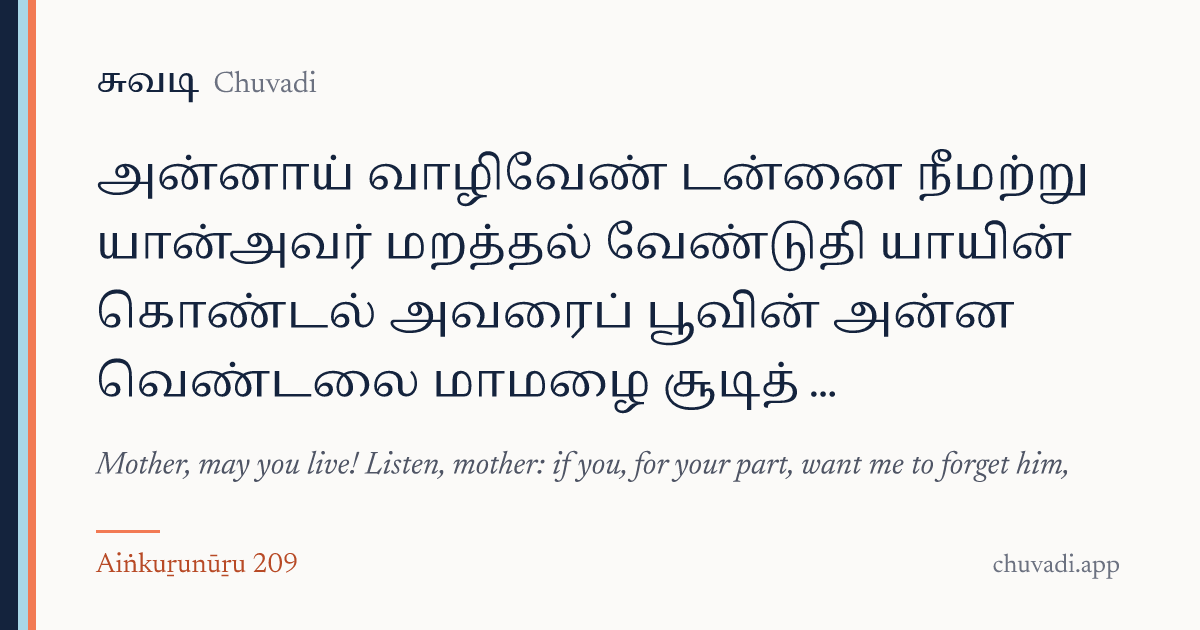
அன்னையே, நீ வாழ்க! நான் சொல்வதைக் கேள், அன்னையே! நான் அவரை மறக்க வேண்டும் என்று நீ விரும்பினால், கொண்டல் காற்றுக் காலத்து அவரைப் பூவைப் போன்ற வெண்மையான தலையுடைய கரிய மேகங்களைச் சூடிக்கொண்டு அவருடைய நீலமணி நிற நெடிய குன்று இடைவிடாமல் தோன்றிக்கொண்டிருக்கக் கூடாது.
இது குறிஞ்சித் திணை. இங்கே தலைவியே பேசுகிறாள்; கேட்பவர் தாயா தோழியா என்பது உறுதியில்லை. தலைவனின் மலை கண்முன் நிற்கும்வரை அவனை மறக்க இயலாது என்கிறாள்.
ஆங்கிலம் · English translationAI
Translation
- Mother, may you live! Listen, mother: if you, for your part,
- want me to forget him,
- then like the flowers of the avarai in the east wind,
- wearing great white-headed clouds,
- his tall sapphire hill must not keep showing itself.
What the poem says
In this poem the speaker is the girl herself ("me"). She answers someone, perhaps the mother or the friend, who wants her to forget the hero. Her reply is that she cannot forget while his hill stands in view every day, its summit crowned with white rain-clouds like the white flowers of the avarai bean when the east wind brings the rains.
The last line says the hill "does not cease to appear" (tōṉṟal aṉātu). The sense is "if you want me to forget, stop the hill from showing itself", which is impossible. The east wind (koṇṭal) is the rain-bearing wind, and the cloud-capped hill marks the season.
It is unusual in this decade for the heroine to speak to the mother so openly. If the addressee is the friend, the poem is a confidence rather than a defiance. The text does not settle which.