



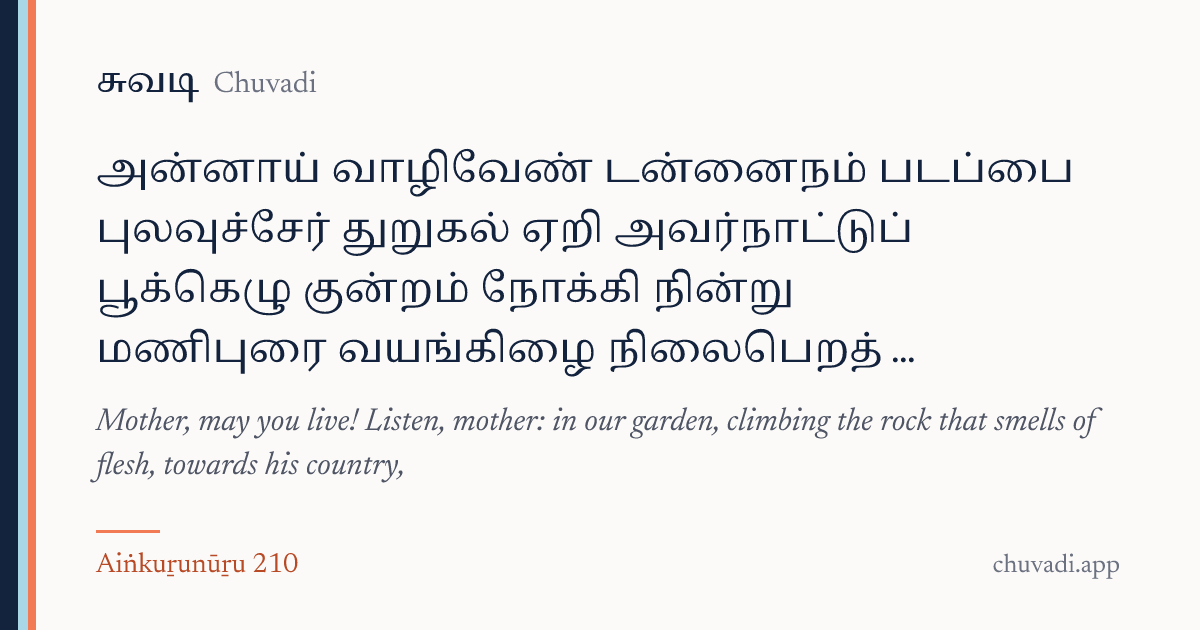

ஐங்குறுநூறு 210 · அன்னாய் வாழிப் பத்து
பாடல் · The poem
Tap a word to see where else it occurs.
பொருள் · Meaning in TamilAI
அன்னையே, நீ வாழ்க! நான் சொல்வதைக் கேள், அன்னையே! நம் தோட்டத்தில் புலால் நாற்றம் வீசும் பாறையின் மேல் ஏறி, அவருடைய நாட்டில் பூக்கள் நிறைந்த குன்றை நோக்கி நிற்கும்போது, நீலமணி போல ஒளிவீசும் அவளுடைய அணிகலன்கள் கழலாமல் நிலைத்து நிற்கின்றன. அவள் உற்ற நோய் அப்போது தணியவும் கூடும்.
இது குறிஞ்சித் திணை. தோழி தாயிடம் தலைவியின் நோய்க்குக் காரணம் தலைவனே என்பதைக் குறிப்பாக உணர்த்துகிறாள். வளை கழல்வதும் நிலைப்பதும் காதல் நோயின் அளவுகோலாகக் கொள்ளப்படும்.
ஆங்கிலம் · English translationAI
Translation
- Mother, may you live! Listen, mother: in our garden,
- climbing the rock that smells of flesh, towards his country,
- gazing at his flower-crowded hill, standing there,
- so that her bright jewels like sapphires stay in place,
- the sickness she suffers may even be eased.
What the poem says
The decade ends with the friend telling the mother how the girl gets some relief. She climbs a boulder at the edge of their garden and stands looking towards the hero's hill, covered with flowers. For a while, then, her love-sickness lets up, and her jewelled bangles, which have been slipping from her wasted arms, stay where they should.
This is a gentle diagnosis. The cure lies in his direction, and the mother is invited to draw the conclusion. Bangles slipping off and staying on are the usual measure of a woman's love-sickness in akam poems.
The rock "that smells of flesh" (pulavu cēr tuṟukal) is probably one where hunters cut up game, or where wild animals have eaten. It gives the hill-country a touch of rawness next to the girl's longing.