



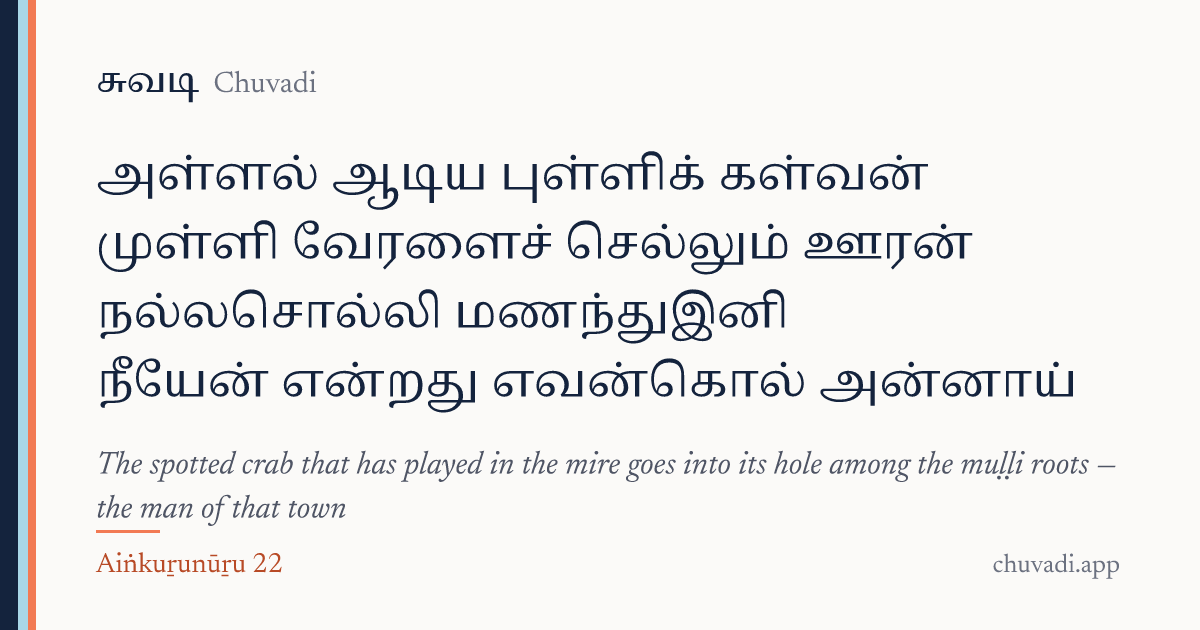

ஐங்குறுநூறு 22 · கள்வன் பத்து
பாடல் · The poem
Tap a word to see where else it occurs.
பொருள் · Meaning in TamilAI
சேற்றில் விளையாடிய புள்ளி நண்டு முள்ளிச் செடியின் வேர் அருகே உள்ள வளைக்குள் சென்றுவிடும் ஊரைச் சேர்ந்தவன், இனிய சொற்களைச் சொல்லி என்னை மணந்தான். "இனி உன்னைப் பிரியமாட்டேன்" என்று அவன் சொன்னது ஏனோ, அன்னையே?
மருதத் திணை; தலைவி தோழியிடம் கூறுவதாகக் கொள்ளலாம். சேற்றில் விளையாடிவிட்டுத் தன் வளைக்குத் திரும்பும் நண்டு, பரத்தையரோடு இன்பம் துய்த்துவிட்டு ஒன்றும் நடக்காதது போல வீட்டுக்குத் திரும்பும் தலைவனைக் குறிக்கிறது. "நீயேன்" என்பது "நீங்கமாட்டேன்" என்ற பொருள் உடையது.
ஆங்கிலம் · English translationAI
Translation
- The spotted crab that has played in the mire
- goes into its hole among the muḷḷi roots — the man of that town
- spoke fair words and wed me, and now,
- 'I will not leave you' — why did he say that, mother?
What the poem says
The speaker, perhaps the heroine speaking to her friend or the friend voicing the heroine's words, recalls the hero's sweet speech and his promise, 'I will not leave' (nīyēṉ, from the verb nī, 'to abandon'). Now that he has left, the promise seems pointless, and she asks why he made it.
The crab first plays in the mud and then slips back into its hole among the roots. The suggestion is of the hero, who enjoys himself in muddy places, among the courtesans, and then returns to his home as if nothing had happened.
'Wed' (maṇantu) may mean either marriage or simply union; in a marutam poem, marriage is the likelier sense.