




ஐங்குறுநூறு 23 · கள்வன் பத்து
பாடல் · The poem
Tap a word to see where else it occurs.
பொருள் · Meaning in TamilAI
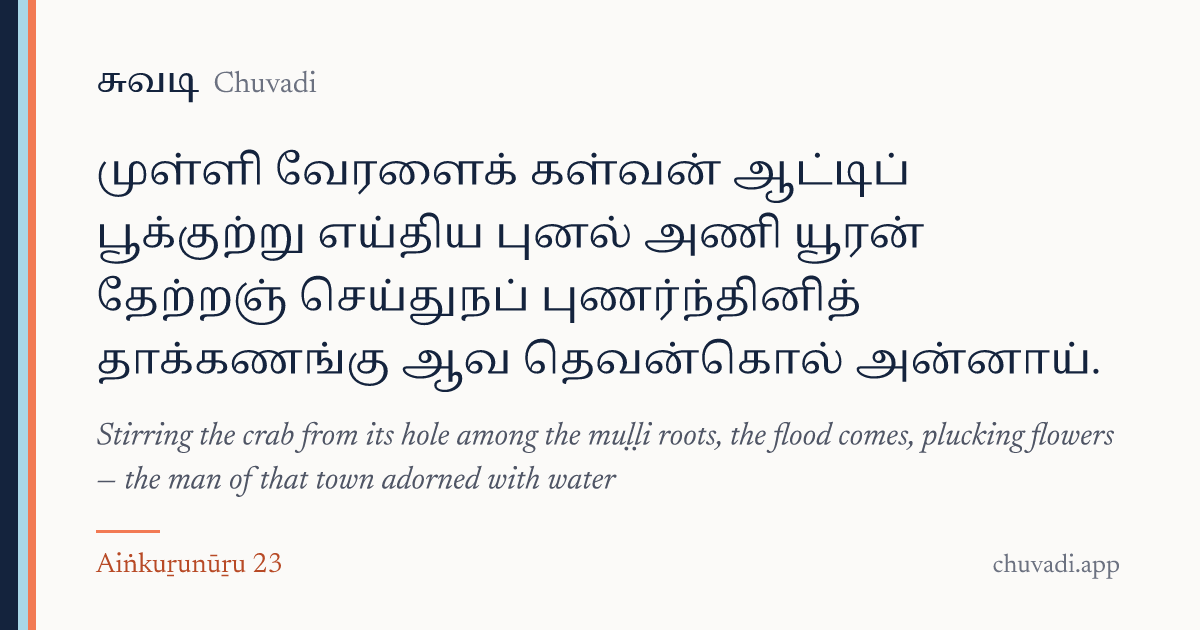
முள்ளிச் செடியின் வேரருகே உள்ள வளையிலிருந்து நண்டைக் கலக்கி, பூக்களைப் பறித்துக்கொண்டு வரும் வெள்ளம் அழகு செய்யும் ஊரைச் சேர்ந்தவன், உறுதிமொழி கூறித் தேற்றி நம்மோடு கூடினான். இப்போது அவனே தாக்கி வருத்தும் அணங்காக ஆவது ஏனோ, அன்னையே?
மருதத் திணை; தோழி தலைவியோடு சேர்ந்து "நாம்" என்று கூறுவதாகக் கொள்ளலாம். ஆறுதல் தந்தவனே இப்போது துன்பம் தருகிறான். நண்டை வளையிலிருந்து கலக்கி மலர்களை அடித்துச் செல்லும் வெள்ளம், தலைவியின் அமைதியைக் குலைத்த தலைவனைக் குறிக்கலாம்.
ஆங்கிலம் · English translationAI
Translation
- Stirring the crab from its hole among the muḷḷi roots,
- the flood comes, plucking flowers — the man of that town adorned with water
- gave us his assurance and joined with us, and now
- why has he become a goddess who strikes, mother?
What the poem says
The speaker says the hero comforted 'us' with his assurances and united with 'us'. The plural voice suggests the friend speaking with and for the heroine, though the heroine herself may use 'we'. The man who once brought comfort now brings pain, like a tākkaṇaṅku, a fierce spirit or goddess who strikes those who come near and leaves them sick.
The flood that rushes in, drives the crab from its hole and sweeps away flowers is an image of sudden disturbance. It may stand for the hero's arrival in the heroine's life, which first seemed lovely and has turned out to be destructive.
Aṇaṅku in Sangam poetry is a power that afflicts, often linked to particular places; to call a lover an aṇaṅku is a strong way of saying that love itself has become an affliction.