




ஐங்குறுநூறு 258 · குன்றக் குறவன் பத்து
பாடல் · The poem
Tap a word to see where else it occurs.
பொருள் · Meaning in TamilAI
மலைநாட்டுக் குறவனின் அன்புக்குரிய இளமகளாகிய, அழகிய மயிலைப் போல அசைந்து நடக்கும் மலைப்பெண்ணைப் பெரிய மலைநாட்டுத் தலைவன் மணப்பான் என்றால், நாங்கள் அவளை அவனுக்குக் கொடுத்துவிட்டோம்; அப்படிக் கொடுத்ததும் நல்லதே. ஆயினும் நல்ல நெற்றியை உடைய இவளுடைய துயரம் இன்னும் நீங்கவில்லை.
குறிஞ்சித் திணை. நாங்கள் என்று குடும்பத்தின் சார்பில் பேசுவதால் தோழியோ செவிலியோ கூறுவதாகக் கொள்ளலாம்; கூற்று உறுதியாகத் தெரியவில்லை. வீட்டார் இசைந்தும் மணம் நடைபெறாததால் அவள் வருந்துகிறாள்; விரைந்து வருக என்பது குறிப்பு. இறுதிச்சொல் துயிரே என்று உள்ளது; அது துயரே என்பதன் பிழையாக இருக்கலாம்.
ஆங்கிலம் · English translationAI
Translation
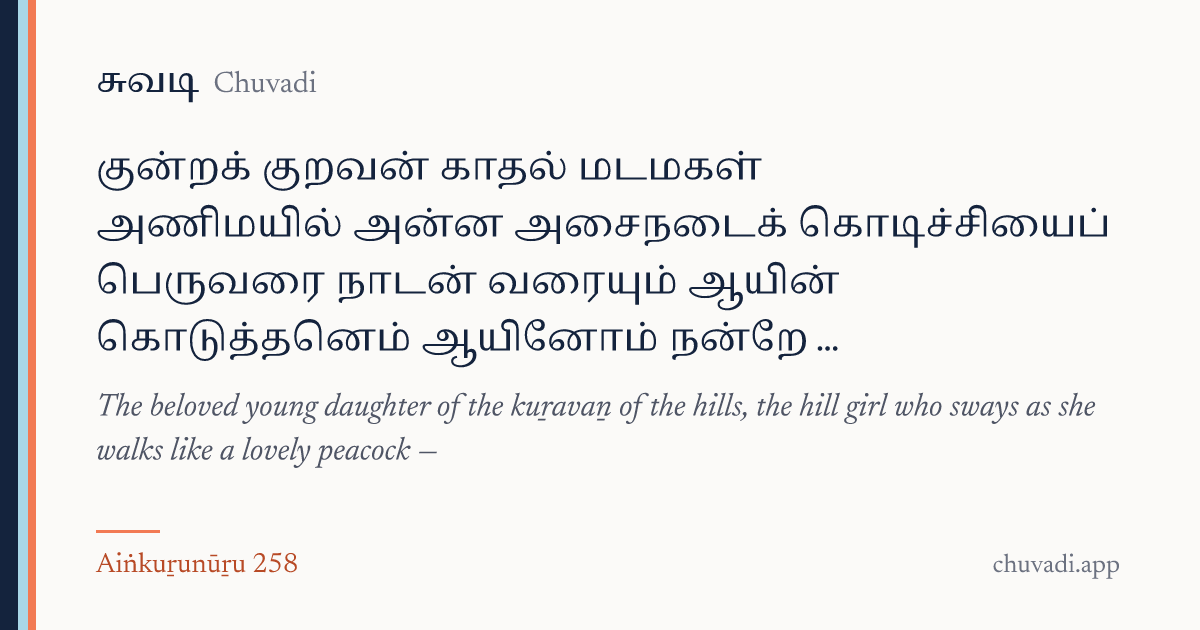
- The beloved young daughter of the kuṟavaṉ of the hills,
- the hill girl who sways as she walks like a lovely peacock —
- if the man of the great mountains will wed her,
- we have given her; so we have, and it is well;
- yet even now the grief of the fair-browed one does not end.
What the poem says
The family has agreed to the match: "we have given her". Yet the girl's distress continues, because the wedding has not yet taken place and her lover has not yet come to claim her. The speaker uses "we", speaking for the household; this suggests the friend or the foster-mother, perhaps addressing the hero to hurry him, but the edition does not say and the poem could be read in more than one way.
The peacock with its swaying gait is the standard kuṟiñci comparison for a young woman's walk.
The last word, tuyirē, is not a standard form. It is most likely a misprint for tuyarē, "grief", and I have translated it so. If it were tuyilē, "sleep", the line would mean that she still cannot sleep; the sense is close either way.